Movie Log: Time Capsule 1951
Earlier this year, I gave myself a small project to organize some movie watching at home. I thought it would be interesting to immerse myself in the films of a single year to see what the common themes, aesthetics, and interests were for that moment in history. It would be a good way to hit important titles on my watchlist that I've never seen in context with some very famous titles that I haven't seen in a while and want to rewatch.
The following is adapted from my Letterboxd logs from earlier in the year. The titles for 1951 were curated and watched (generally) in release order in their respective countries.
The Prowler
A married woman home alone at night is shocked by a "prowler" peeking into her bathroom window from her backyard. The cops who come are dismissive and unbelieving. Misogynist. One of the cops has a distinctly predatory gaze as he looks at her. This is the startlingly dark vision of 1951 we're dropped into in The Prowler.
When the cop and the married woman start having an affair, one thinks of Double Indemnity (1944) - the archetypal film noir - and we start to wonder who will convince who to kill the husband. She doesn't seem like a femme fatale. The movie keeps their motivations murky even after the murder occurs. A trial occurs, and we see life after the trial and we feel sure that justice hasn't been served.
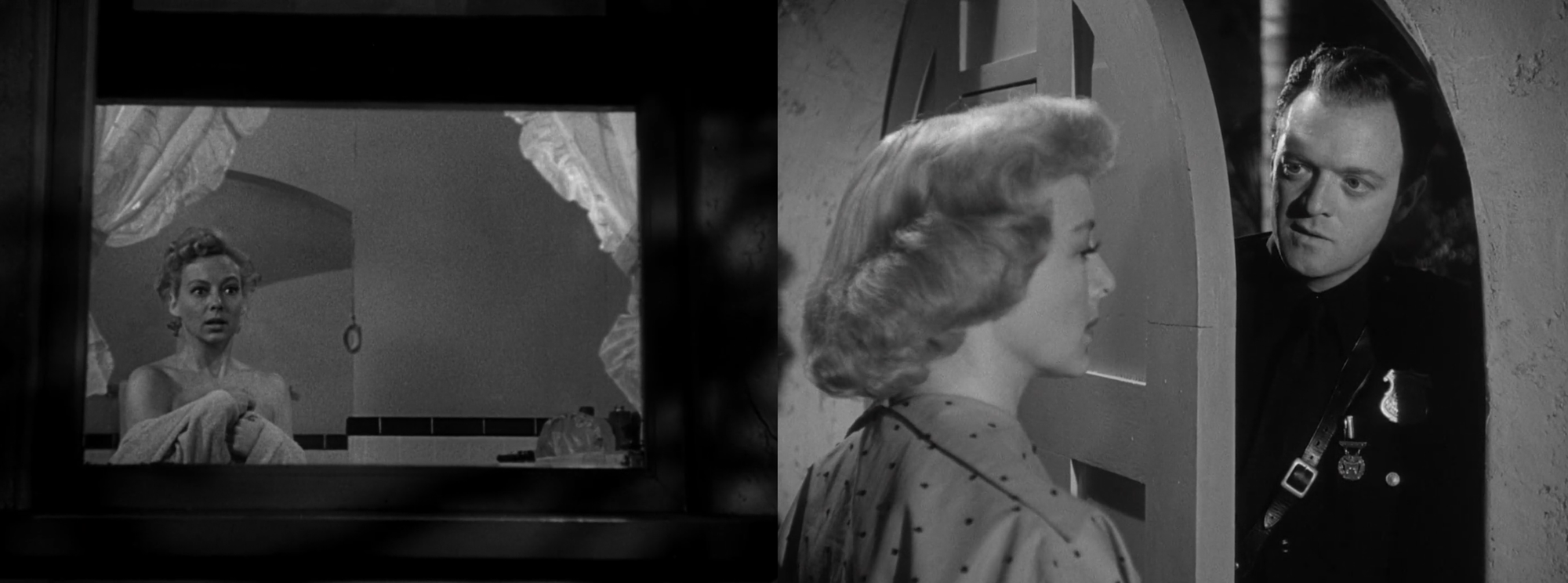
The distrust this movie has in both the police and the criminal justice system is interesting in relation to the atmosphere in America in 1951. Whether the average American shared these feelings is difficult to say, but director Joseph Losey and screenwriter Dalton Trumbo were both facing the political witch hunt of HUAC. Trumbo was already blacklisted and working under a pseudonym; Losey would soon be blacklisted too and move to Europe.
A more distinctive message from the movie is that the two types of characters in the movie are those that are satisfied with what they have and those who want more. Van Heflin has a good job and all the power that comes with being a cop, but he won't be content until he owns a business where he doesn't have to do anything. Evelyn Keyes has an upper middle-class lifestyle, but her husband can't have children. All of the characters who are actually content in their middle-class lives are portrayed as incredibly boring people.
***
Ace in the Hole
While Ace in the Hole is primarily known for being a precautionary tale about the dangers of journalism as a for-profit business - how supply and demand create a need for sensationalizing stories - Kirk Douglas' character is also American exceptionalism taken to its extremes. He doesn't see his greed and desire to be important or to make it to the top of the game to be unusual; he's forthright in his ends justify the means philosophy. He's already been fired from 11 of the biggest newspapers in the country when he enters the Albuquerque Sun-Bulletin and demands a job.
This small-town role chafes him until he comes across the story of Leo Minosa trapped in a cave-in. Leo was hunting for "treasure" in Native American cliff dwellings, things he can steal and sell for profit, ignoring the disapproval of the local tribe. Leo's wife is also unhappy with her life and ready to make a quick buck to bounce out of town. They all fall under Kirk Douglas' spell - his promise of riches and a better life - all that's required is to save Leo Minosa... as slowly as possible. The newsman can sell a "scoop" for big bucks if there's enough demand, so he contrives to delay Leo's rescue. Instead of rescue in 24 hours, they will leave him trapped for a week.
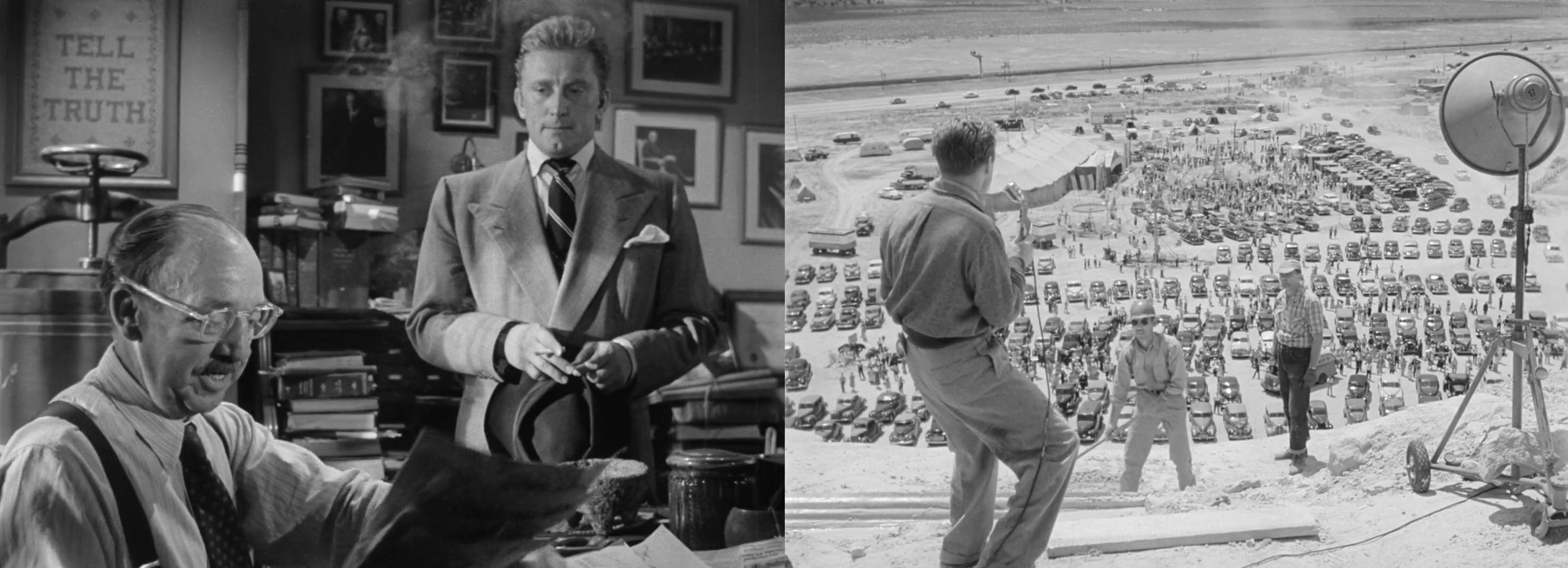
In 1951, this was a box office flop because of its "far-fetched" plot and grim view of America, but we can recognize its realism far too easily now. It's less well-known among Billy Wilder's films because - despite his trademark snappy dialogue and strong visuals - it is a nasty piece of work with an unsympathetic lead character. But Wilder considered it his masterpiece.
****1/2
A Place in the Sun
A young, sensitive Montgomery Clift is new in town; he's come to make a new life, asking for a job from his industrialist uncle. At first, he's happy with his assembly line job and his affair with coworker Shelley Winters, which he must keep secret because it's forbidden by his employer (and her landlady). She tells him when he's promoted and becomes important he'll want to leave her, but he denies it.
He soon gets that promotion, but his real downfall is the allure of the ultra-glamorous Elizabeth Taylor, her cabin in the woods where the rich kids all hang out, riding their motorboat around on the lake, and having Hawaiian-themed parties with fresh pineapple. (In the 1950s, shipping was prohibitively expensive because pineapple spoils quickly, and most people in the 48 states were only exposed to the exotic treat as a canned product.)
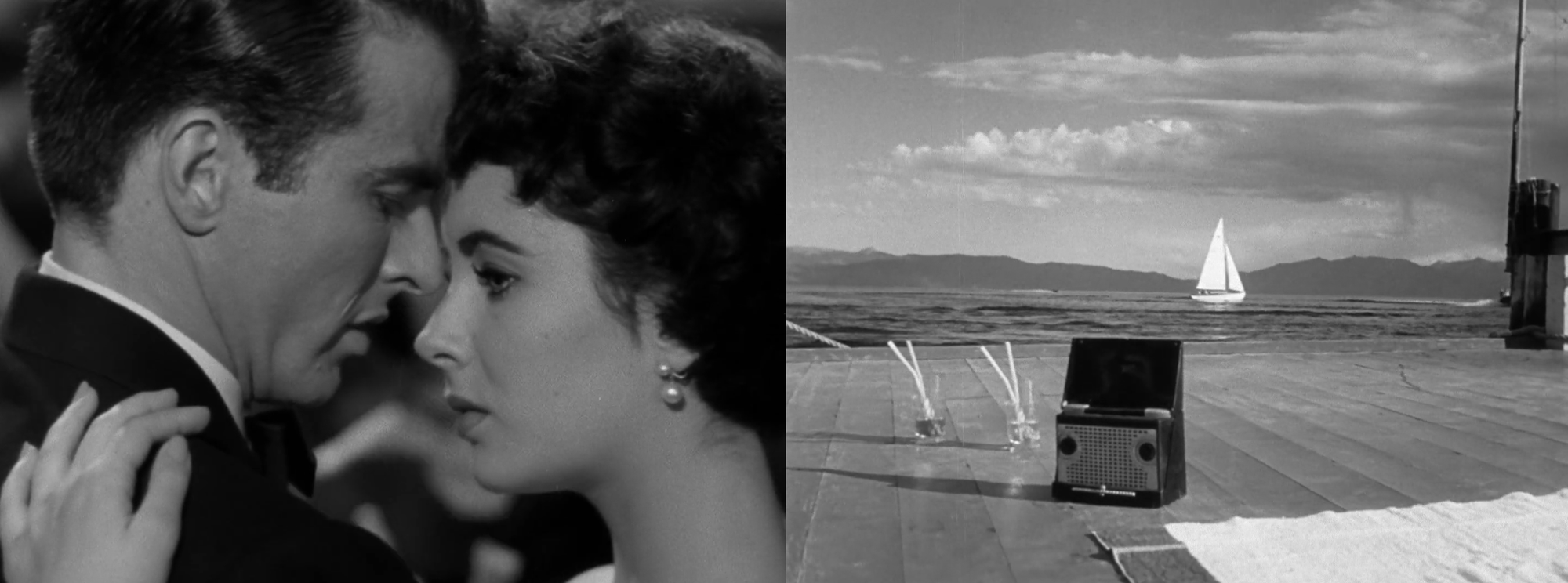
From the novel 'An American Tragedy', a portrait of the country as a repressive place can be formed. The film makes the upper-class lifestyle completely alluring, while the lower-class young adults struggle to pay the bills or even find a quiet place to be alone. The parents Clift left home to get away from are zealous religious missionaries and the unspoken backstory is that he couldn't bear their lifestyle eschewing personal wealth. When Shelley Winters' character becomes pregnant, she meets with a doctor for "help" but the illegal procedure is never mentioned (or obtained).
The biggest flaw in the movie might be Shelley Winters' character. She would be Oscar-nominated for her performance, but in story terms she is painted as a "nag" so that you can't fault Clift for wanting to get out. Another flaw perhaps is the simplistic courtroom drama the last act devolves into. Raymond Burr gives a fiery single-scene performance as the prosecutor; a scene that would help him transition from playing one-dimensional criminals to Perry Mason by the end of the decade.
A Place in the Sun is a basic melodrama but with director George Stevens and with this cast it's a fascinating watch. From the magnetism of Taylor and Montgomery Clift - who is giving so much inner turmoil with so little, a dazzling physical performer - to shot choices which deftly convey gravitas. It is one of the best-looking movies of the year. Charlie Chaplin called it "the greatest movie ever made about America".
****
No Highway in the Sky
Following their collaboration on Harvey, Jimmy Stewart and director Henry Koster adapted British novelist Nevil Shute's 'No Highway'. Shute also wrote 'On the Beach' and 'A Town Like Alice', but in real life he was (for a time) secretly writing books while working his day job as an aeronautical engineer.
In adaptation, they have made Jimmy Stewart's scientist more of an absent-minded professor who can't even find his own home. He is raising his daughter alone, on books and games of intellect which put her at complete odds with the average schoolgirl. The humor of their family's portrayal is thankfully played warmly; they are an unusual but happy family unit.
The subject: a new transatlantic aircraft - a subsonic precursor to the Concorde - has been built with a new alloy of metal. And Stewart has calculated that after a mere 1400 hours of the vibrations of normal engine operations, the tail of the plane will sheer completely off leading to the complete loss of all souls on board.
His employers are not portrayed as a bumbling corporation covering things up. His new boss Jack Hawkins actually encourages his further investigation, and while on his way to the factory to investigate further - WOULDN'T YOU KNOW IT - Stewart finds himself on the very aircraft he thinks is dangerous... and the crew informs him the aircraft has already flown exactly 1400 hours.
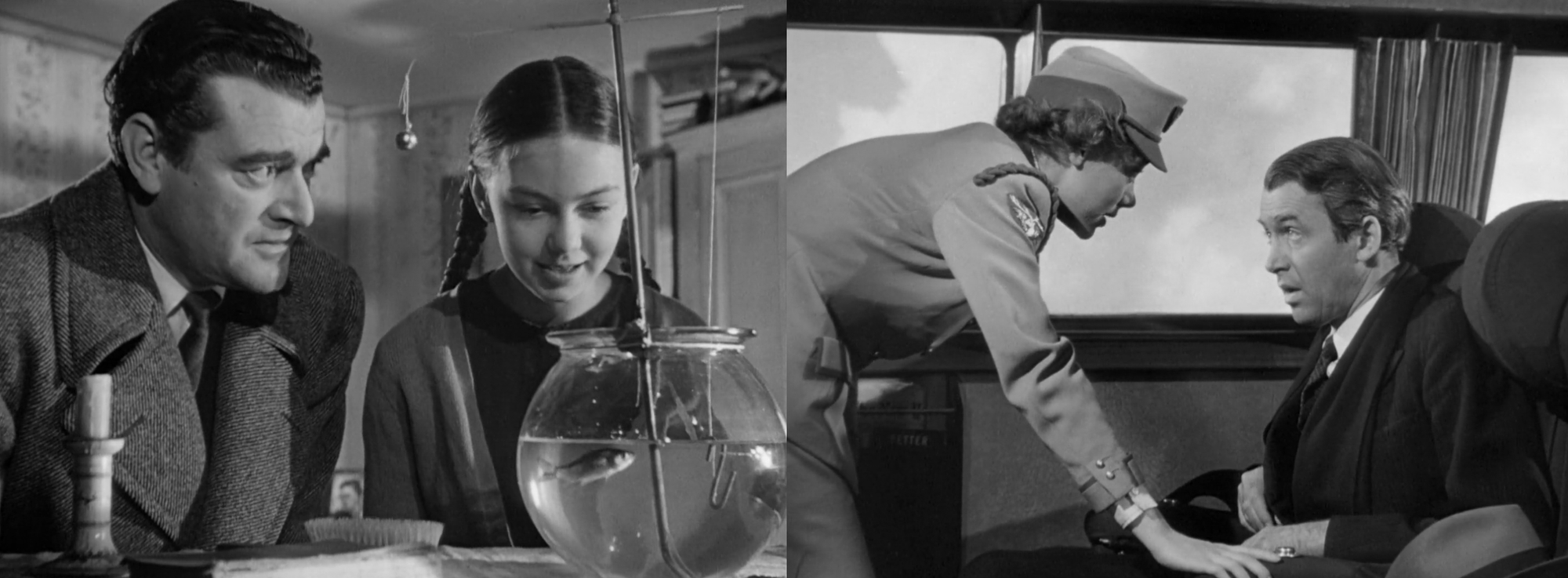
Everyone on board thinks he's nuts and when he tells the other passengers he starts a panic. One of these passengers is a superstar actress played by superstar Marlene Dietrich, who doesn't have much to do in this picture but provide star power. She is actually outshined by the perky stewardess Glynis Johns (you might recall as the mom from Mary Poppins).
While the movie can't sustain the suspense of "Will it crash?" and has an even less exciting third act on the ground as Stewart's character must account for his drastic actions, but the movie has a very good sensitivity to its characters. While the movie paints him as a good single father, it also decides that the stewardess should feel so sorry for him as to quit her job immediately and marry him because he can't handle his finances, much less the housekeeping.
Henry Koster thought it one of his best movies, and its well-made and full of heart; it exalts science & engineering, that young girls can also enjoy studying STEM, and having the courage to stand up for what you believe in.
***
The Man in the White Suit
Across the pond, Ealing Studios in the UK also takes on science and industry, but has a darker view of the corporations running things. Alec Guinness's Sidney Stratton is a scientist in a textile mill; the town is all brick and cobblestone, dirty and imposing factories and smokestacks. The workers are "flotsam floating on the flood tide of profits." Sidney's union coworker doesn't let him skip the tea break: "We had to fight for it."
Sidney is single-minded in his dedication to science, but he's not a bumbler. He's just willing to surreptitiously spend £1,000s of the bosses money - and even work for free - to attend to his secret research.
His invention - a fabric that won't wear out and can't get dirty - sends the industrialists into a tailspin. They try to buy the rights from him to bury it forever, but he wises up to them. They try to kidnap him and force him, but the science-minded daughter of one of the owners helps him escape.
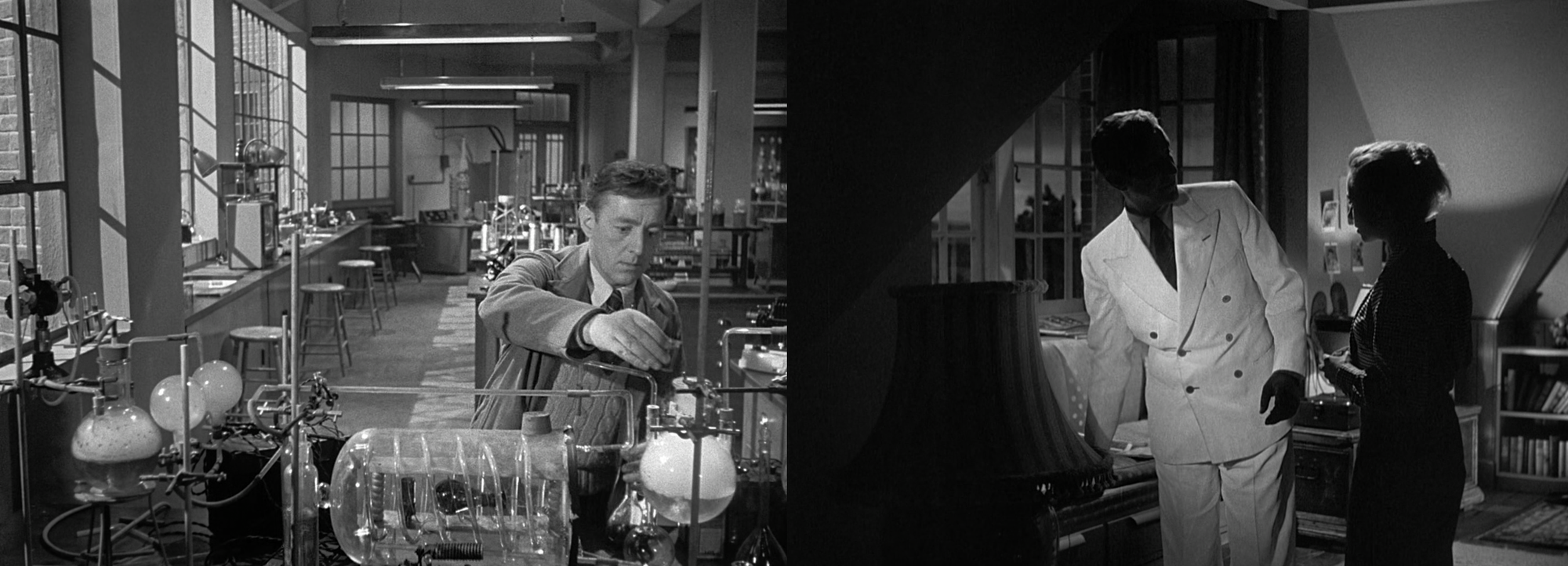
The movie ends oddly and abruptly. Sidney's fiber is suddenly shown to be a sham. But not before an old washerwoman has a moment to chastise him: "What will I do when there's no washing? Why don't you scientists just leave things alone?" While the corporations are the most evil, "progress" also means the lower-classes are left with nothing to do.
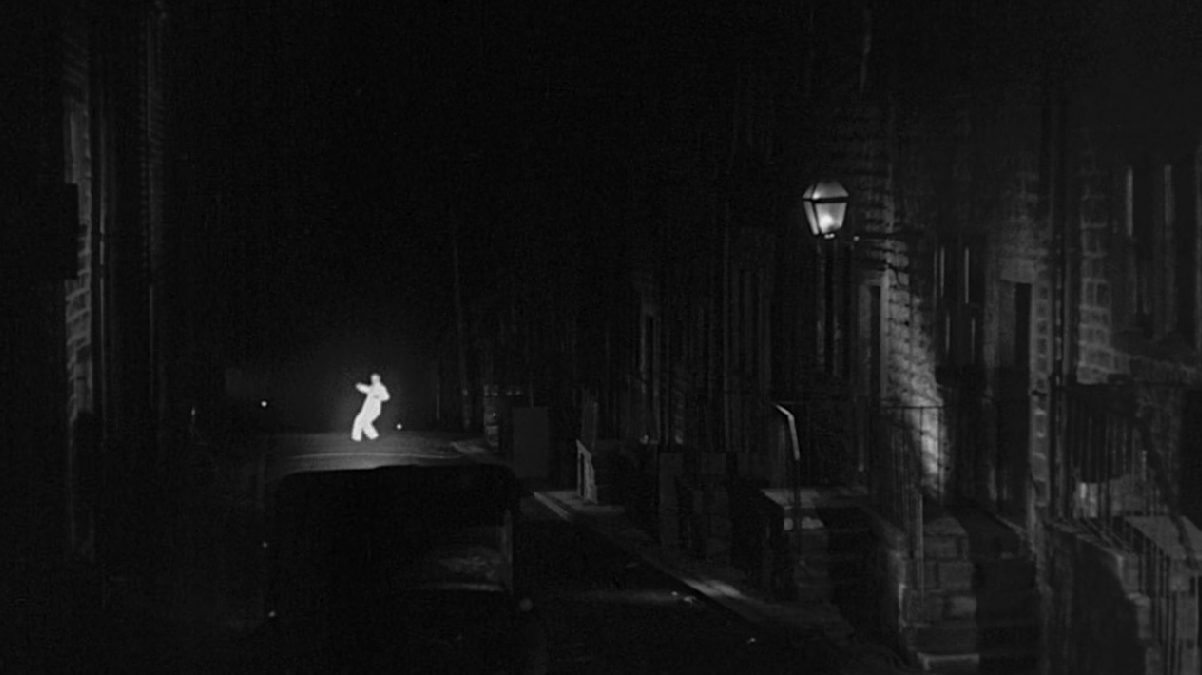
A science fiction satire with this much to spark conversation about was a rare thing in any age, but the film did not get picked up for release in the US. It has striking imagery thanks to the director Alexander Mackendrick (Sweet Smell of Success) and the young cinematographer Douglas Slocombe (Raiders of the Lost Ark) who captures a real mill town and the iconic imagery of Alec Guinness in an almost glowing white suit running down dark streets at night.
***1/2
Summer Interlude
Swedish director Ingmar Bergman's 10th feature, and considered his first "great" film, the one where the themes and psychological complexity and overall Bergman-ness of his films became fully formed. It is a more sophisticated & emotionally mature film than what Hollywood could manage in 1951.
Rewatching this now, Summer Interlude has echoes in the recent film Sentimental Value (2025). It is about a young woman who seems very cold and jaded for 28 years old, when a diary is sent to her that reminds her of her first lover. She returns to a holiday cottage on an island; stepping back into the cottage unlocks the memories of that fateful summer. The exploration of these events peels back the layers of the way she lives her life in the present: the unhappy perfectionist at work and a non-committal, part-time lover to her boyfriend.
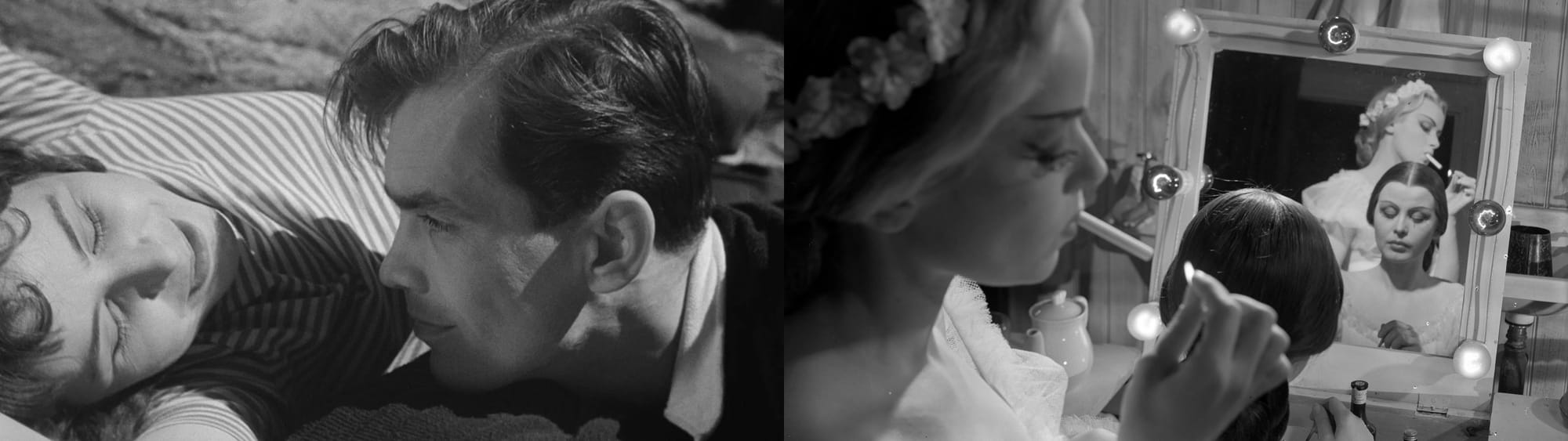
Maj-Britt Nilsson's performance is remarkable, her naive and happy-go-lucky teenager almost unrecognizable side-by-side with her bitter, near-retirement ballerina. A strikingly creative scene shows the two young lovers drawing stick figures on the sleeve of the record; Bergman uses animation to convey the magic of their shared imagination of their future together.
****1/2
Diary of a Country Priest
1951 was a big year for directors finding their voices; this is considered to be the film where Robert Bresson found his "voice". Unsatisfied with the direction of French cinema, he was looking for a new form of expression. The story he chose to adapt from a novel seems to have struck a chord with him, both as a Catholic from the countryside, and as a purist in his art.
Diary of a Country Priest is a difficult watch today, in that it demands careful attention. The way it is shot, you don't know at first what is happening. You only know what the unnamed Priest character knows or tells you through his diary entries. You don't get a sense of the geography of the village; you mostly see the Priest. There are only a few other characters seen on screen, and it's even hard to tell them apart and what their relationships are to each other.
The Priest is fresh out of the seminary; this is his first "flock" and he couldn't be more out-of-step. He's a dour and rigid soldier against the devil and everyone in his community is either godless or miserable or both. The first thing we see him witness is two people kissing inside the gates of an estate; they scurry away resentfully and we only understand later that it is a man having an affair with his maid. The Priest goes to an older priest to receive advice which is strange to hear: he says the young man is trying too hard to be liked and should just make his congregation obey him.
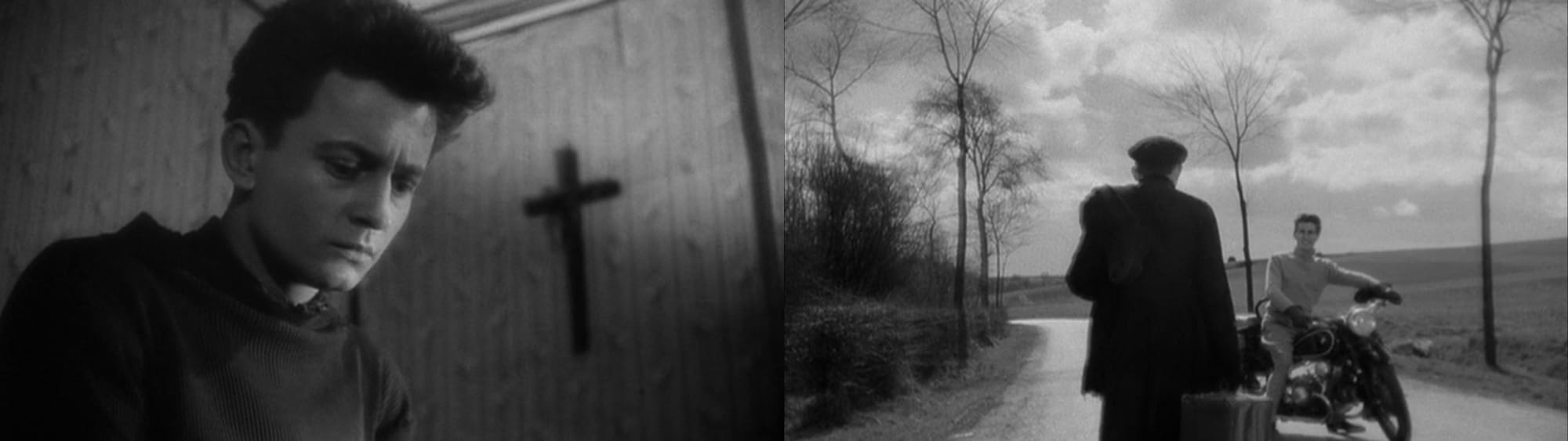
Later in the film, the Priest has occasion to laugh and it's startling because he hasn't smiled even once. He notices too, and quickly berates himself for self-enjoyment.
The film is obviously a strong portrait about grappling with faith, but it can also be viewed as a metaphor for the loneliness of living with one's convictions in other contexts. Most apply it to Bresson as an artist. This is the film where he developed his "actor-model" idea; his actors are not given emotions to convey, but only mechanical directions. The audience plays a key part in projecting emotions and inner turmoil onto movie characters and Bresson's technique is to make the actors more of a blank canvas, guiding the audience with shot choice and editing.
This is an unusual solution to a problem that even Hollywood was trying to solve in 1951: how to advance film performance forward into something more artful. Hollywood was about to discover "method acting".
****
A Streetcar Named Desire
In the context of some more subtle acting performances of 1951 (the aforementioned foreign films would not reach the States for a few years), A Streetcar Named Desire pops as the pinnacle of American maximalism.
The two unforgettable leads at the front are Vivian Leigh and Marlon Brando, and they are giving very different kinds of performances. Vivian Leigh takes a classic Hollywood melodramatic performance style, while Brando seems from a different decade. This is only Brando's 2nd film, and he's been studying Stanislawski's "Method", bringing a new kind of naturalism by inhabiting his character fully. It's actually to the film's benefit that Brando sticks out so much; it's needed to set his "brute" of a character apart.
Streetcar is very obviously a play adaptation from its claustrophobic location but also Tennessee Williams' distinctive dialogue. Elia Kazan actually makes this feel believably like a flat in the middle of New Orleans, moving a few scenes out and about the city. But he also exploits the sweaty apartment making its characters chafe against each other. The movie uses a striking amount of chiaroscuro lighting, even more than most film noirs.
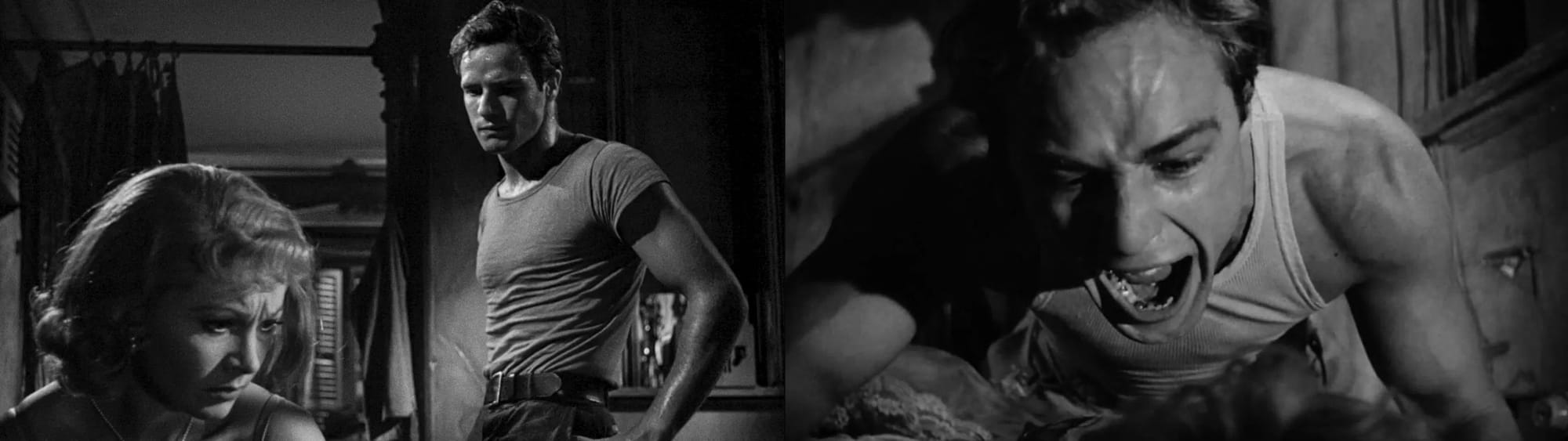
Like A Place in the Sun, the United States is shown as a toxic place, a crumbling empire where most people are struggling to put things together and coping poorly. The movie was censored compared to the play which makes it a little bit harder to follow. A mere reference to an offscreen character's homosexuality was cut out despite being key to the plot; the film also downplays a sexual assault into an evening of menacing vibes.
It can be hard to see what a crackerjack picture this was in 1951, because Hollywood has moved on so completely from this style of movie that it feels the most dated of these films. At the Oscars, A Place in the Sun took Best Director & Best Screenplay. A Streetcar Named Desire almost swept the acting Oscars, but notably snubbed Brando.
***1/2
The Browning Version
Having just seen several adaptations from 1951, this was the one I didn't immediately suspect was based on a play. The British production admirably moves around the campus of Mr. Crocker-Harris' boarding school organically as he prepares to leave the faculty for a less-demanding role in semi-retirement.
At first, we see how the students and other teachers view him. The students hate him, and the faculty are disrespectful. Then, with incredible subtlety from actor Michael Redgrave, we start to realize that there is more to the detached old classics professor than anyone else realizes, and he is having an end-of-life crisis. His marriage is failing and his career - he thinks - has also been a failure.
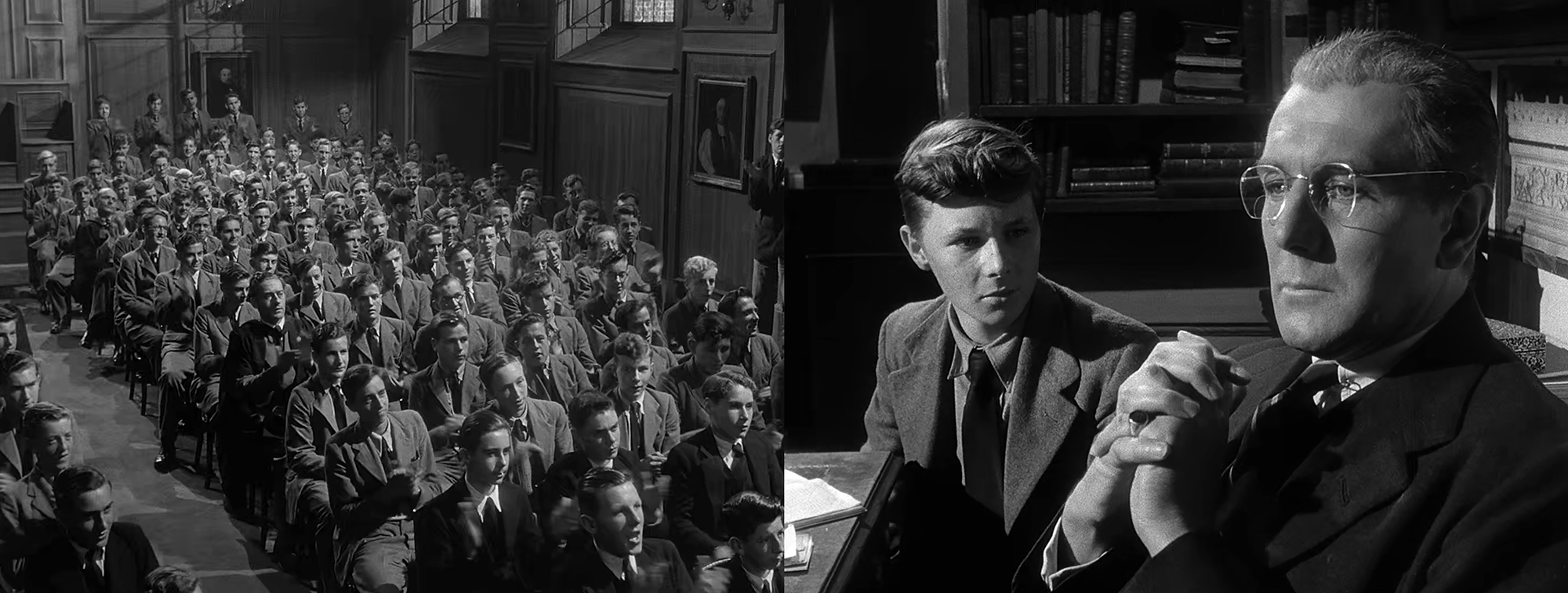
It's a bit surprising that such a dour drama taking place in a setting specific to Great Britain would be co-funded by Hollywood, but perhaps it was thanks to the enduring popularity of Goodbye Mr. Chips (1939). This movie is a little less about the impact of teachers but is a devastating depiction of the difference between your inner life and how other people perceive you, and about living your life without regrets.
****
Detective Story
My survey of films from 1951 came to an end with Detective Story, which was released towards the end of the year in November. It was also an adaptation of a play, which is somewhat obvious due to the fact that almost all of the policework here takes place in the offices of a NYC precinct.
Kirk Douglas gives his second intense performance of the year as an aggressive asshole. He is so rigid in his view of criminals; he believes he needs to lock them up as they will only keep perpetrating crimes against the "real citizens" of the country.
There are several cases that are being handled during the few hours we witness almost in real time - they range from the petty to organized felonies. A young girl who shoplifted a purse is waiting for the night court judge to arrive; she is sort of the witness to everything that unfolds.
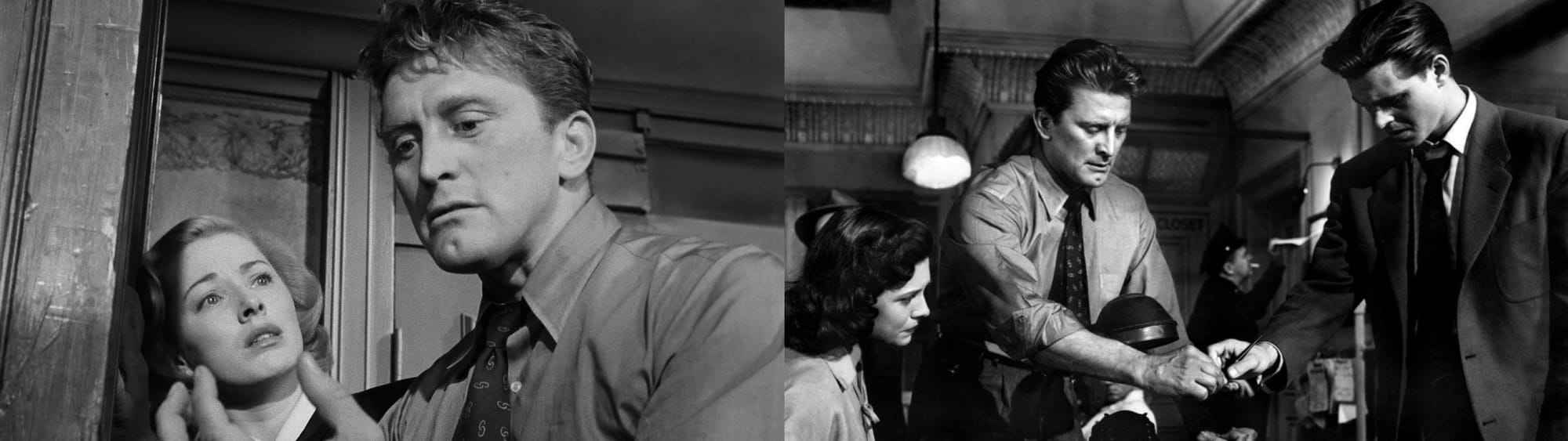
The main case that has captivated Kirk Douglas, the criminal he most wants to "nail", is a retired doctor who he thinks is administering illegal abortions for a small fortune. Unlike A Place in the Sun from the same year, this movie is more explicit about abortions because it is able to paint it as criminal activity. The doctor gets his referrals from the mafia.
Nevertheless, the most striking part of this movie - even more so than its grim view of police power and the potential for abuse - is that when a key character is revealed to have had an abortion, she is not depicted as a monster. She even shows the strength and agency to realize her marriage is over and leave. A well-written movie that is dated in some respects, but forward-thinking for its time.
****
While I expected 1951 to be a "moralistic" age for movies in Hollywood, I was surprised to see how often the movies were full of grey areas and how grim the view of the country was at this moment in time, with the Korean War and Cold War underway and a political witch hunt turning citizens against each other.
I was also surprised how often the hot-button political issues of today were already so thoroughly a part of the movies of 75 years ago...
You know, like airplanes falling apart...