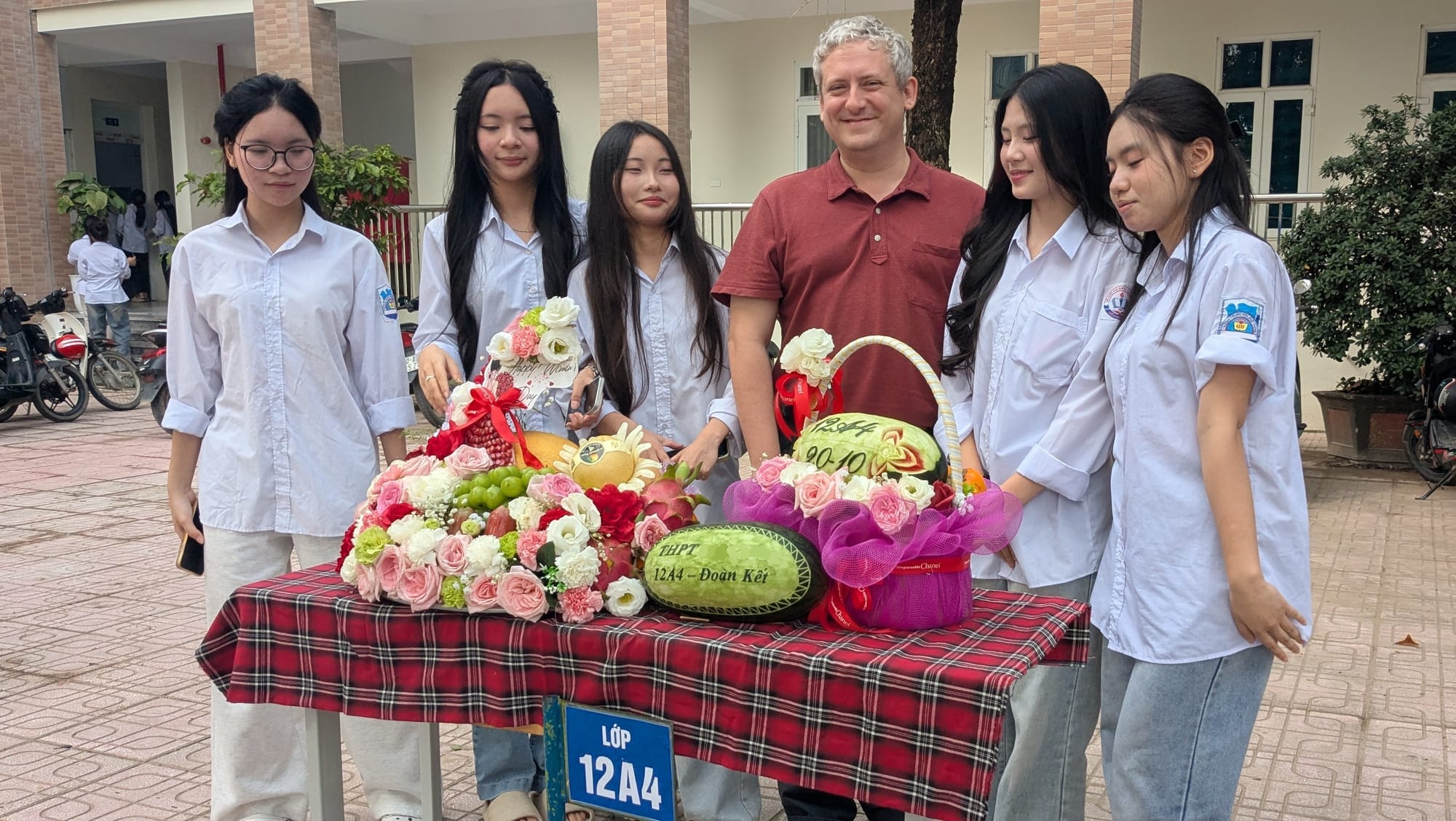
Vietnamese Women's Day
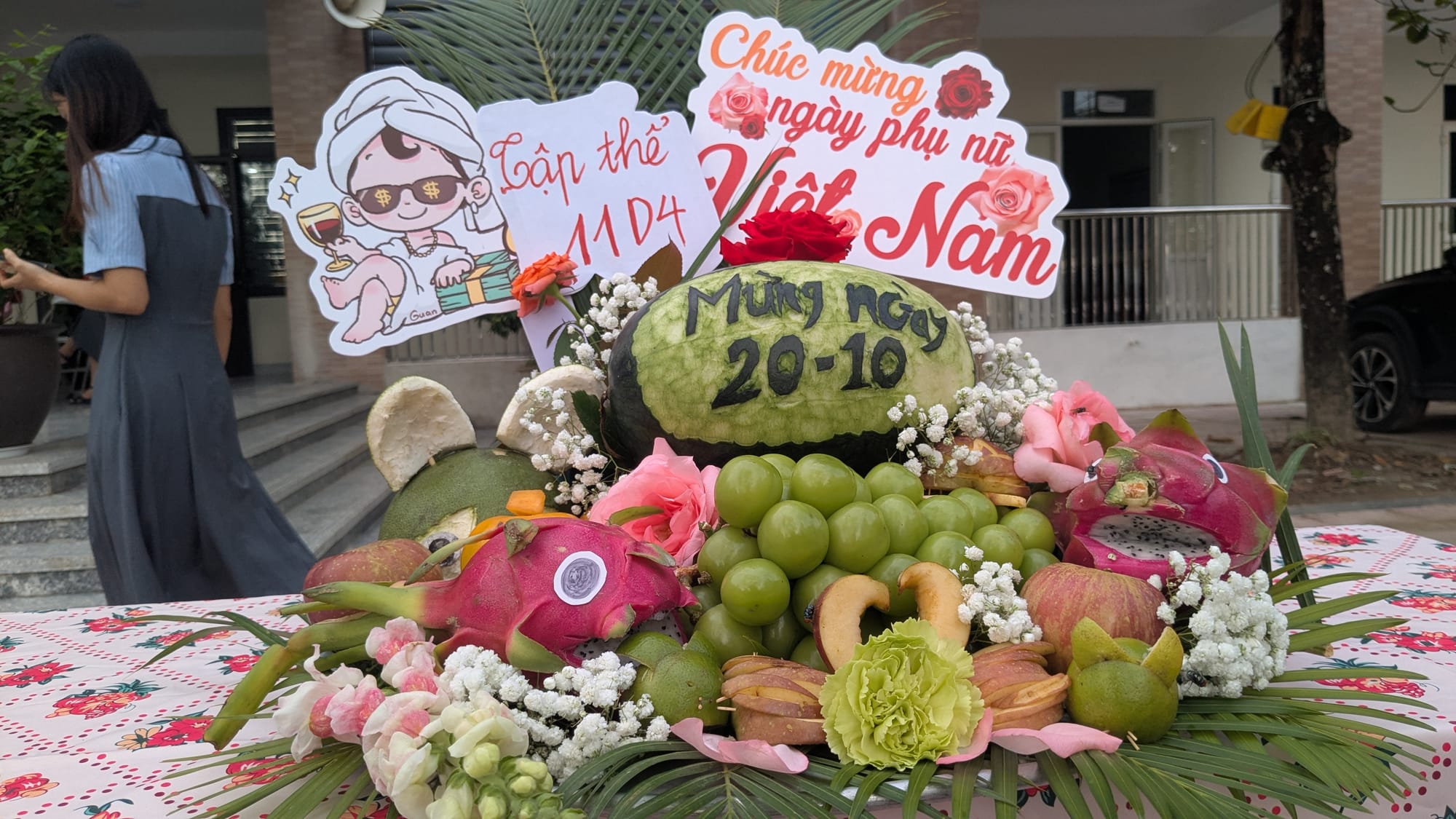
Việt Nam celebrates both the International Women's Day in March as well as their own Women's Day on October 20. On that day in public schools around the country, classes were pre-empted for various celebrations. Mothers and teachers everywhere received gifts.
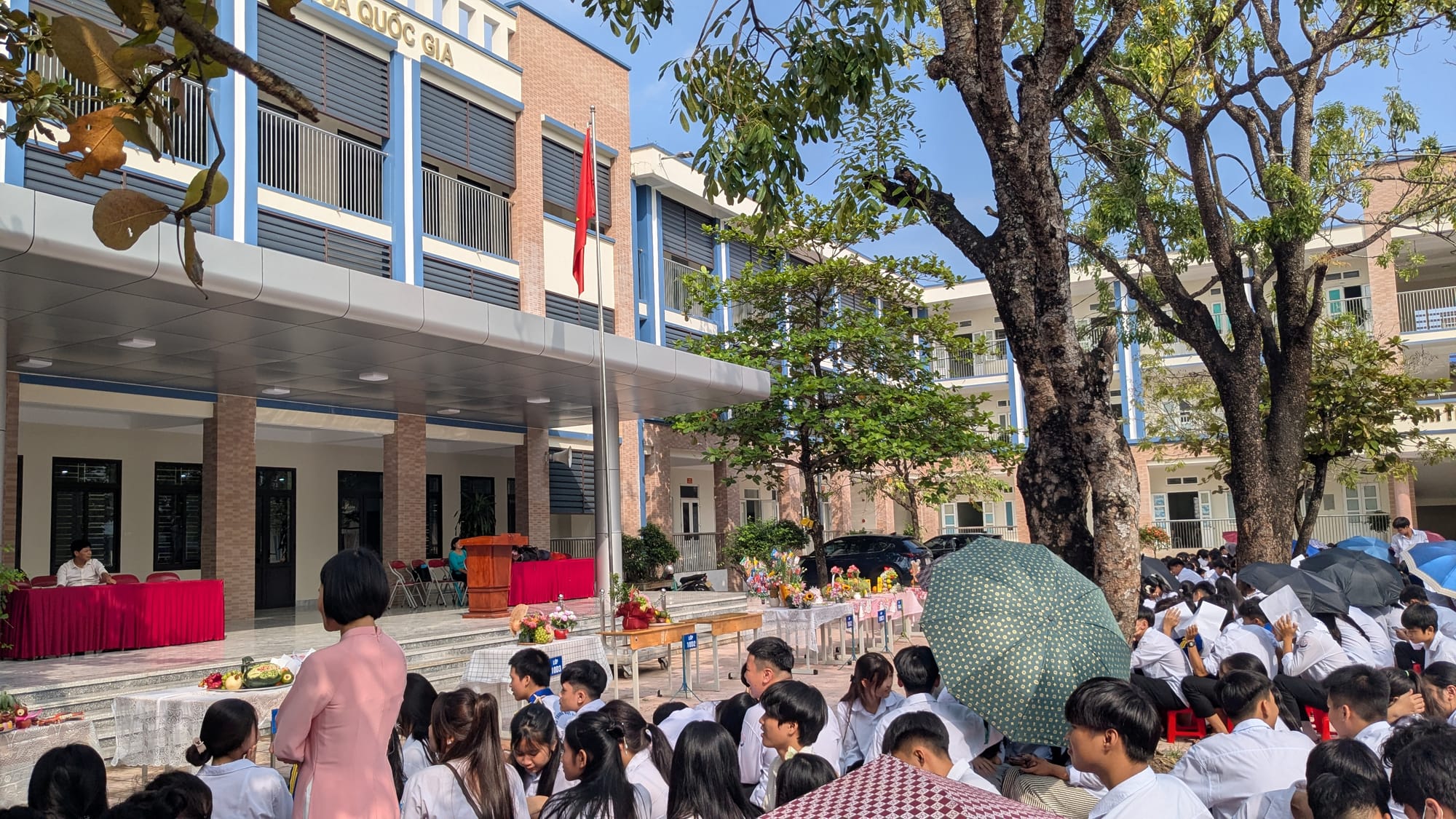
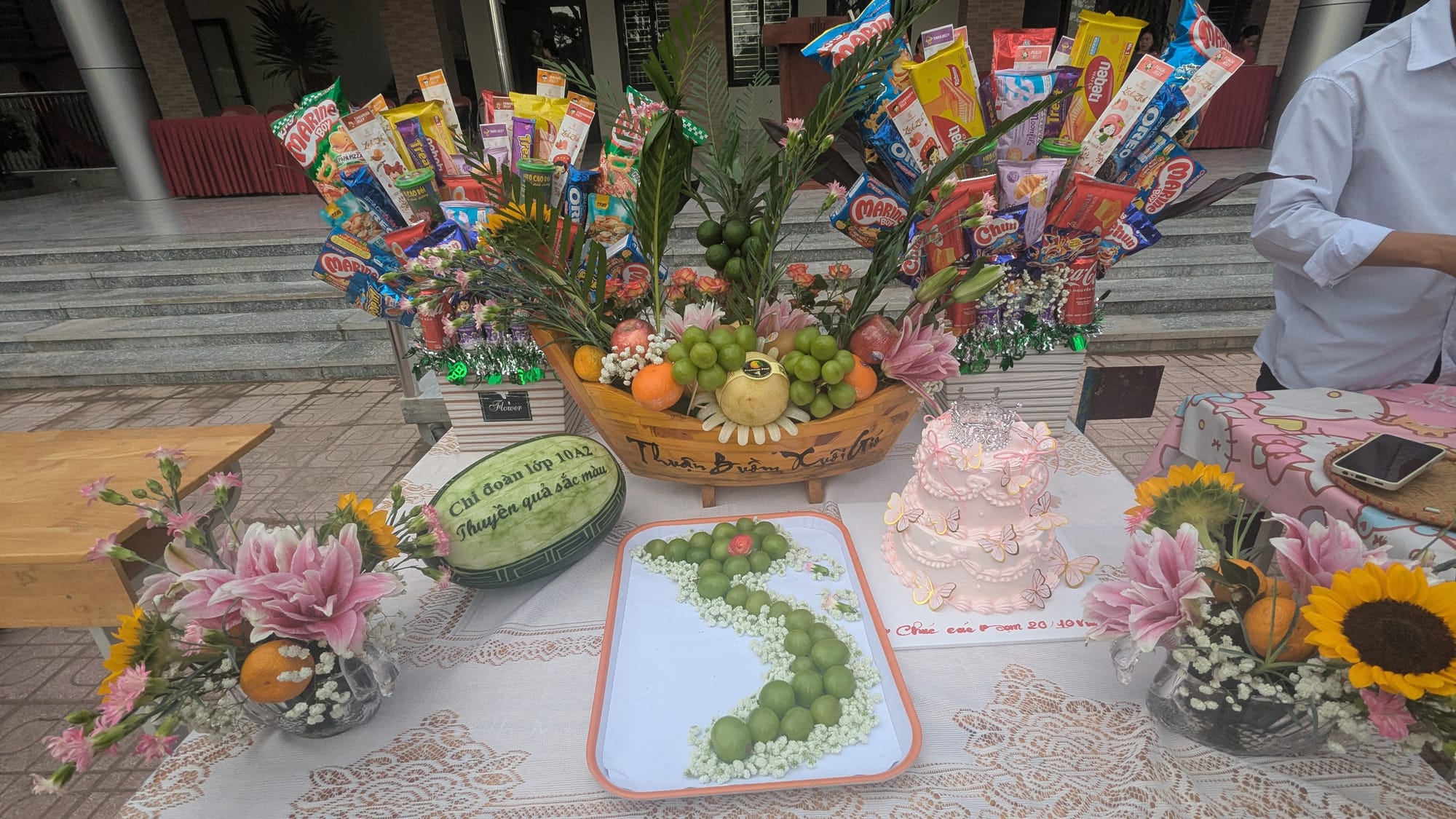
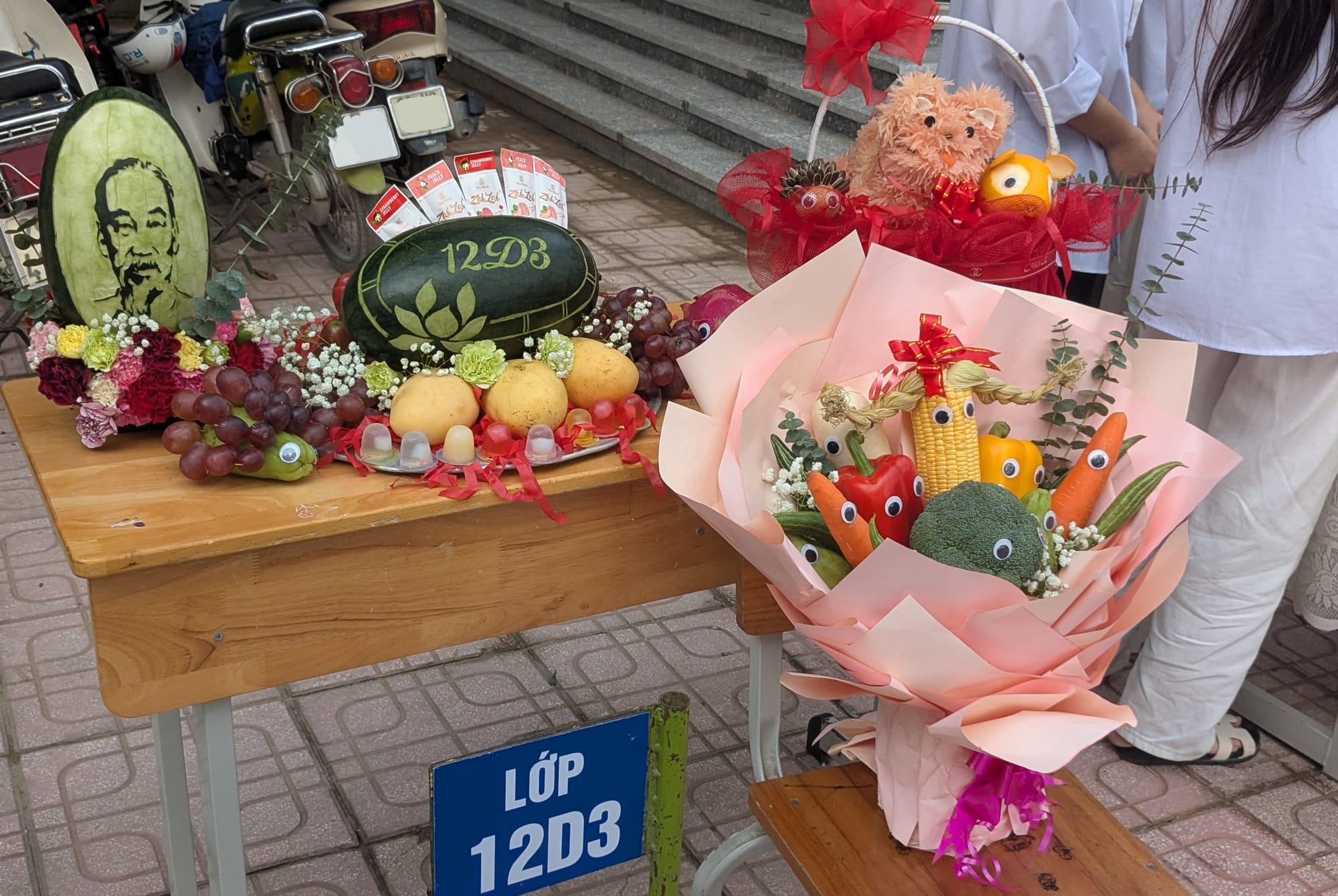
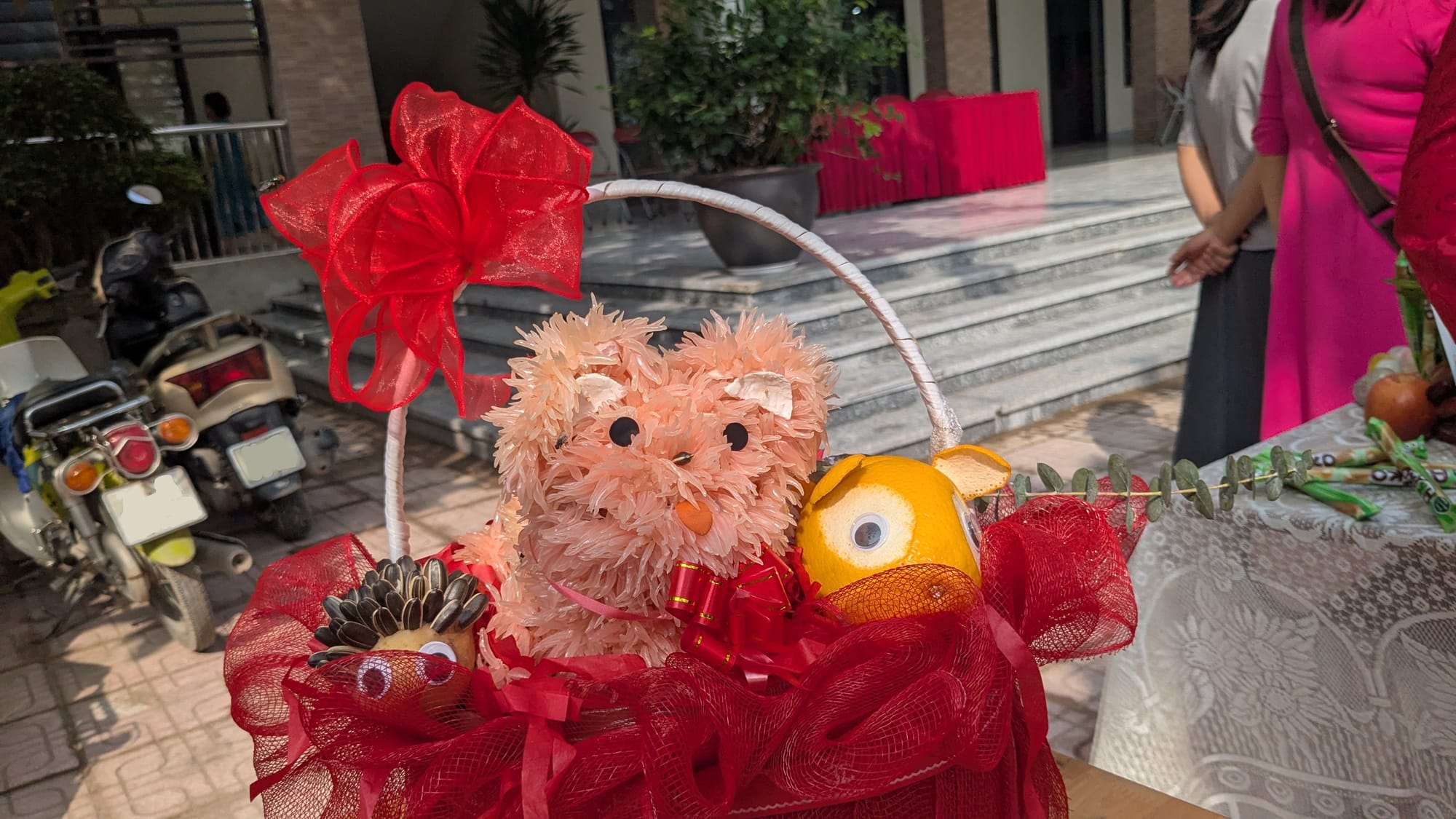
At my high school, the students of each class brought fruits and flowers and other decorative items and spend 90 minutes in heated competition to create a decorative arrangement on desks which were moved out into the center of the sunny courtyard.
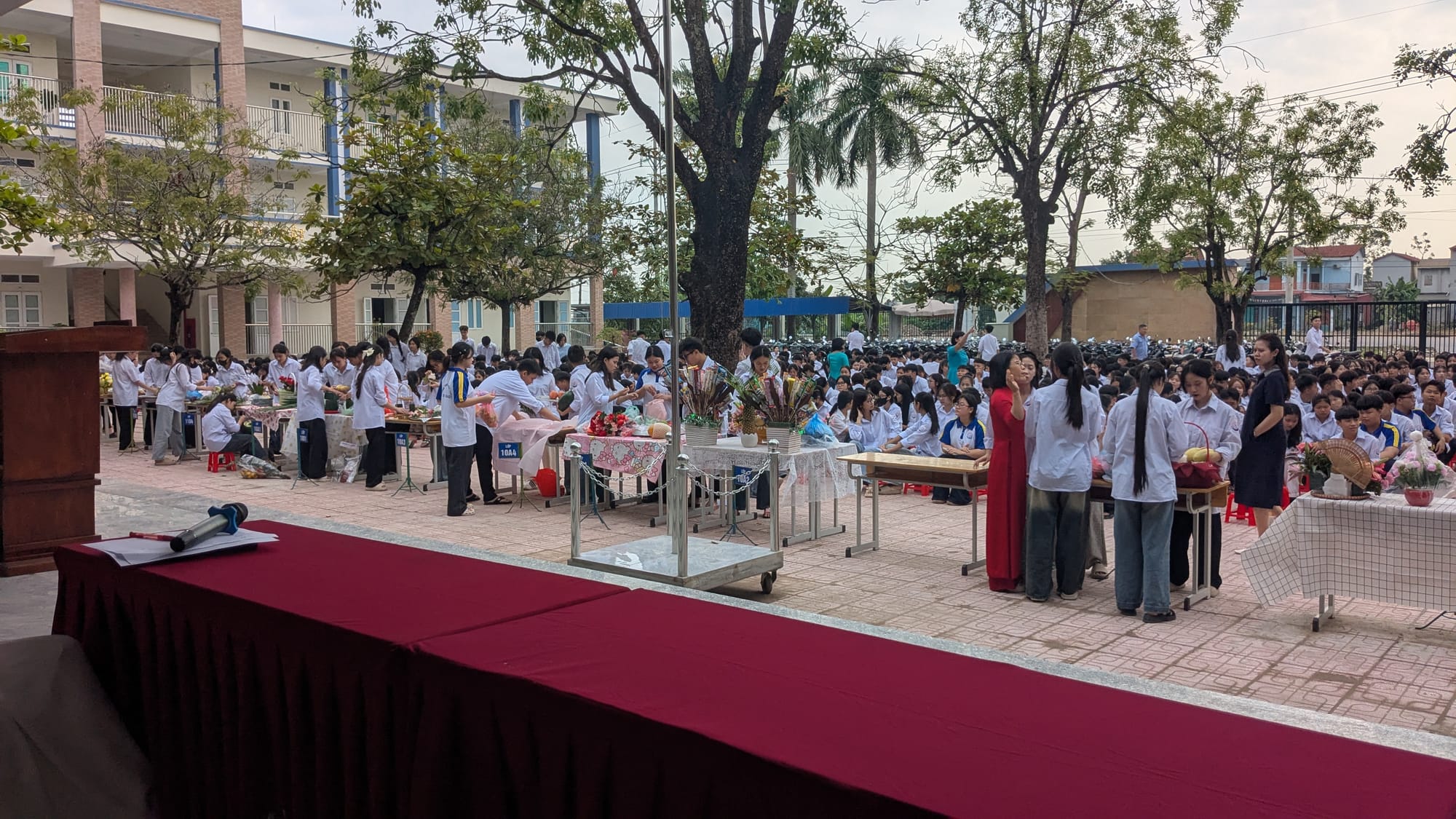
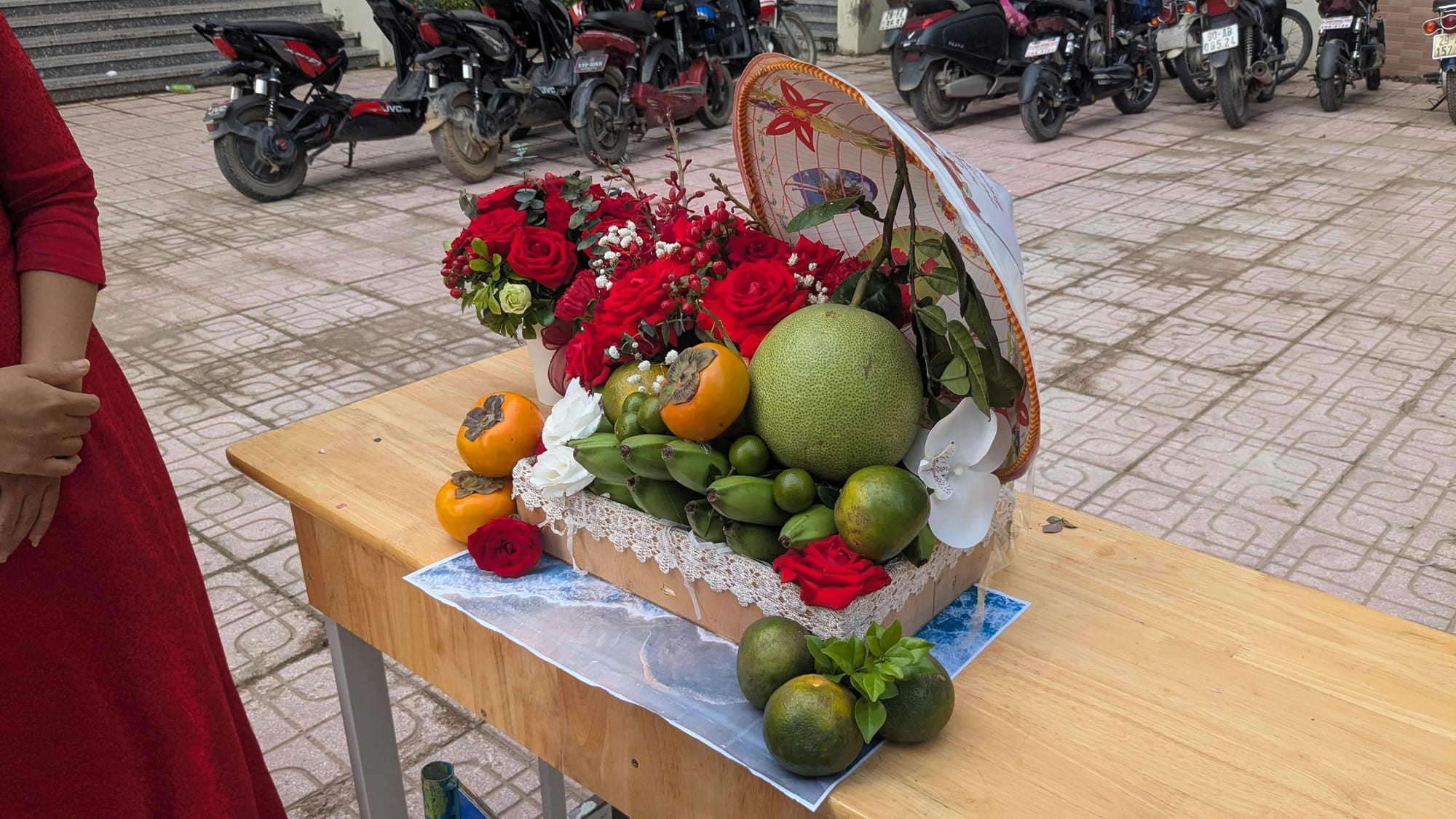
As they still gathered worked on their displays, I walked through them to admire the creativity. There is a wide range of sizes in the display; some of the classes, it seems like the students' parents could not afford to chip in as much, while others have professional quality display baskets and giant white fresh-cut lotus blossoms.
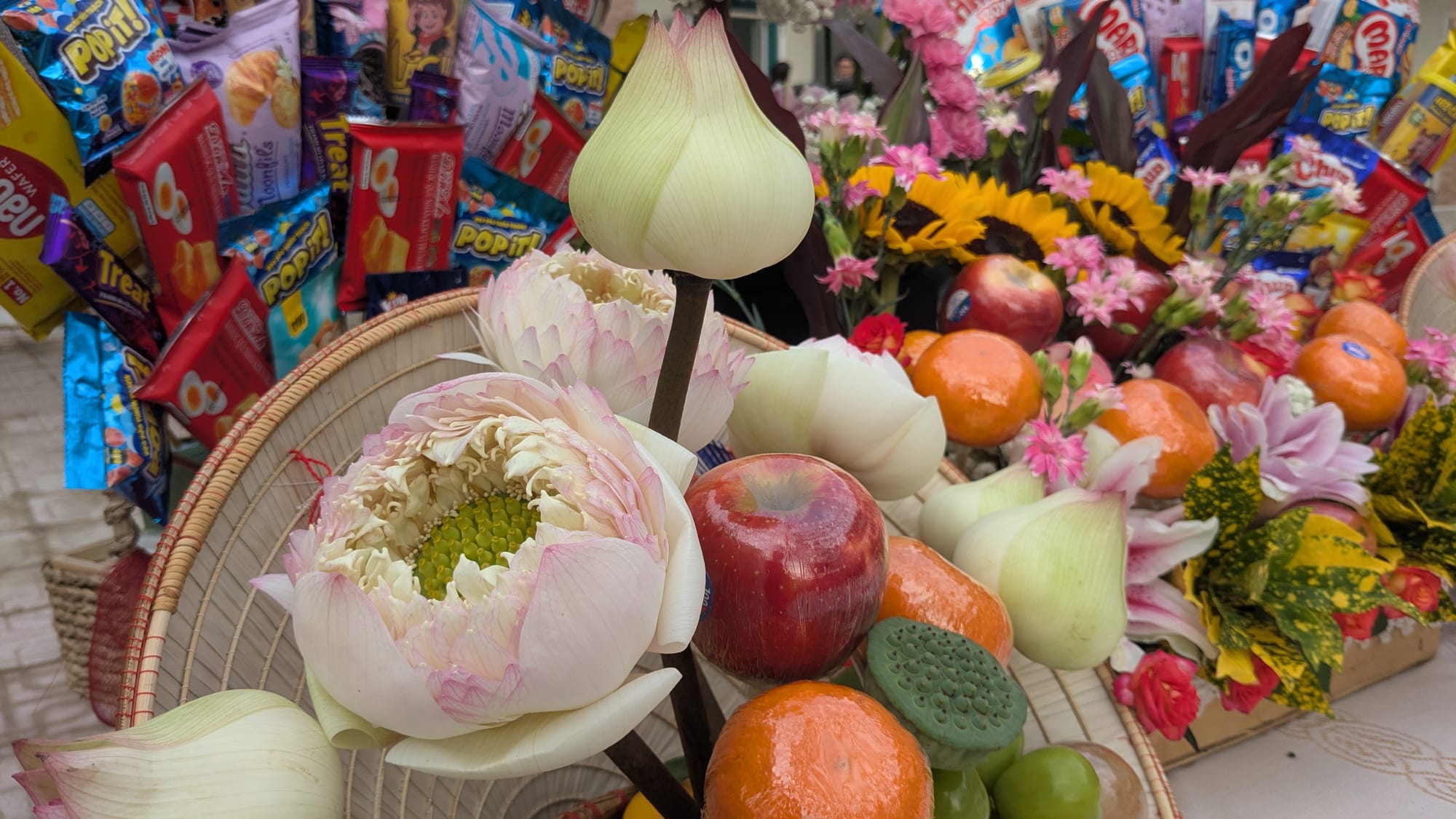
Some of the displays include a lot of candy, which at first I attributed to materials that they had on hand... but after the competition I saw that the students took the materials home - not their teachers - so it made more sense!
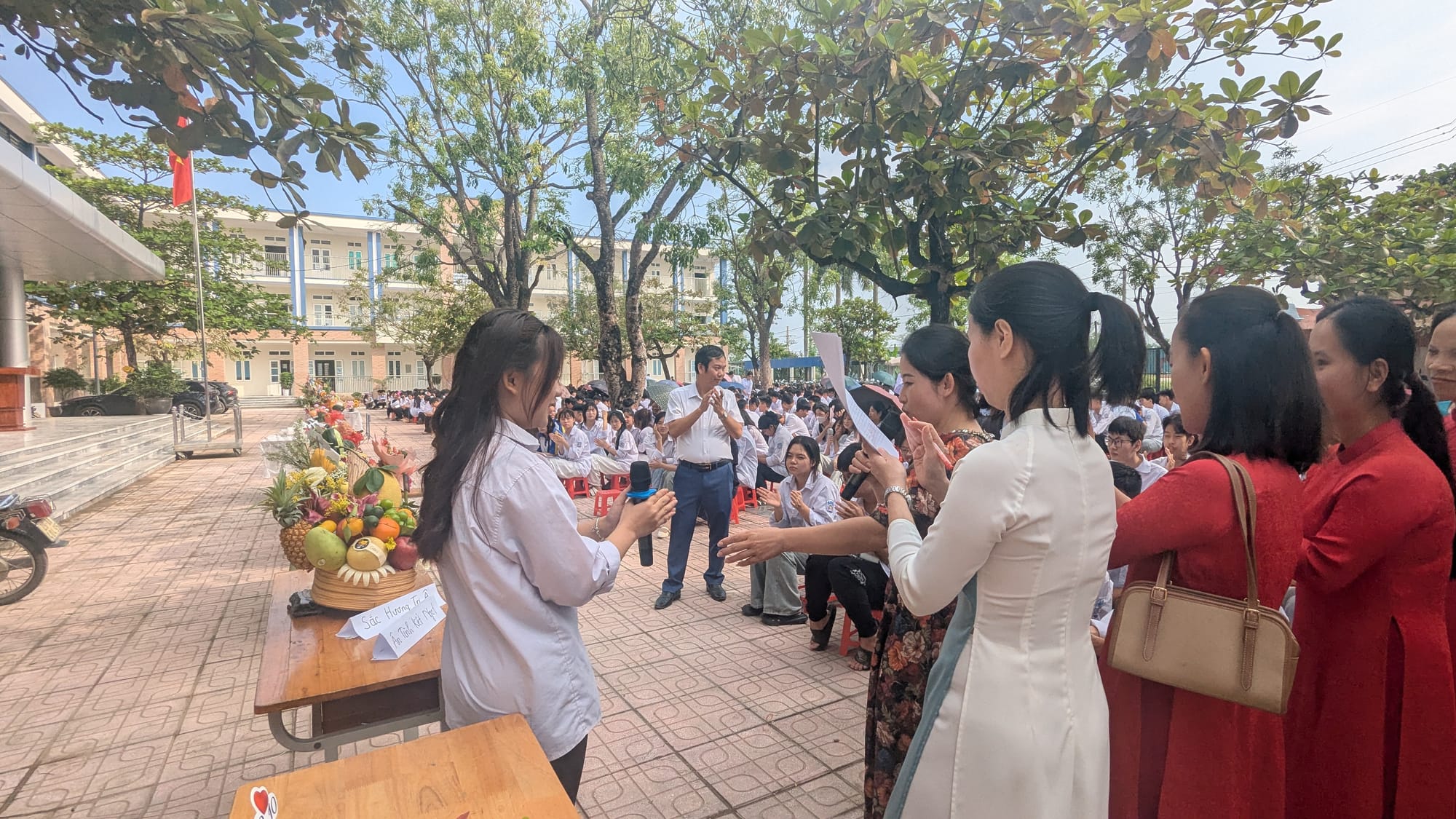
After this, a representative of each class had about five minutes to give a formal presentation to a panel of six judges, women on the staff of the school. I tagged along behind them trying to pick out some of the words, formal words for well-wishing, and words about fruit and family.
One of the displays included the Vietnamese conical hat which is ubiquitous among women farmers who work outdoors, an obvious symbol of the hard work that Vietnamese women do for their families.
I was touched when one of my 12th grade students - a soft-spoken young man who has been trying so hard to reach a fluent level - had prepared to give his speech in English too, especially for me.
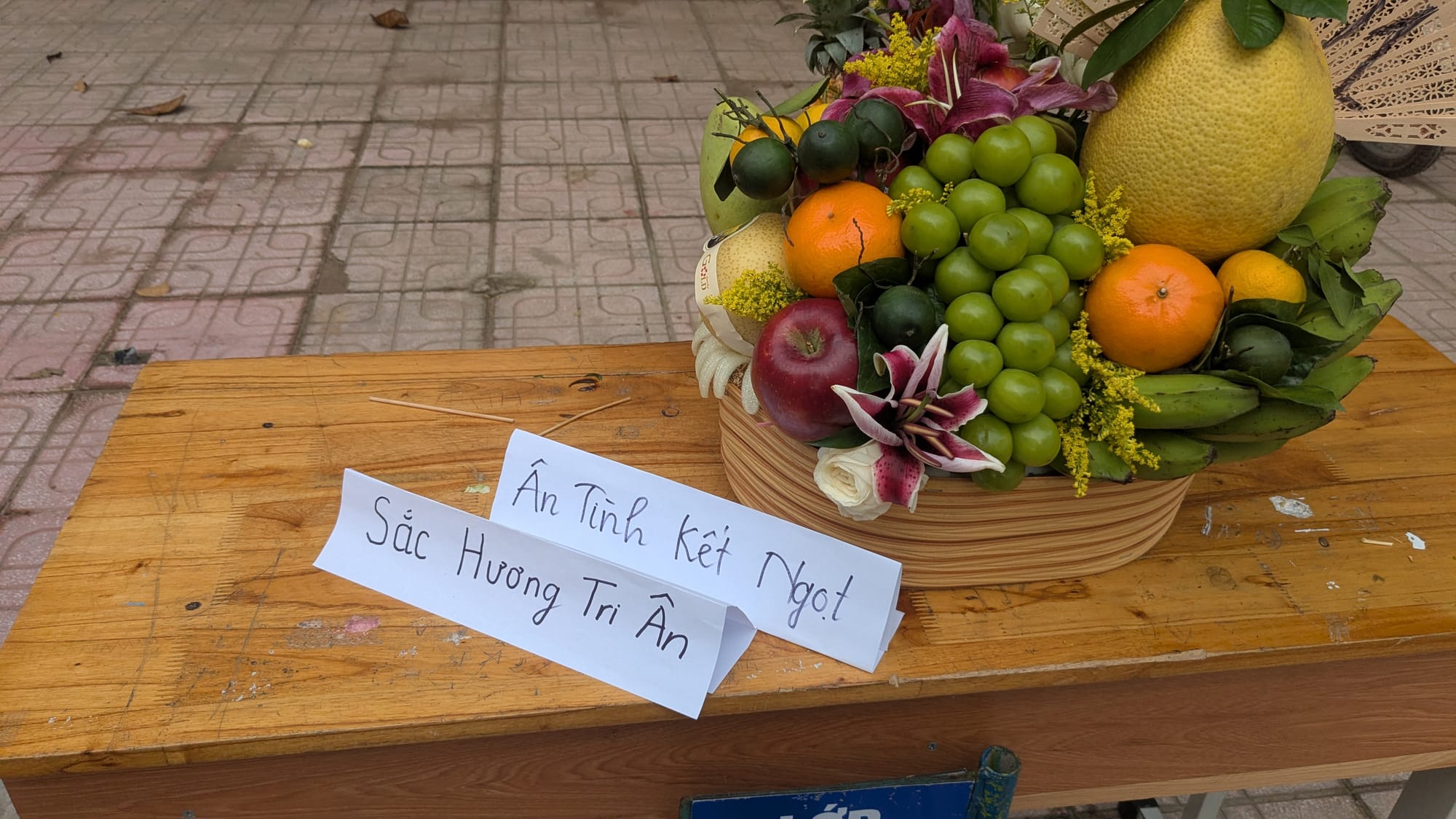
I learned that festive fruit trays in Việt Nam, for this holiday and others, should contain (at least) five types of fruit symbolizing the five elements of earth, a core belief present in their five-colored religious flags.
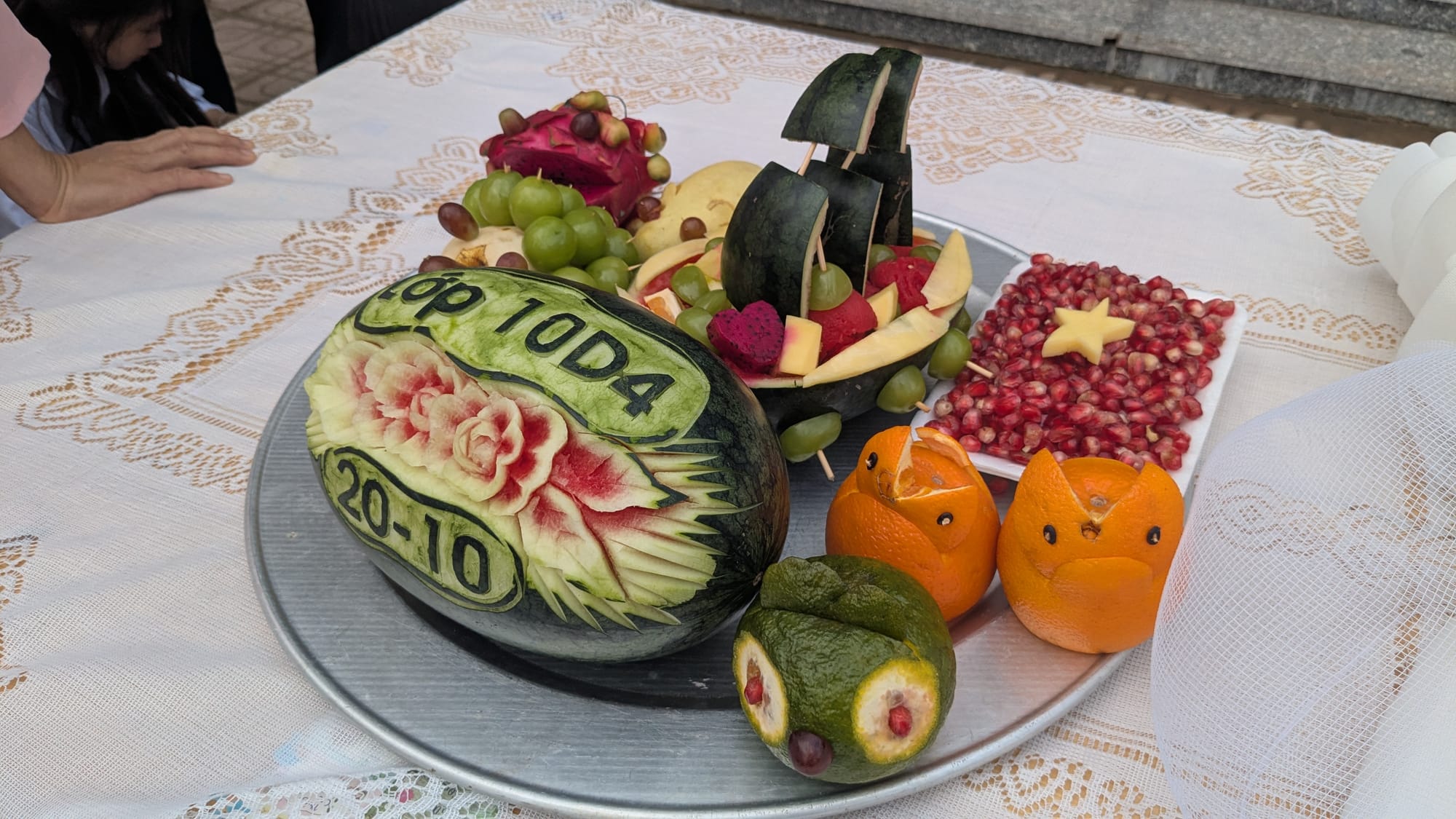
Meanings are ascribed to different fruits. Grapes for example come in clusters representing wishes for large and happy families. Dragonfruit symbolize wishes for good luck, golden persimmons: good fortune, and the white lotus flowers: beauty.
Some of the students from one class started shouting at me, "Teach-uh! Cuh-ris!" They pointed at their display and gave me a thumbs up. As it happens, I had an English lesson recently where "judge" was a vocabulary word, so I told them: "Thầy không phải là giám khảo!" (I am not a judge!) They laughed.
But if I were a judge, I would give them all ten marks (full score) for their creativity, collaborative spirit, sense of fun and joy, and for the warm generosity they show me in always trying to include me happily in their traditions.