Readings: Hà Nội in the Old Days, Pt. 7
The translation methods used are hasty and poor quality; anything written here should not be taken as well-researched fact. Each section below represents a chapter in his book. This is only summary, and I have tried to capture the flavor of the writing, purely for my own edification.
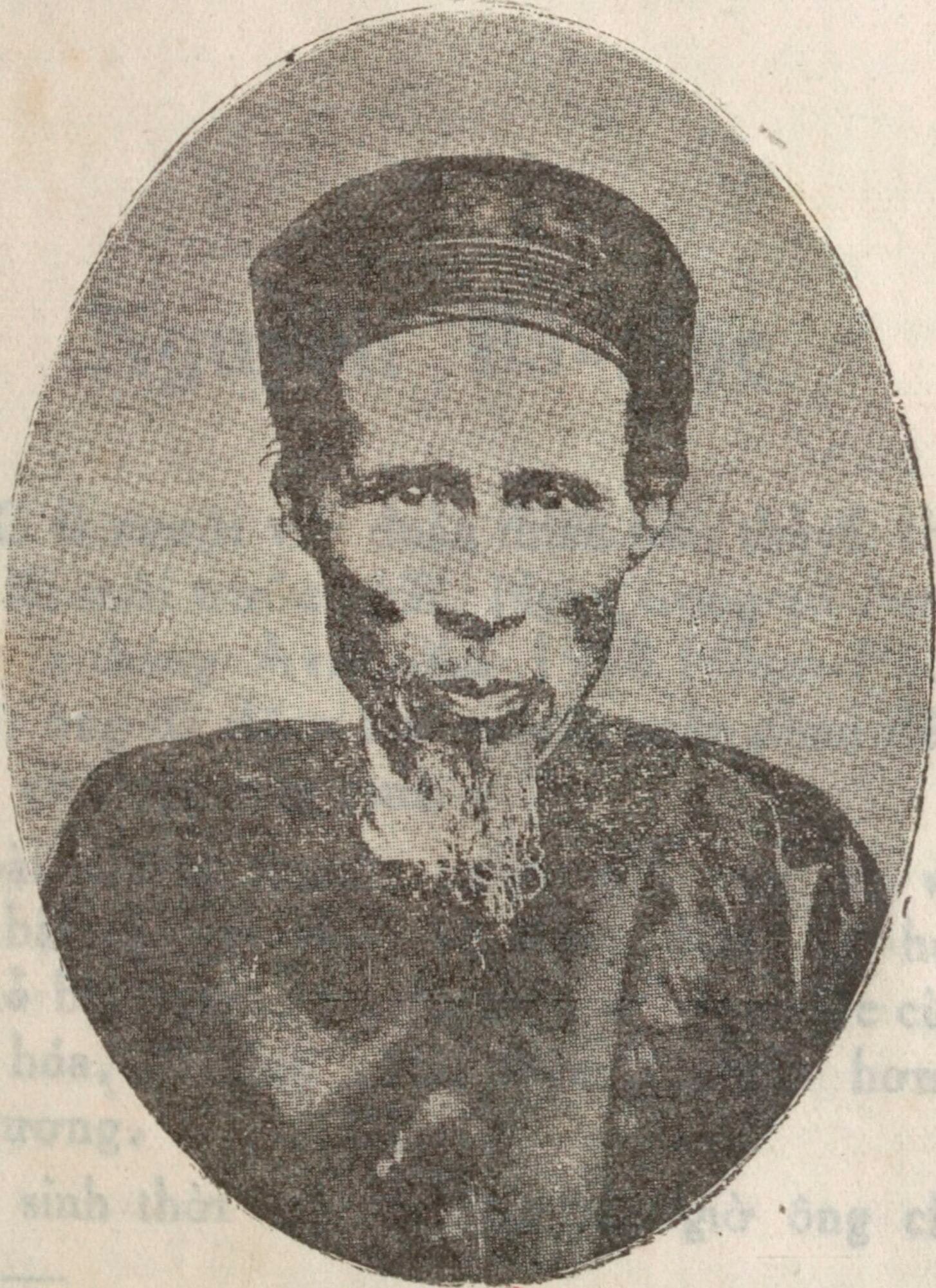
Author Nguyễn Bá Học (1857 - 1921)
Nguyễn Bá Học was considered a new type of novelist, more concise than authors of the previous generation.
He was originally to be a teacher. He studied Confucianism but failed his Imperial exams twice. He lost his father and older brother at a young age and had to go to Ninh Bình to study. His mother worked hard to send him two quan per month, but on this amount of money food was scarce and his torn clothes had to be tied up with bamboo strips.
There was also a lot of turmoil in the North disturbing his study, so he followed his sister to Hà Tĩnh in Central Việt Nam. Her Chinese husband had opened a grocery store there and Học learned the business, but it soon closed down due to financial losses.
At the end of the 19th century, the French started opening schools to teach French and Vietnamese. The new language interested him because it was easier to learn and he could read and write within a month. Not long after, he took an exam for teachers and was surprised when he passed. He was given a job in an elementary in Sơn Tây. Later he taught in Hà Nội and Nam Định for a total of 31 years. While teaching he would translate interesting articles about Western ideologies. When he retired at 60, his pension barely covered his large family, so he turned to writing short stories and articles and was published regularly.
His writing style was unusual for its thoughtfulness and worldly principles, simple but full of humanity. He did not write much but it was pioneering and had social significance for the people.
In his article Advice to Students he said: "There is nothing better than literature to convey cleverness while harming the mind. Because literature is good for emotion but not for reason; the truth does not make good literature. So it is not practical education. Students should practice debate and ethics and know about matters related to running the country. Brutal people write petty writing. Weak people write detailed writing. People of fame and fortune write with only their self-interest."
He also wrote: "The road is not difficult because of many rivers and mountains, but because people are afraid of crossing rivers and mountains."
The Wedding of Vũ Trọng Phụng
When Vũ Mỹ Lương was 1 year old, her father passed away. He left 4 wives and 16 children. She was the youngest daughter of the fourth wife. Her father was a healer and her mother continued his work, selling powders and plasters - treatments for boils and to blacken teeth - under the banyan trees of Mọc Market. Her family had enough money to spoil her; she stayed home with her older brother Quy. When her mom would bring home rice cakes for them, she would give the biggest portion to the little bully. When he was about 7 or 8 he poured beads into her ears while she slept. She woke screaming in pain, was rushed to the market where a barber tried to remove the beads with his earwax remover. But he couldn't get the deepest beads and she would be a little deaf all her life. Growing up she was hard-working and friendly and good at sewing.
She would sew charms and make fruit clusters to sell at the Đoan Ngọ Festival. She would carve animals in dough or green papayas for Mid-Autumn Festival. In her free time she went to her grandmothers' bakery to learn more about baking green bean and rice cakes.
Many people tried to play matchmaker for the young Ms. Lương, but she refused all her suitors. Her dream was that her husband would be someone who was good at writing poetry.
When one of their neighbors learned of this dream, he thought of Vũ Trọng Phụng. Phụng had also lost his father at the same age and gotten a scholarship to go to the Buoi School by writing a letter to the principal in French. He had worked his way up and now was a successful author, poor but well-respected.
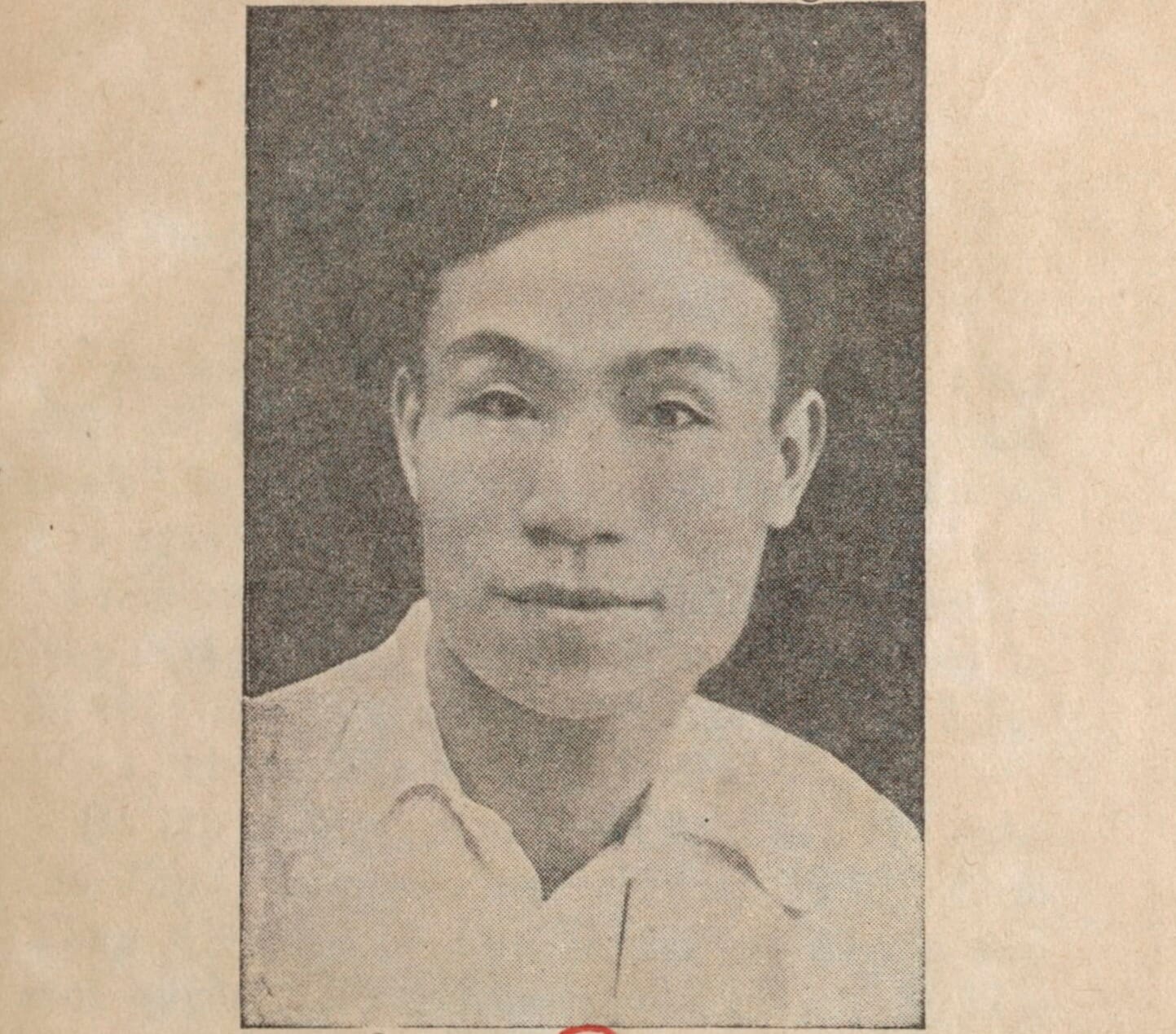
From their first meeting, it was love at first sight between Phụng and Lương. He wrote his love a passionate letter every week and his feelings were so great they were as long as short stories. He proposed to her by the end of the year. They went to an astrologer and learned that their birth years showed that their destinies were compatible. The astrologer also gave them a good day for the wedding in January 1938.
An engagement party was held by Phụng a month before the wedding. Many families in Giáp Nhất village received a package containing one bánh chưng (a square rice cake), one bánh dầy (a round rice cake), a package of spring rolls, areca nuts and betel leaves.
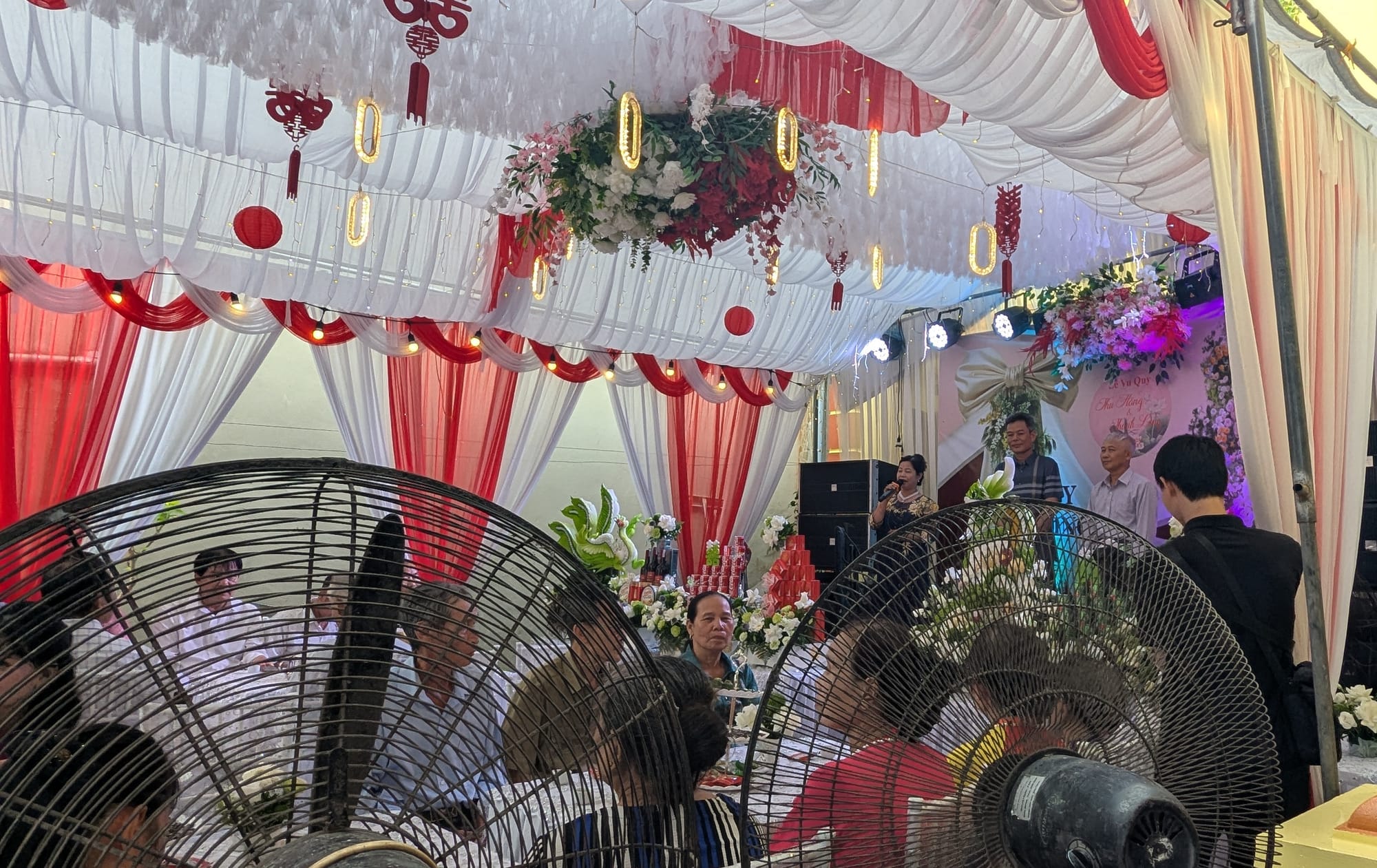
The villagers and relatives came to help set up for the wedding. Five main rooms and three side rooms are all filled with tables and chairs for the feast, and an additional tent in the yard was necessary to hold the guests. The feast lasts for two days and several pigs are butchered. Invitees bring tea, wine or money wrapped in red paper.
In the early morning, the village children waited by the pond to see the wedding cars arrive. Closer to noon, the groom's party arrives in 10 black cars driving single file. Phụng's writer friends are part of the party and when they get out of their cars there is a mix of traditional Vietnamese clothing and European clothing. Phụng wears a turban and silk shirt.
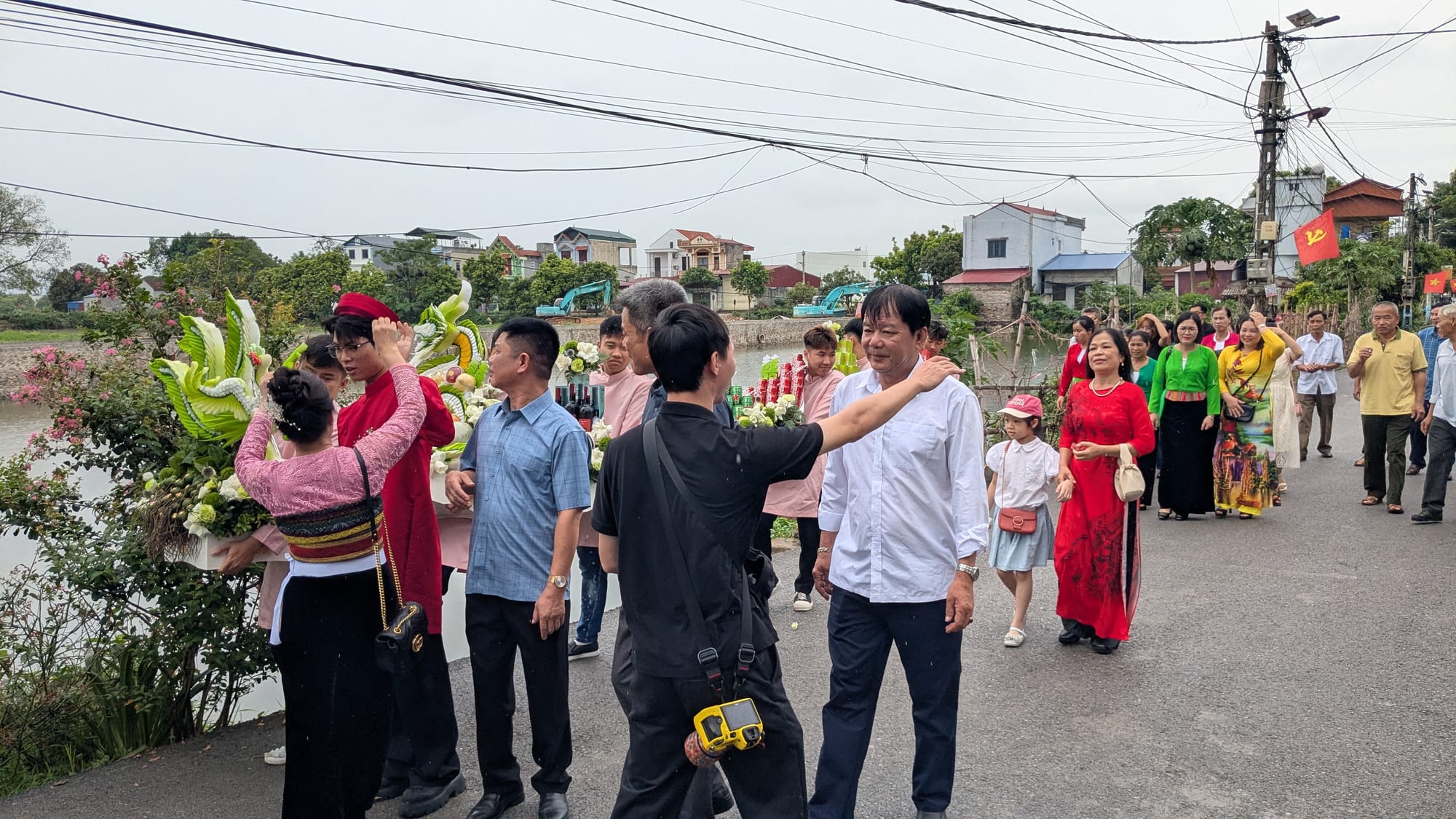
At every wedding the children come to tie a rope, and the groom's family must hand over an envelope with five or six coins to pass it. But they heard that there would be journalists attending so they told each other to not do this outdated custom. There was a sound of firecrackers, and the pink smoke splashed onto the orchid trellis around the wedding party entrance.
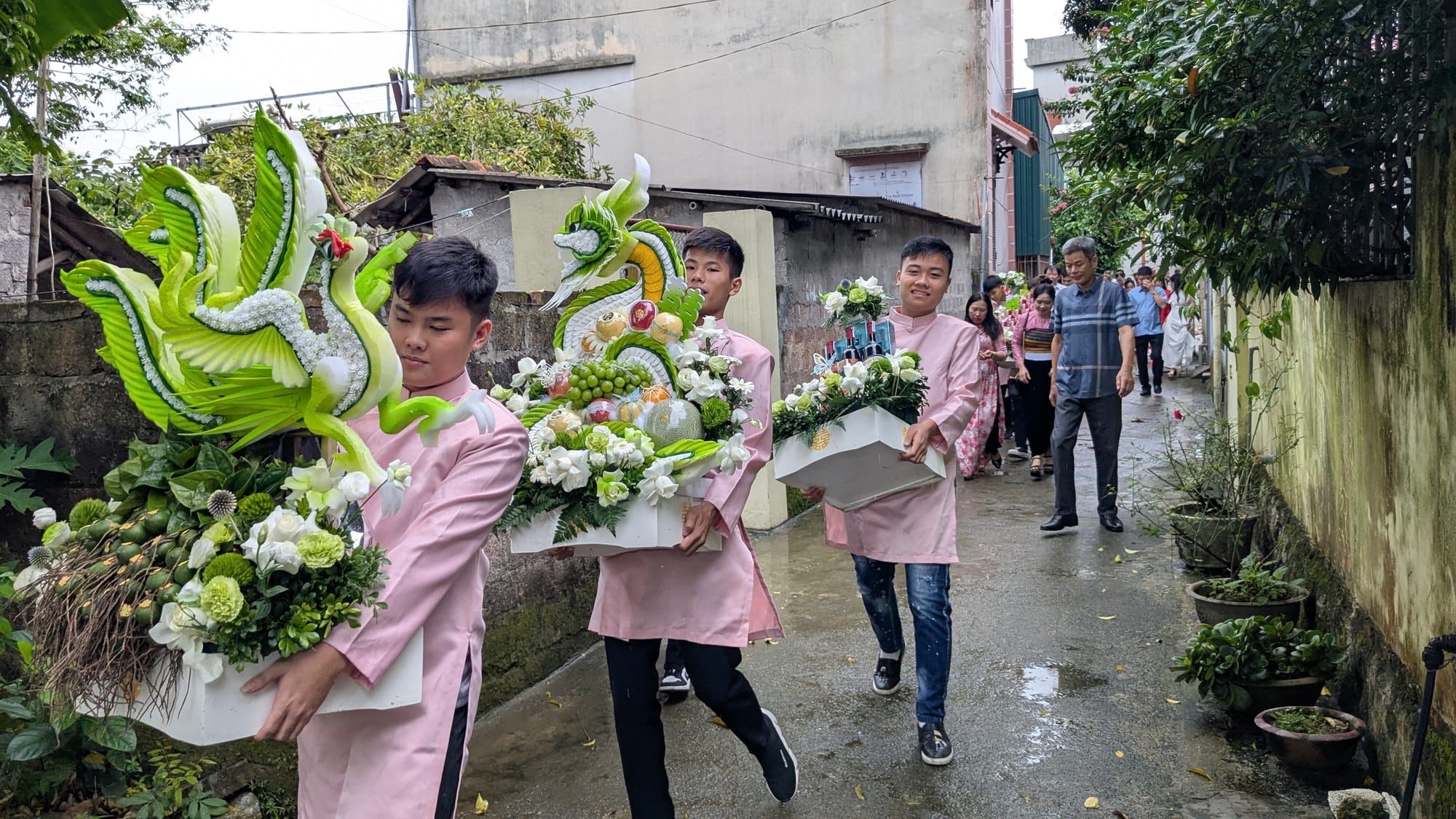
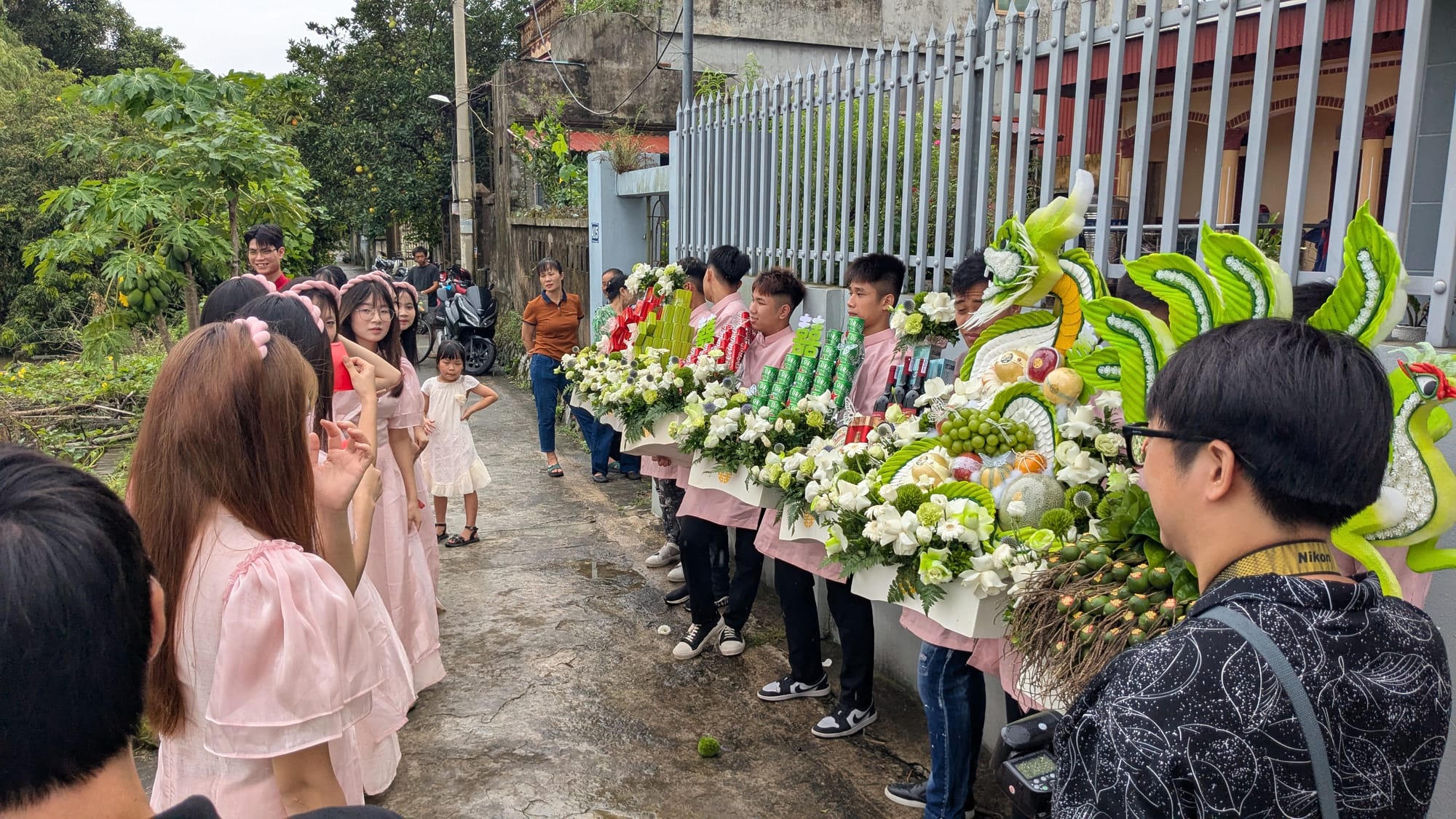
The groom arrived at the family altar just as the bride was coming out of the room. The groom stepped onto the platform, performed four rituals and bowed twice. Then the bride stepped onto the platform to perform the next ritual. The bride wore a pink áo dài, blue turban and gold earrings.
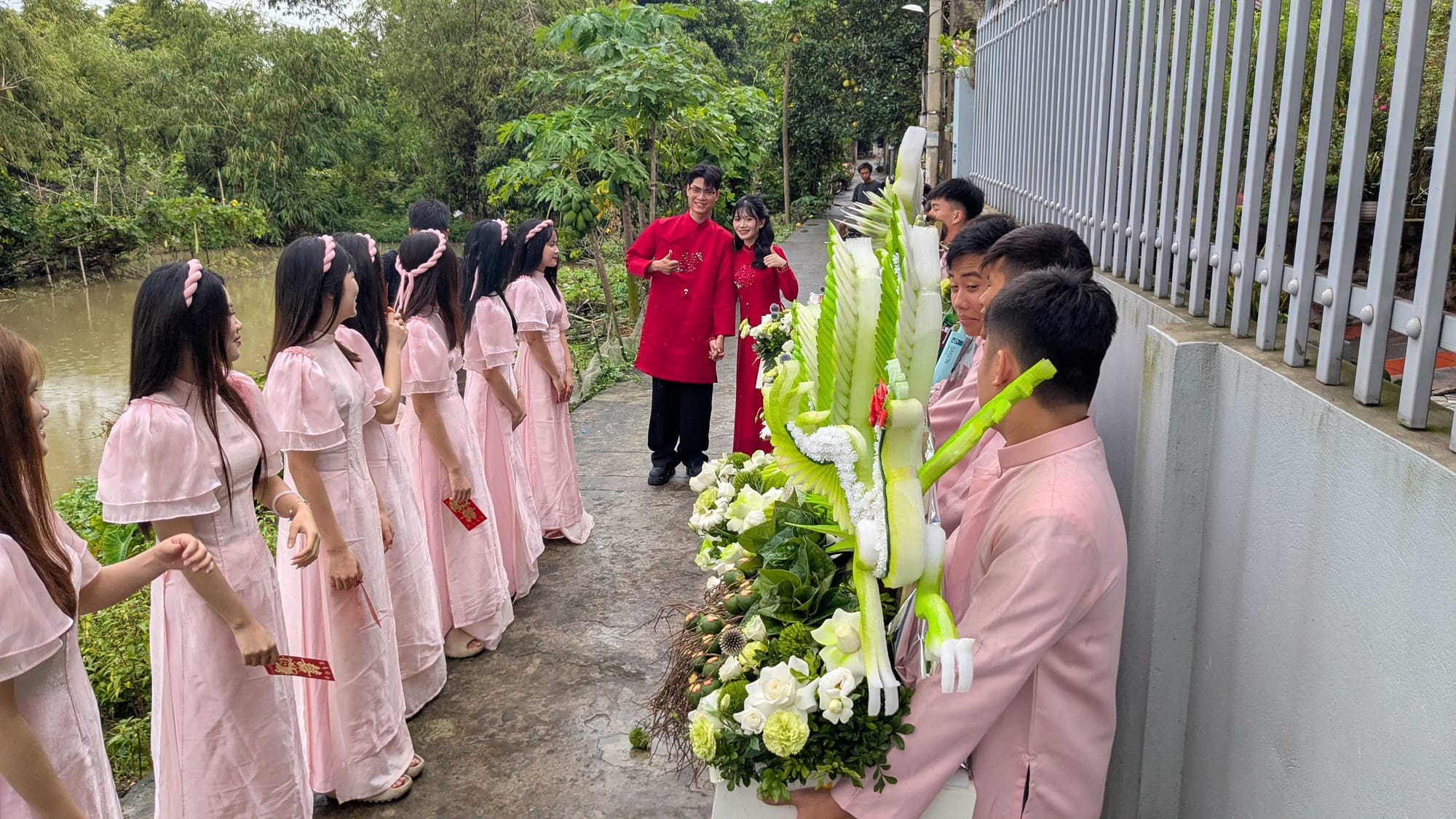
Concluding the ceremony, the groom's party asked permission to take the bride at the auspicious hour of noon. An old man with a white beard led the party, holding a censer leaving a smoke trail of incense behind him. Behind him were Phụng and two groomsmen. Behind them was the bride holding a fan in both hands to cover her face with two bridesmaids at either side. Two servants followed with trays of betel nuts. Two more people followed with lacquered boxes. Both families got into the cars and left the bride's village.
More than an hour later the motorcade arrived on Hàng Bạc street in Hà Nội to the sound of firecrackers exploding.
Among the wedding gifts were a table clock, a bronze statue, a felt hat, foreign wine, a moon-shaped lute, a tea set, and a box of Lucky cigarettes. Many famous writers also wrote poetry and one poem was framed to put on the wall of their home.
After this lavish wedding, the new Mrs. Phụng was able to open a small bookstore. The next year they were able to move out of Phụng's cramped attic apartment into a proper house.
By this point, his tuberculosis was in its third stage. After half a month in his new residence, the great writer passed away on October 13, 1939, at the age of 27. His last work was the novel "Winning the Jackpot".
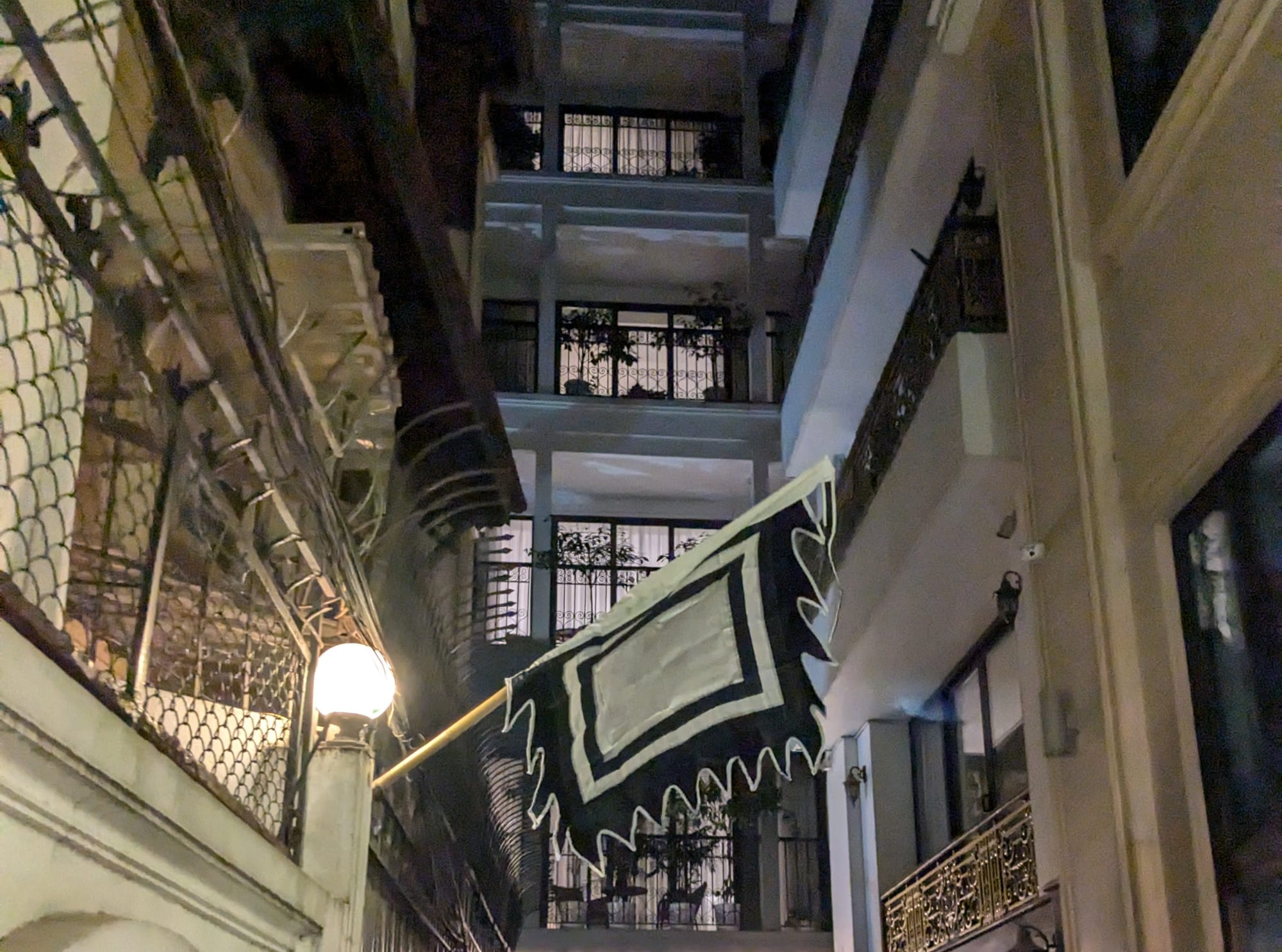
The Funeral of Vũ Trọng Phụng
A hearse pulled by two horses quietly departed from 73 Ngã Tư Sở to the cemetery, followed by 300 people walking or pushing bicycles. The young wife's cries were heartbreaking. A woman next to her held her tiny daughter, less than a year old. A cap was put on Lương's head made of white cloth, and she groped at it like she was trying to pull it off.
"How many people have died leaving nothing to remember?" the author kept thinking. Lost in thought, the procession went on ahead of him. He walked more quickly to keep up. The followers all wore black with white stripes and black conical hats.
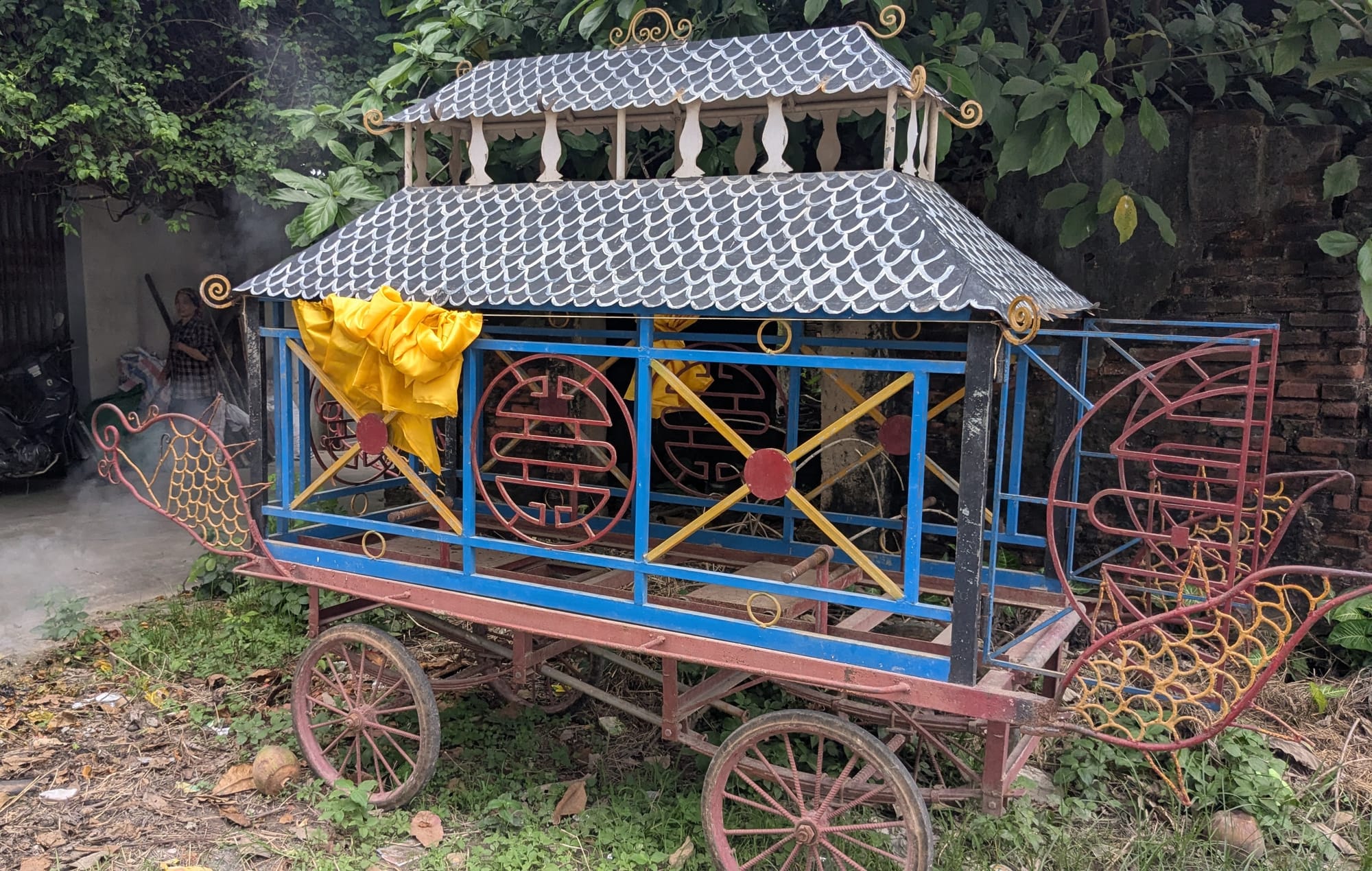
When the coffin was lowered into the freshly dug grave, the poet's wife jumped in on top of it and had to be dragged out. Everyone tried to comfort her, saying it was fate and there was no way to avoid it.
The famous poet Lưu Trọng Lư read the eulogy. He said: "A writer's name lives forever. You turned defeat into victory; death can no longer do anything..." The poet Bùi Huy Phồn had written the couplet:
"The Human Trap" is set cleverly by nature
From "The Storm" came "Lucky Fate"
"Win the Jackpot" did the literary world
But suddenly "Love Ended" "Without a Sound".
The poet constructed the poem using titles of Vũ Trọng Phụng's works.
About Time in Việt Nam
In the past, time was calculated by moments. A day had 12 hours.
The middle hour was noon when the sun reached its peak. This is the Hour of the Horse. When the chickens enter the coop is the hour of the Rooster. When the roosters crow, it is the hour of the Tiger. It is a simple but inaccurate way to tell the time.
After the French occupied Việt Nam, they built the Phủ Liễn observatory in the port of Hải Phòng. Then they set the official time for all of Indochina on July 1, 1906. The official time zone was set as the 7th time zone, shared by Thailand and Indonesia.
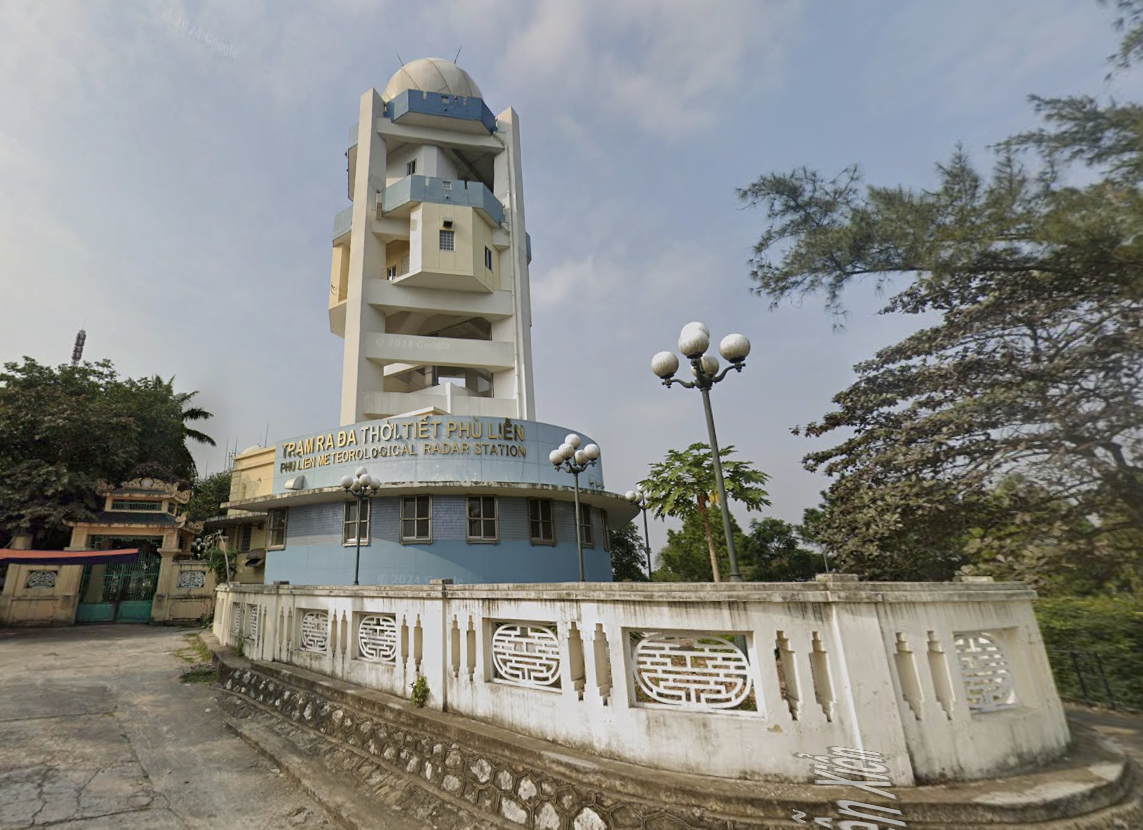
The Vietnamese people were very familiar with this time zone, but at the end of 1942, the Governor General issued a decree to move Indochinese time to the 8th time zone, one hour faster. It caused a disturbance without any benefit.
After the coup against France on March 9, 1945, Japan assimilated Indochina into their time zone, which was the 9th time zone, disrupting life again. Everyone felt resentful, but no one dared protest.
After the Geneva Agreement on July 20, 1954, Việt Nam applied the 7th time zone which is based on Hà Nội's longitude. President Ngô Đình Diệm in the South declared that the South would be 60 minutes ahead of the North. When the country was reunified in 1975, all of the country was united under the 7th time zone.
Vietnamese Circus
The games of dancing and rope climbing have existed since the Ly and Tran dynasties. But the circus was born much later. First, there were foreign circuses coming from Britain, America, and China. At the end of 1921 in Sài Gòn, the New Việt Nam circus group of André appeared.
On December 5, 1922, a round tent was erected for the first time in Hà Nội at the corner of Hàng Da market. For 5 eents, people could attend to see acrobatics, flying, contortion, jumping through rings of fire, juggling, and dwarfs. Elephants, tigers, monkeys, bears, and leopards performed tricks.
Not long after, Hà Nội had several circuses. After the war years of 1946-54, circuses all but completely disappeared. But when peace was restored, a circus venue was formed on Trần Nhân Tông street at the corner of Lenin Park.
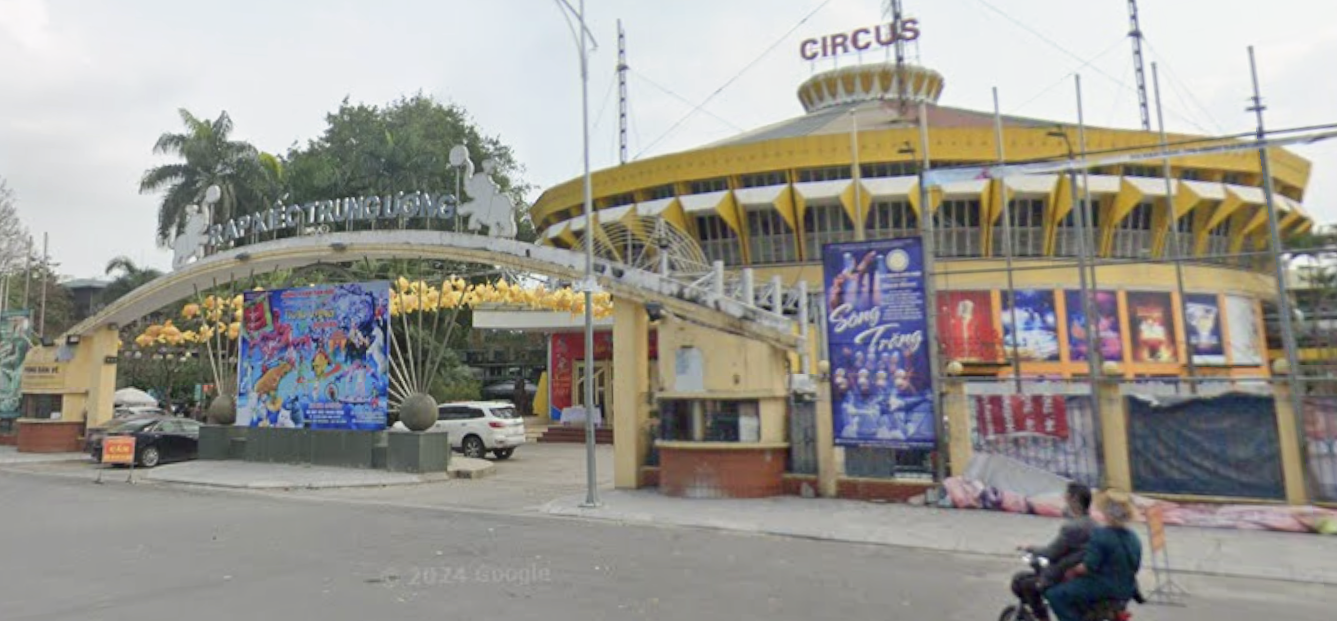
During 40 years of performing for the public at home and abroad the Vietnamese circus has been particularly appreciated overseas, where sometimes the theater has to perform 5 shows a day to meet demand.
A Glorious Time in Hà Thành
At the end of the 19th century in Thành Thị village, a deputy village chief had a beautiful daughter named Lan whose reputation spread far and wide. Her family had a wine-making business so every day she brought her wine to sell at markets near and far in the countryside.
At 17, she was even more beautiful than expected and caught the eye of the village chief of Kim Sơn in Ninh Bình. Her father was in debt and forced her to marry this prestigious man. She cried her eyes out and was unable to bear to marry an old man who still played drums, so one night she left and escaped to Hải Phòng.
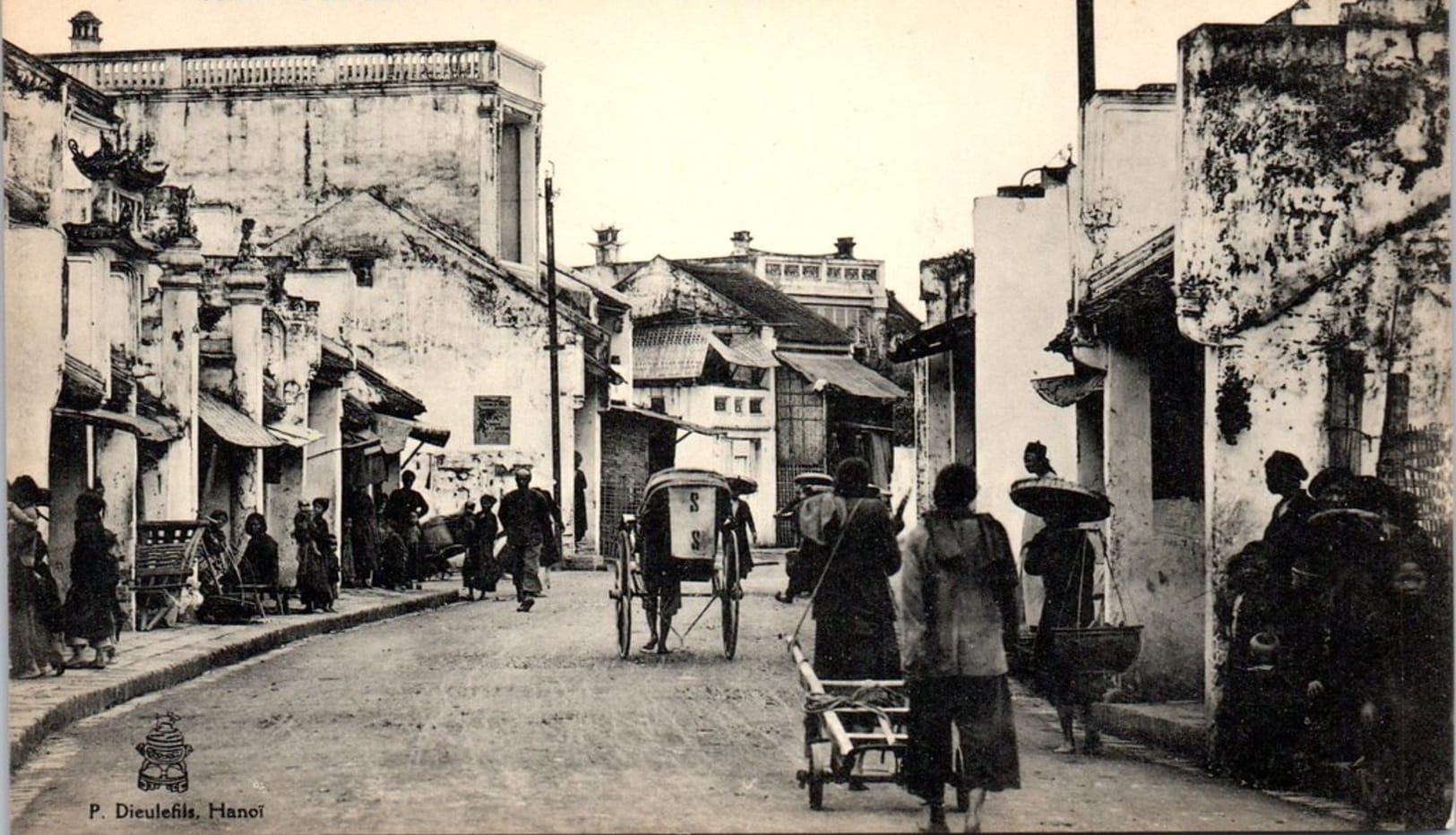
She found a shoulder pole and wandered around selling fruits and vegetables until she fell in love with a young Chinese grocery store owner named Hồng who married her. But not long after, he went bankrupt and left the country, leaving her alone to cry, missing her father and mother in the lowlands.
Then, a friend who was married to a Westerner came to Lan and told her about a Western official she could marry and so she met and married Laglan. The French were renovating Hà Nội, filling in lakes and rivers, and tearing down the walls of the Citadel. Relying on her husbands' contracts and power, Ms. Tư Hồng brought workers from her hometown to fill in the many contracts for new buildings. Ms. Tư Hồng became rich and famous.
Suddenly the Central region was hit by a great flood. Hearing this, the rich woman rushed to collect rice from Northern provinces and transport it to the Central regions to sell at a big profit. But when the boats docked they were brought in for questioning by the authorities. Ms. Tư Hồng quickly told them that she gave the rice freely to the flooded people to save them.
The news quickly reached the Huế court. King Thành Thái saw her as a compassionate woman and issued a decree to confer on her the rank of Fourth Grade. The deputy village chief of Thành Thị suddenly opened his eyes and learned that this rank had been conferred on him as her father.
She returned home and threw a great party for many people including businessmen like Bạch Thái Bưởi in her hometown. She knew how to say French words like 'merci', smoke cigarettes and drink French wine.
But her husband was suddenly recalled to France and he left her in Việt Nam. She was angry with him for abandoning her and eventually remarried another Westerner, a bearded priest who had broken his vows and was ten years younger than her. She knew the art of marrying a westerner.
God had a sense of humor because after all this she ended up getting a divorce. But a few years later she passed away and her funeral and interment was at Hàng Bột Church which she had given a lot of money to help erect.
Many people questioned why she was allowed to be buried here and saw her story as either tragic or humorous.