Living in Việt Nam, Pt. 9 - Young Buffaloes

As usual, I have tried to obscure the name of the high school and village where I live and serve as a volunteer. I have changed the names and descriptions of some of the people who appear in the story to protect identities. In this chapter in particular, I had to redact a name and change the meaning given for it because it is the name of the school, but I have tried to capture a similar meaning for the sake of sharing the essence of my story with you in the best way.
June 2025
On a normal Monday morning, the courtyard of a Vietnamese public school is bustling with activity for the flag ceremony. The students pull stacks of plastic stools out from underneath the stairwells and line them up in neat rows on the tiled courtyard, two rows per class. All of the tenth-grade classes on one side, then eleventh-grade, then twelfth-grade. They all stand and sing the Vietnamese national anthem and listen to school announcements followed by a pep talk from the school's principal.
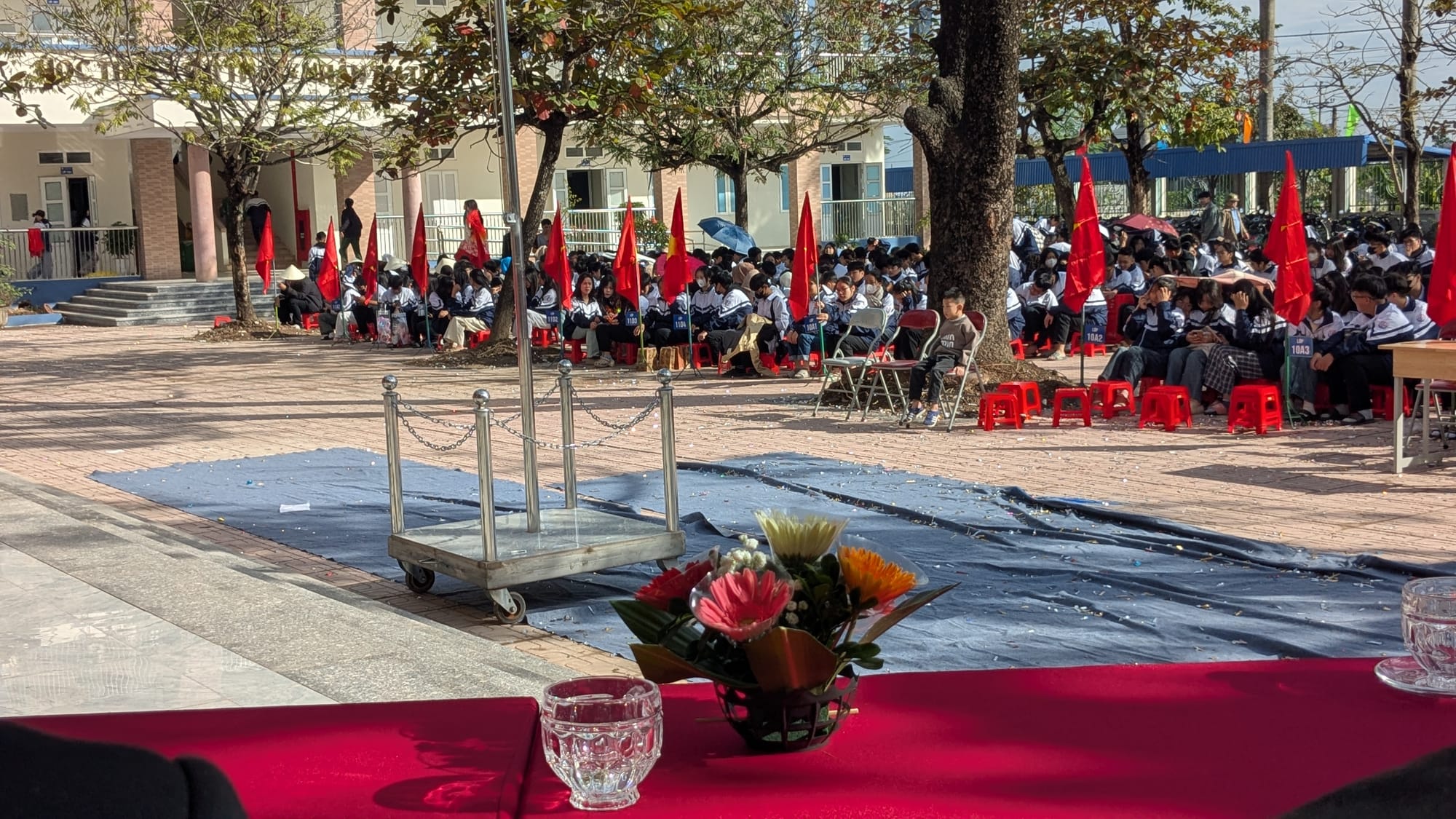
But on May 26, the energy is different. It's buzzing. Because this is the graduation ceremony. All of the teachers sit behind long tables on the stage looking down over the students. When the sun really starts to get scorching hot (approximately 7:40am...) some of the teachers leave the stage to take refuge inside.
A few students sing karaoke songs. The top scorers in each grade are awarded certificates and their homeroom teachers come to take pictures with them.
Afterwards, the rest of the teachers retire to the teachers' room while the twelfth-graders go to finish preparing their rooms for their graduation party. A catering truck arrives with lunch.
I watch the students put away all of the stools and flags for the graduation ceremony including blue iron flags bearing the number of each class. I notice one student, Phạm, horsing around like it's his day even though he's only finishing the tenth grade. A particularly tall and skinny student, taller than me. One who had no interest in learning English and would often goof off in class. But after a few months if I gave him a patient look he would quiet down.
Phạm catches me side-eyeing him and comes over to me.
"Pho-to. Pho-to."
I agree and take a photo with him and shake his hand. I'm a little confused by this, as he's not graduating. But months later when school starts again, I realize he's no longer a student. Secondary school is not compulsory in Việt Nam and it is costly for parents. I suppose he knew he wouldn't be back, whether due to his grades or just needing to help his family with money.
The spread of food for a celebratory banquet is a little bit different than a normal meal. There are often whole prawns and other fried foods which are normally uncommon. Instead of the usual plain white rice, there is a mound of yellow-colored sticky rice, studded with coconut and corn for a sweet aroma and topped with meat floss. I can't explain why but I really love sticky rice. The hint of extra flavor is really subtle but comforting.
I sit next to the oldest male teachers, who mostly teach gym and are the most jocular and fun to be around. As the dishes are slowly distributed among the many tables around the teachers' room by the catering staff, with plastic wrap still over them, I try to name all the foods in Vietnamese.
"Xôi." (Sticky rice)
"Đúng rồi." (That's right)
"Rau muống xào tỏi." (Water spinach stir-fried with garlic)
"Đúng rồi." (That's right)
"Thịt bò." (Beef)
They laugh. "Thit trâu."
Chô? I think. Have I had this? Okay, it's clearly not 'chó' which would be dog. It's an 'ô' sound. Chô? Trô?... Oh! Trâu!
"Buffalo!"
An English teacher nods in agreement: "Yes."
"Ohh. Thịt trâu for the trẻ trâu."
The older teachers laugh and laugh. Trẻ trâu is a slang word for young men who don't act their age: usually the ones who try to act cool, get in trouble, don't study and only try to pick up girls. The words for "young buffalo" are used in the reverse order than they normally would be in Vietnamese since the adjective should come after the noun. So in Vietnamese it is like "buffalo youth". It was a favorite term among the volunteers when we're together, but I had never used it at work before, waiting for a good opportunity to make my colleagues laugh.
The English teacher gets very serious and tells me that the buffalo is a very important animal in Việt Nam, very hard-working, essential to the agriculture here, so eating buffalo meat will give you prosperity.
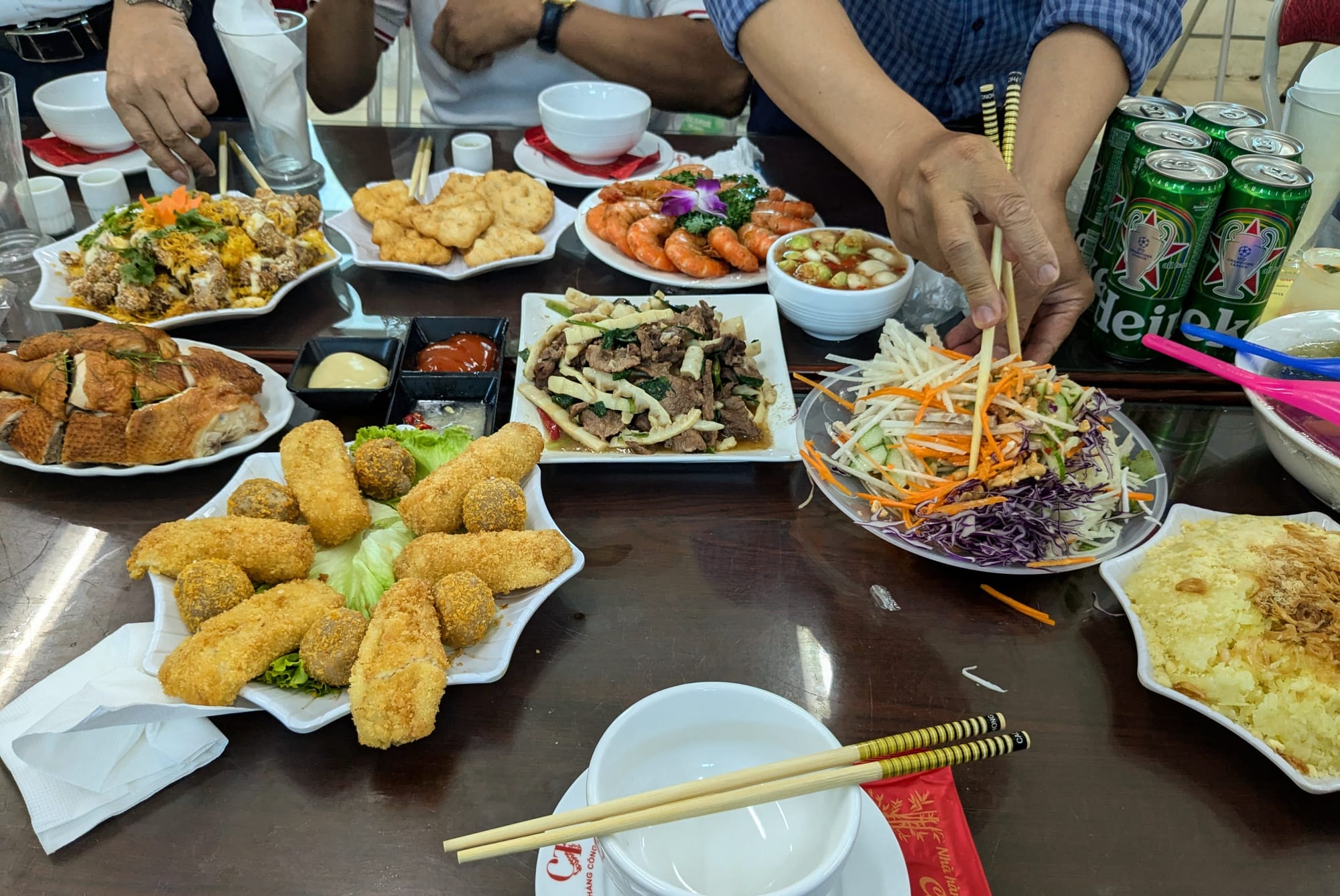
A number of the dishes are fried and the older security guard I call Chú (Uncle) looks at it and tsks.
"Chú không thích à?" (You don't like, do you?) He shakes his head.
Students like this food, I say. He laughs and agrees.
With the banquet set, slim cans of Heineken beer are passed out with acrylic glasses to pour it into. Despite Việt Nam having its own full portfolio of lager beers, ranging from the cheap to the local favorite to the slightly more expensive, the mystique of a Western brand means Heineken is often used for special occasions. It is brewed and canned here in Hà Nội. I think Heineken's red star logo has really been fortuitous for their marketing here.
"Okay, we will go to toast the graduating classes now," the English teacher informs me.
Nearly the entire teaching staff of the high school, at least 30 teachers, packs onto the slightly raised platform at the front of each senior classroom to toast them. Most of the kids drink Coca-Cola but I'm a little surprised that some of the boys have brought in cans or pony kegs of fresh beer and are toasting us with alcohol.
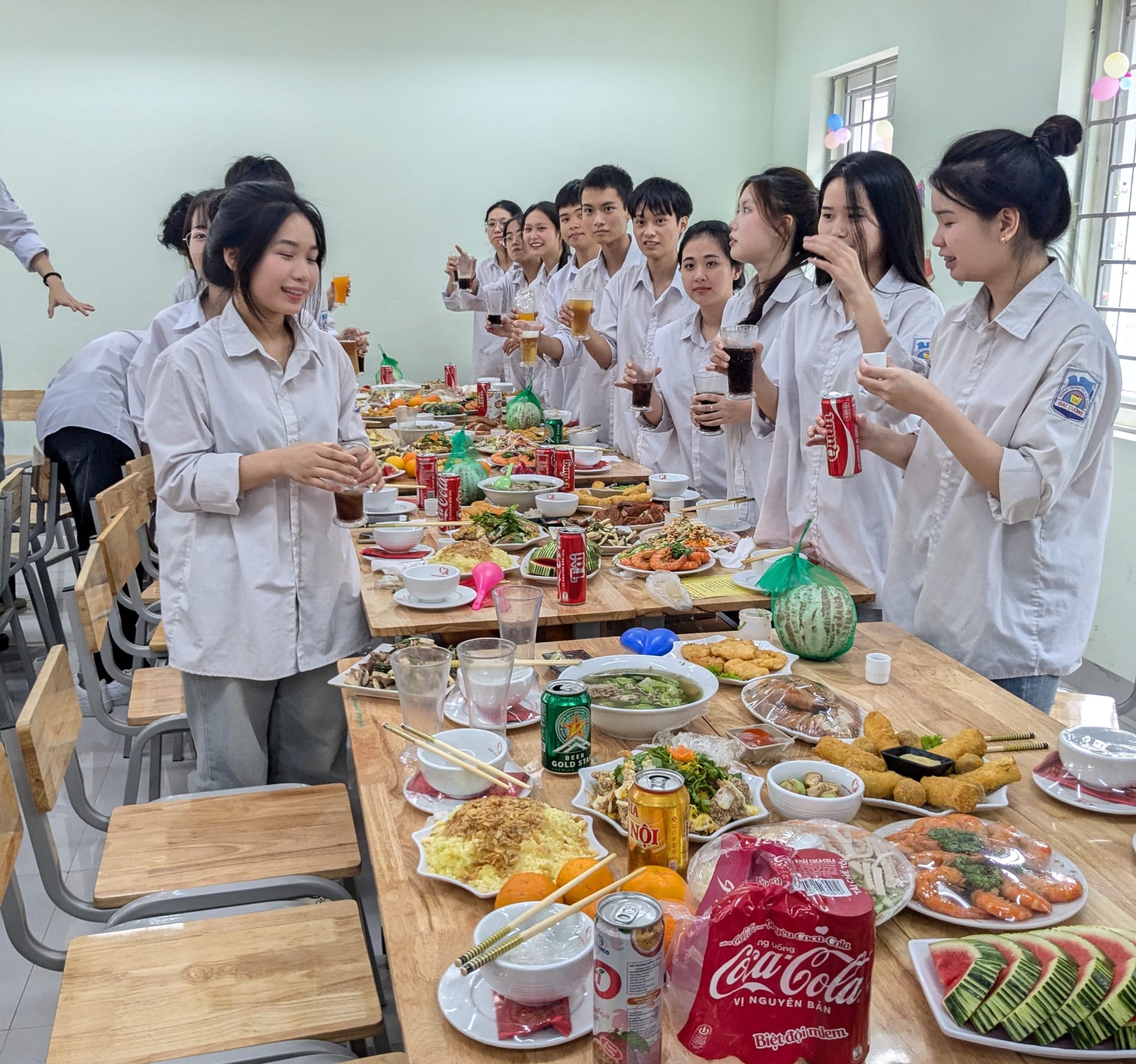
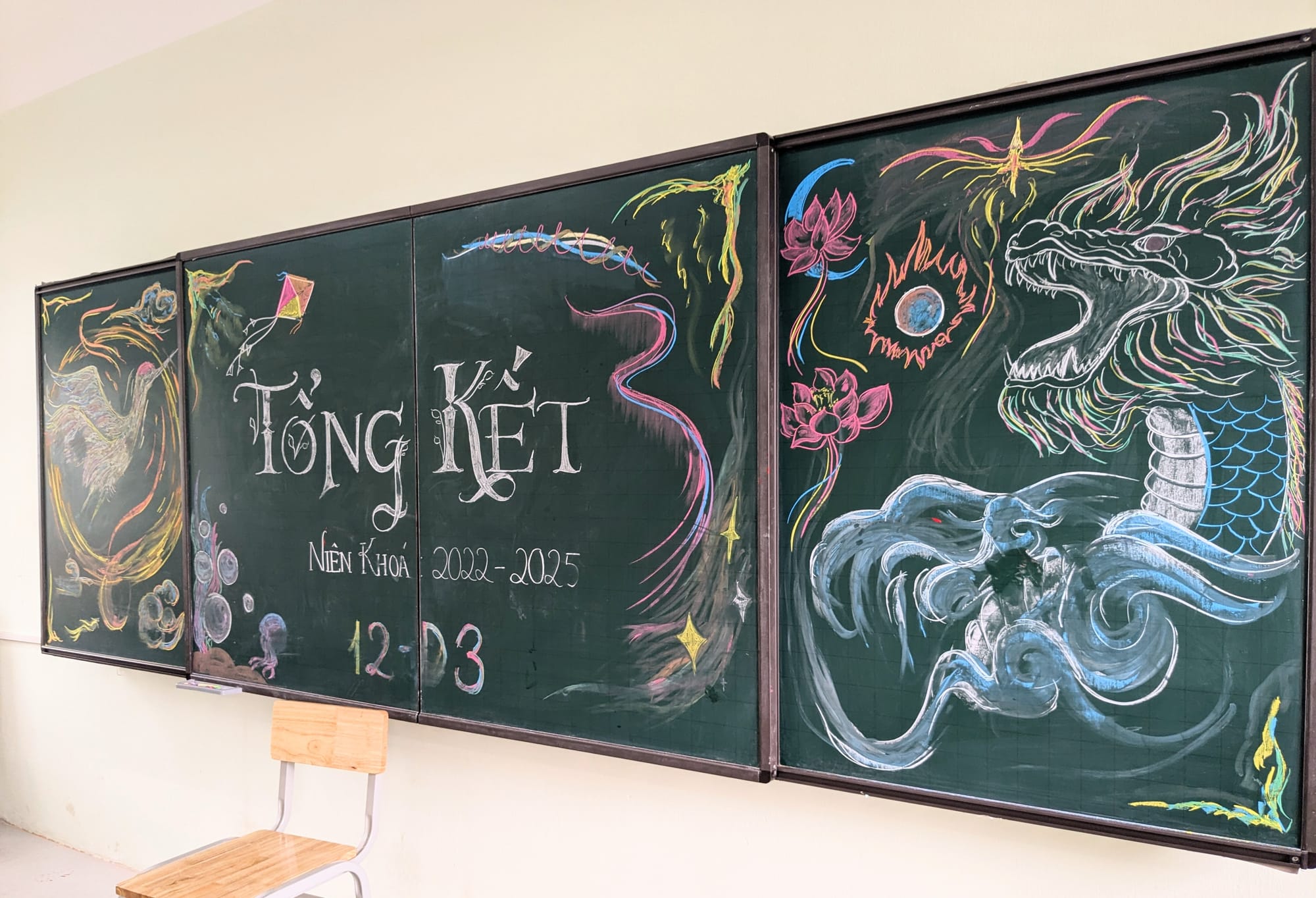
We do this in the classrooms of all six graduating classes. An elaborate chalk mural adorns the chalkboard in some rooms as the students have come to the school over the weekend to decorate their rooms for the party.
After eating, I hear a ruckus in the halls and the sound of running. The students are having a water balloon fight in the halls. Later, some of the students wield handheld firecrackers that shower each other with metallic confetti. The hallways are trashed after the party; the bathrooms are flooded with water.
The white long-sleeved shirts that the students wear every day for their uniform are now adorned with the signatures of their friends and classmates and teachers. I am delighted when some of the students run up to me and ask me to sign their shirts.
I sign them: "Good luck! Thầy Chris"
As the students scurry away down the hall, I hear them realize with excitement that I have signed it 'Thầy Chris' and laugh. Soon more students come to my room asking me to sign their shirts.

The next day I decide to try to sleep in a little, assuming that there will no longer be students at the school in the early mornings.
By 7:00am, I awake to the sound of motorbikes parking in the courtyard just outside my front door and teenagers shouting to each other.
What the heck? I think as I roll out of bed and hit the switch on my electric kettle to make hot water for a cup of instant coffee. Before I can pull on a pair of shorts, there's a little knock at my door and I hear one teacher ask another: "Is he asleep?"
I draw back the curtain and the mosquito netting and open the door to my librarian friend Chị who speaks a little English.
"Are you asleep?"
I say no, but her smile says she doesn't believe me. "Come to the gym. Help."
After my ready-to-go breakfast of hardboiled egg, fruit and coffee I walk over to see what's happening at the gym. I've never been in our gym before as it's been closed and in the middle of an active construction zone. The scene inside would make a great set for the TV series "The Last of Us". There are piles of furniture everywhere even up on the bleachers: wardrobes, wooden desks, chairs & stools, metal science laboratory workbenches with electrical wiring dangling from them. The roof has been leaking in several places leading to several walls to be draped with glistening green slime.
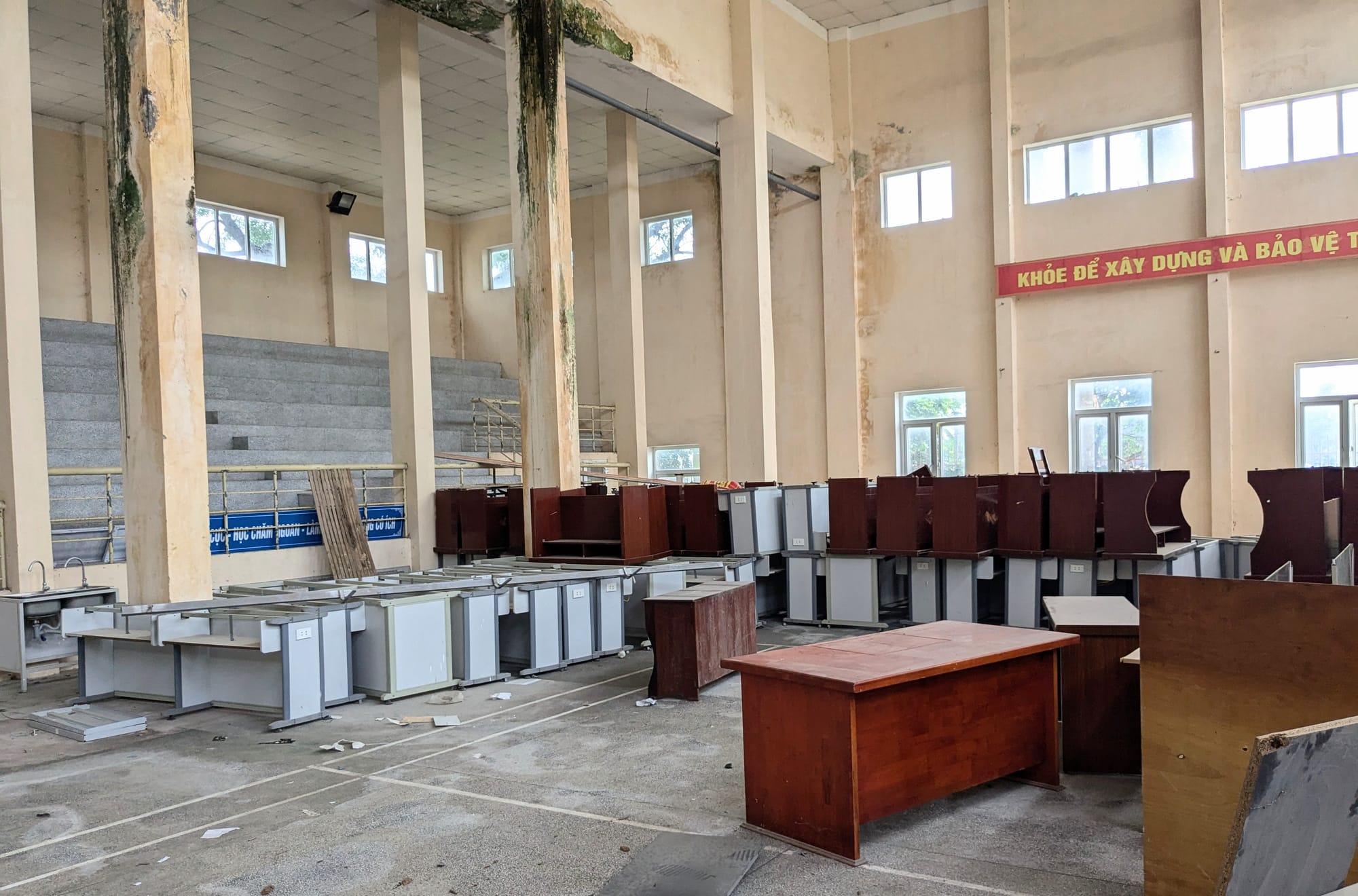
Our job is to move all of this furniture to rooms on the other side of the school so that renovations can get underway on the gym. Two classes of students come each morning on a rotating basis to help. I'm given a face mask and a pair of white cotton gloves. A man in green flannel and a wide-brimmed hat and a scarf around his face - totally protected against the sun's rays if not the heat - leads the efforts.
At first, it feels like I can't do anything right. No matter how I lift or carry things, they tell me to do it a different way. But I have to hand it to them, they know the best way to move each object that takes the least amount of physical toll.
A banner is strung up and tied from the bottom to the top of the bleachers, so that stools can slide down to the bottom. I'm skeptical, but soon there is a fast assembly line of people placing stools at the top and catching them at the bottom. Up until one of the stools falls over and its legs puncture the banner.
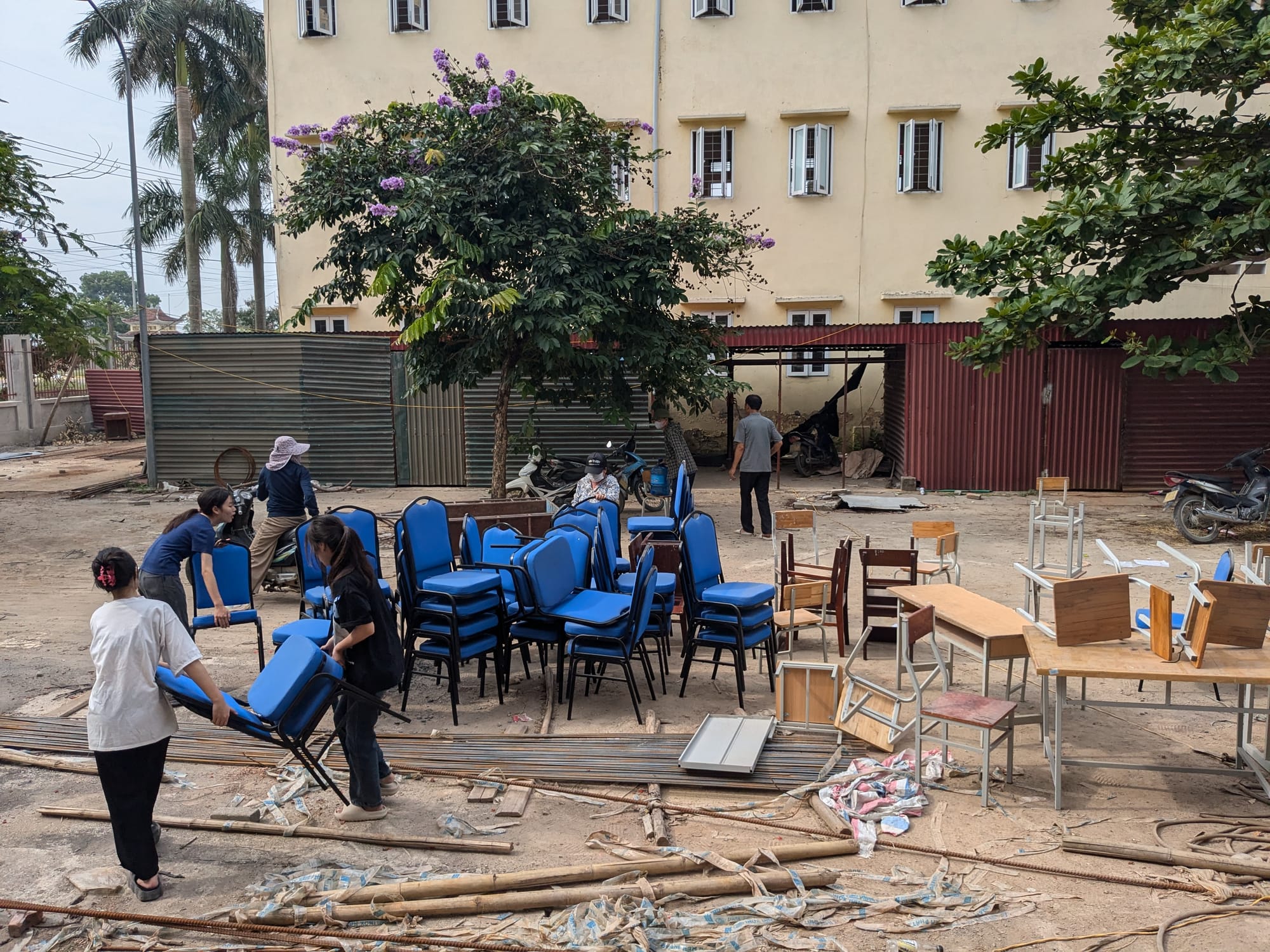
I try to follow some of the students to load the chairs outside onto a motorbike-pulled wagon to transport them to the other side of the school.
"Chris!" Chị calls me. "Stay out of the sun."
"It's ok, I put on sunscreen." It's not that hot yet, but they all seem concerned that I'm not wearing long clothing and a hat and a mask to cover my skin completely.
I pour some of the water from a 10-gallon water cooler jug into my own bottle, eschewing the communal plastic cup everyone is using. One of the other teachers is staring at me concerned and mutters something to the librarian.
"She is worried you're sick. You are..." She motions about the sweat running off my hair.
I smile. "I'm sweating a lot. It's okay. It's normal for me."
We finish at 10:00 am as the sun starts to blaze down. It is the first day of a couple of weeks worth of work.
I follow Chú to the vice principal's office where she has laid out fresh fruit and crackers for us.
"Would you like to drink tea or beer?"
"Beer?" I laugh. The security guard gives me a thumbs up.
The man in the green flannel shirt joins us and finally unwraps his mummified face. I almost laugh out loud now that I recognize Đạt, a physics teacher who is usually dressed in the sharpest business apparel of any teacher here.
I venture to use one of the Vietnamese words I have just learned in a sentence, saying: "Vietnamese are very hard-working."
Chị tells me: "You don't need to work tomorrow if you need to rest."
"Oh, I want to help! Em muốn giúp."
Chú toasts me proudly with his beer.
After blazing days, the nights in June in Northern Việt Nam are surprisingly nice and cool. In the evenings, I open my room up for a nice cross breeze. Children fly kites and sometimes massive swarms of dragonflies gather at third-floor height. Taking advantage of the piles of chairs and desks littering the corridors, I sometimes take my laptop to the third-floor to work with a view of the village and the dragonflies and to feel the breeze.
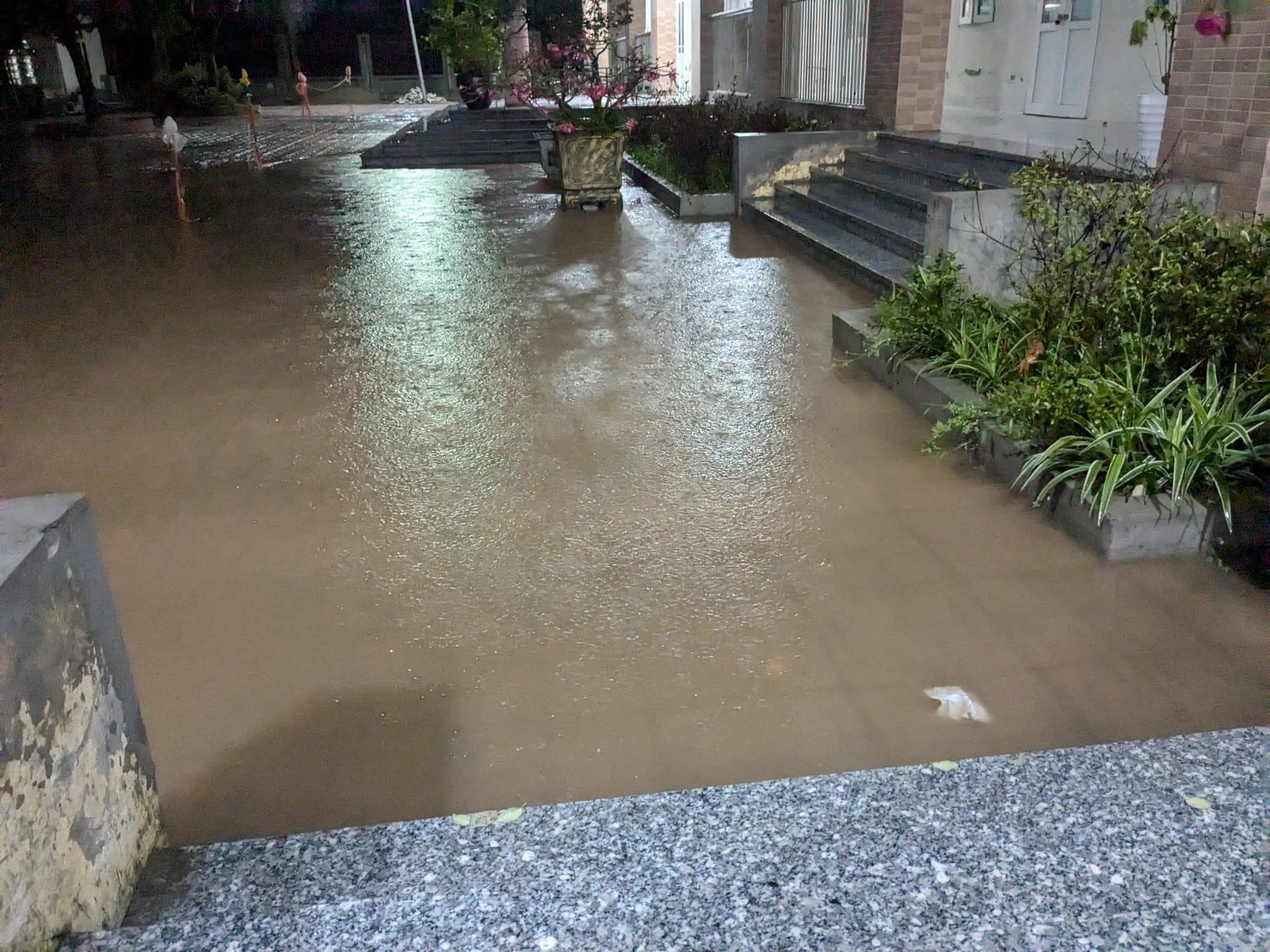
After the dragonflies appear, there is usually an evening storm. The rain falls so heavily that the courtyard of the school is quickly under six-to-eight inches of water. I test the water-proofing of my rain boots one evening, but this water drains away within an hour so I'm never forced to use the rain boots. They are more like emergency gear.
Shiny yellow frogs the size of lemons hop out of the water into the halls of the school. I have to shoo them away from my front door lest they hop in under the mosquito netting. On the other end of the room, a gecko with a shortened, snapped off tail crawls on my window mosquito netting snapping at the gnats attracted by my room's light.
"Okay, Stumpy. Time to go."
We have an agreement between us and he slithers away so as not to be trapped between the glass and the net overnight. I un-velcro a corner of the net to stick my arm out and pull the window shut.
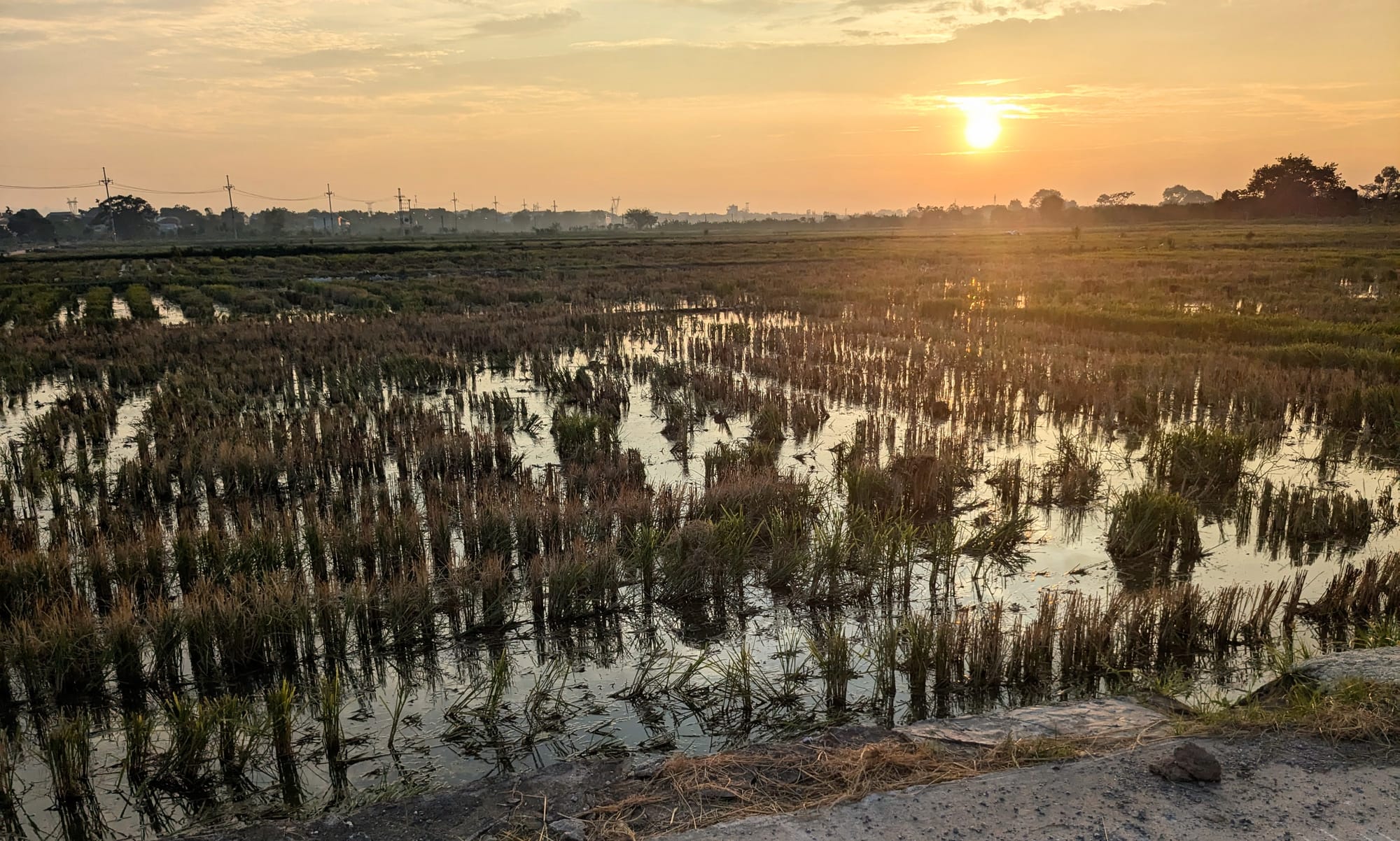
The rice fields do not look as pretty after they have been scythed down to stubble.
Nearly all of the villagers have at least a small patch of rice paddy, which must now be dried. Their rice has been to the mill for the first time to remove the straw but not the husks. In the morning, they pour all of their freshly harvested rice out onto the sidewalks and paved roads around their home. It bakes on the bright concrete all day, and is swept up hurriedly in the evenings before the storms come.
The rice is spread thin and often covers the entire street. While some people try to avoid walking or cycling on it if there is enough room, in most places it is common to walk or even drive vehicles over it. Slowly, so as not to kick it all over the place.
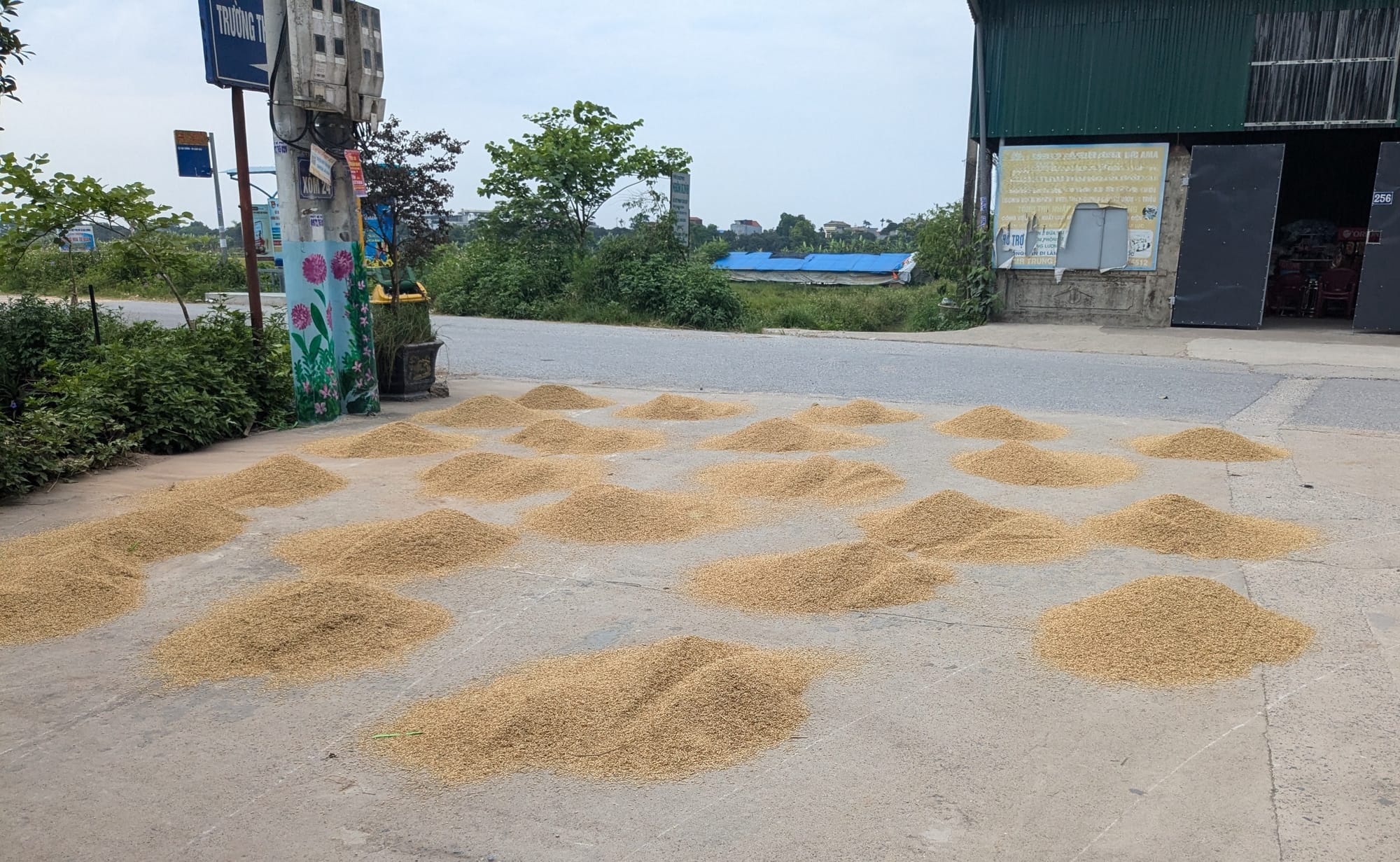
The rice is due to go back to the mills one more time to sift out the rocks and husks and bugs. But now I understand why it's so important to people here to wash rice thoroughly before cooking.
One day a teacher brings me a handful of walnut-sized, bright pink fruits still on the ends of branches.
I had never seen what a lychee looks like whole and had never had a fresh one, but it immediately becomes my favorite fruit. After tearing the tip of its thick, rough skin you can easily pop the soft white grape-like inner fruit into your mouth. It is cool, full of moisture and flavor: sweet and rich but balanced with complex floral notes. The large mahogany pit inside is as smooth as a river stone; it comes out looking clean rather than disgustingly chewed on.
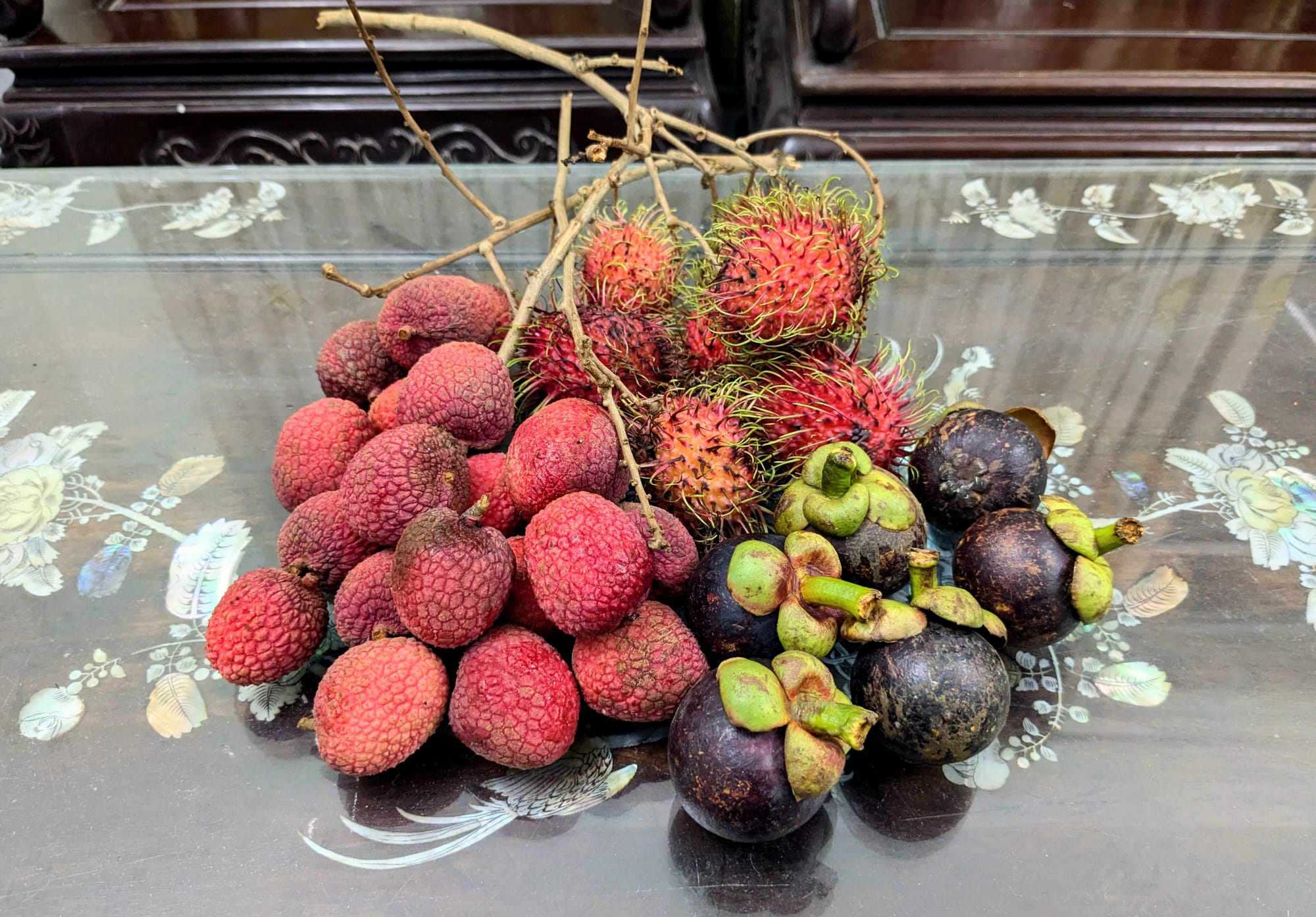
The lychee is the king of a whole array of tropical berries with tough, inedible skin. The longan, which leaves your fingers and mouth feeling sticky. The mangosteen with a tougher outer skin and milkier flesh. The rambutan with its long velcro-like hairs, and an edible pit that tastes like almond (this one was popular with us during Vietnamese language lessons, because of its fanciful name 'chôm chôm'.) There are even others more obscure, without names in English.
I am already looking forward to next June and the return of this season of fruit.
One of the guards started to urge me to bicycle in the evenings in the school's half-finished stadium. The focus of construction has shifted to getting as many things done on the school itself as possible over summer.
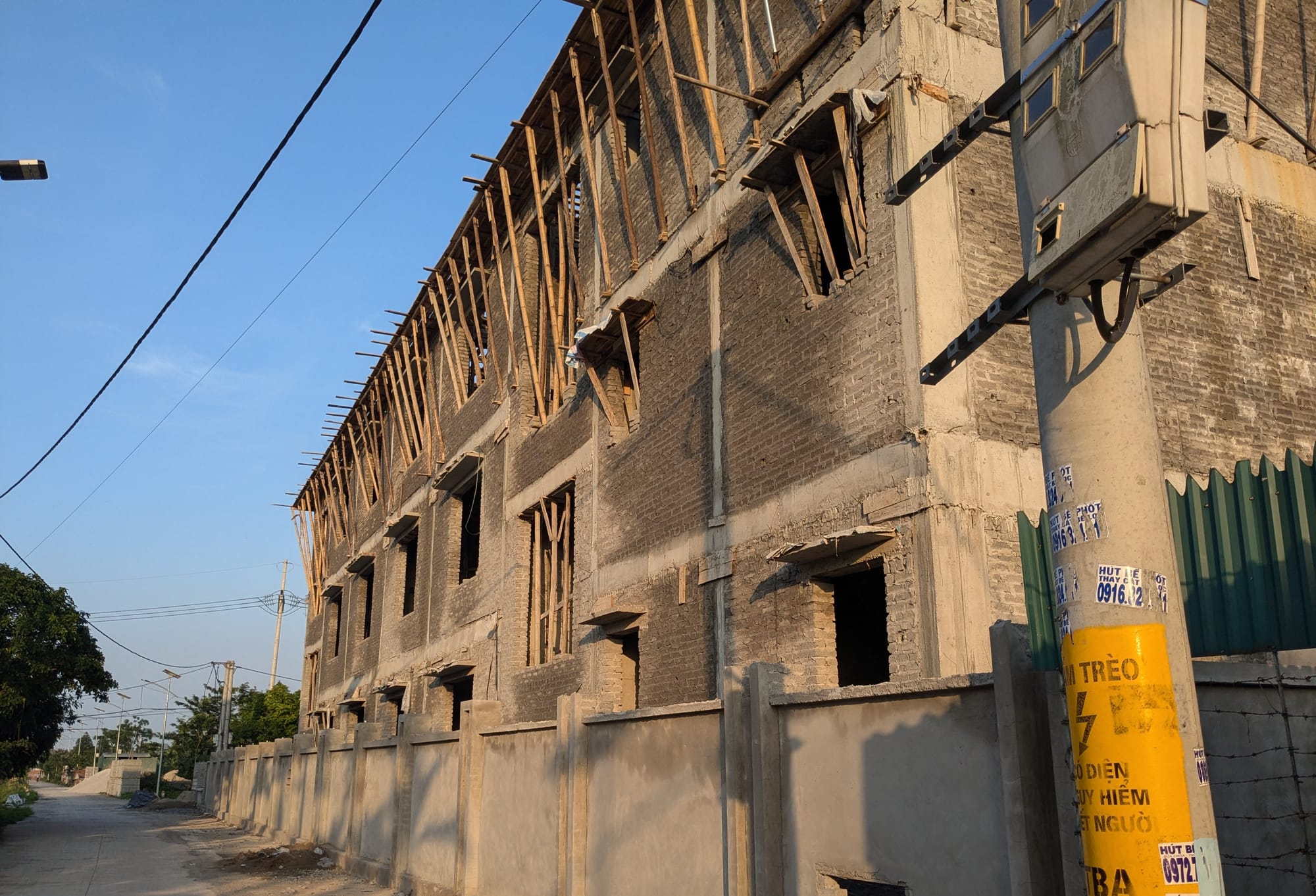
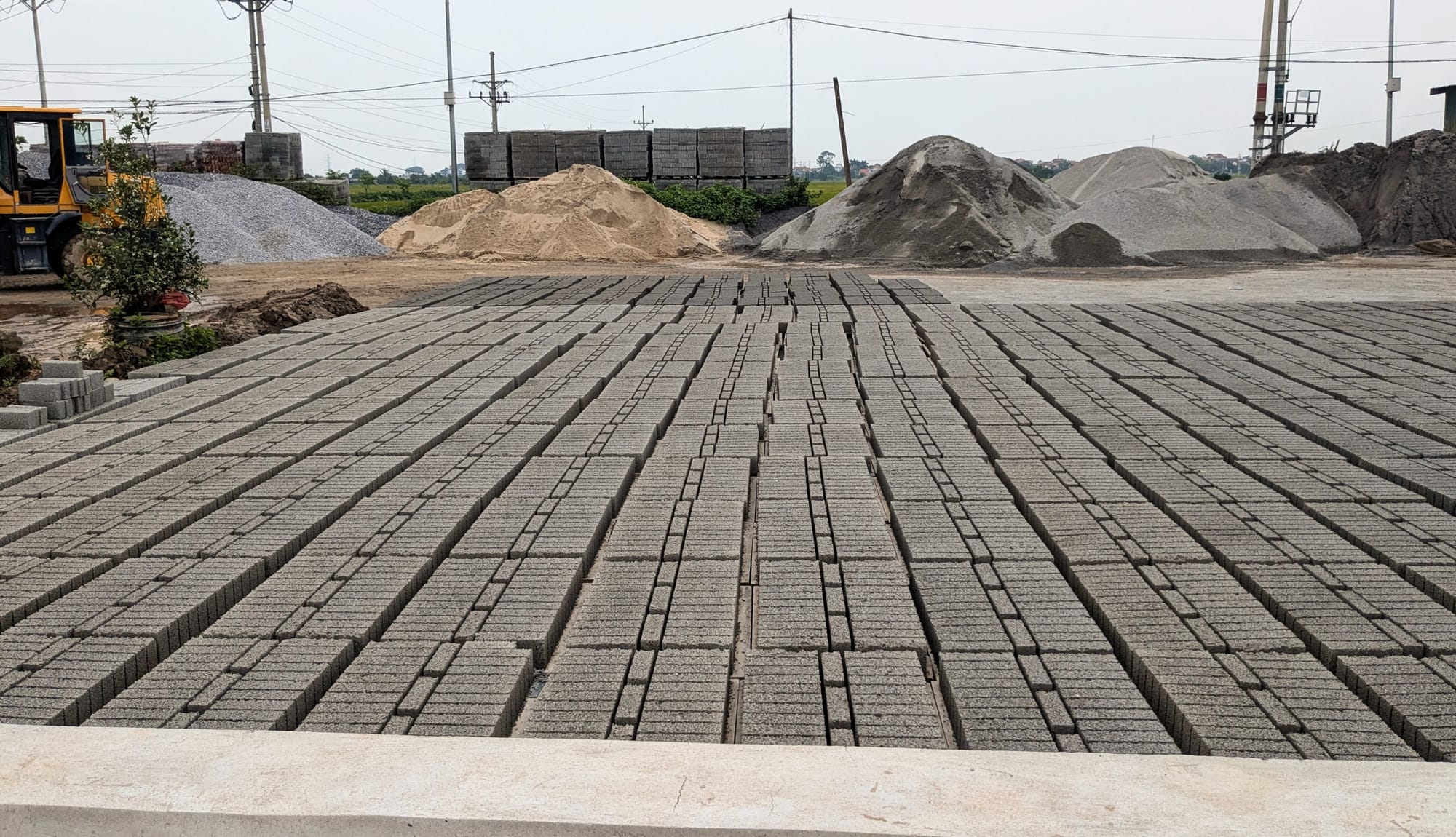
At first, I wanted to roll my eyes at this suggestion as I felt he just wanted to be able to keep tabs on me. I keep mostly to the rice fields where they showed me to go, and it's infinitely more fascinating than riding in circles next to a small brick factory and a few homes.
But I soon find several reasons to spend some of my time working out there. One is that I can put both earbuds in and crank the music free of worry about traffic. And so I find time to listen to songs from research I'm planning for a series of classes on American music at the Embassy in August. I discover the earliest recordings of guitar distortion in proto-rock & roll, like Jackie Brenston's 'Rocket 88'.
For the first time in my life, I am wearing flip flops by default - like the locals - even bicycling in them.
Other locals come to the stadium to walk after the sun goes down behind the school casting shade over the field. Chị sees me from the garden and joins me to walk. We take turns practicing English and Vietnamese.
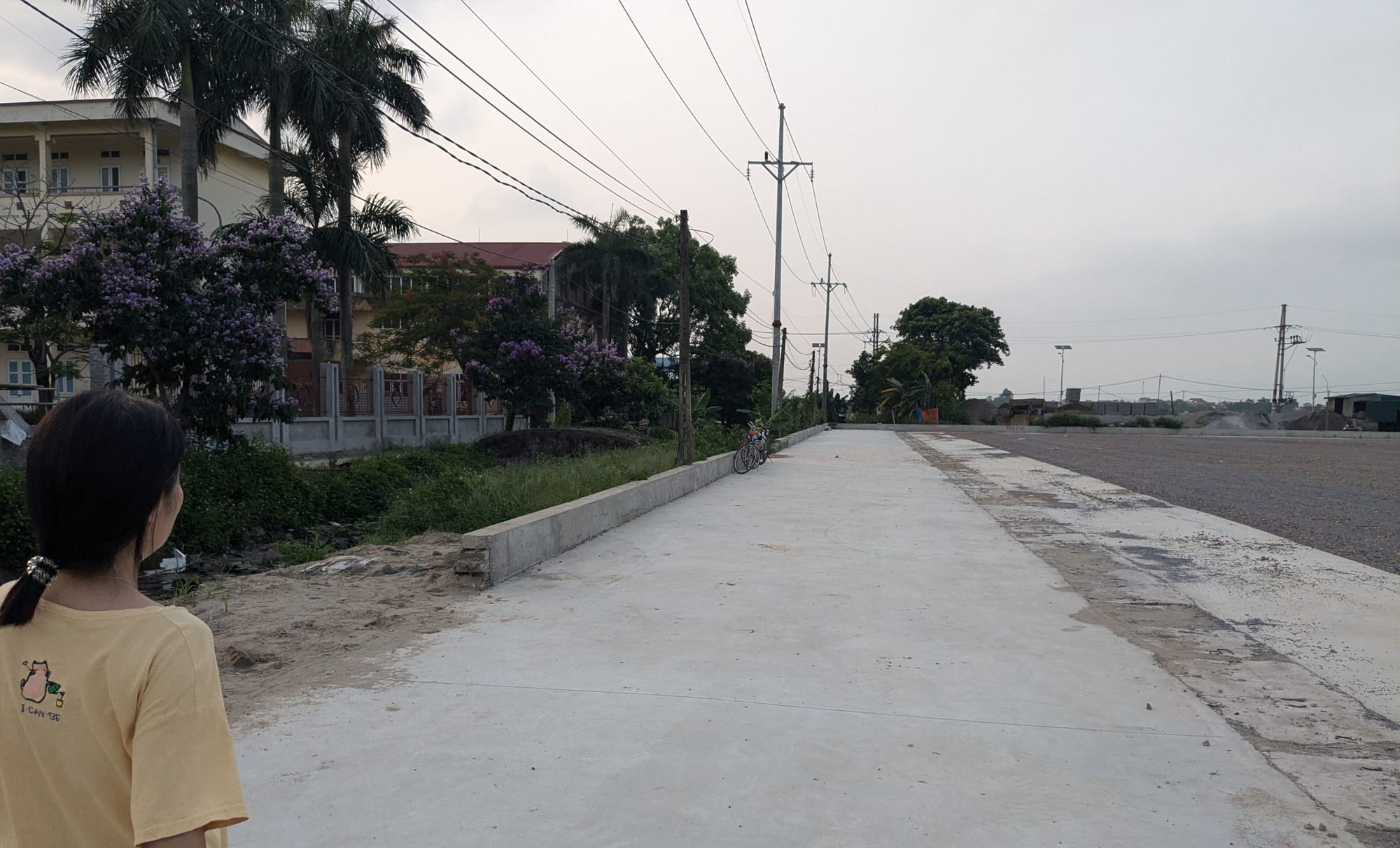
"Chris. Take off your shoes. Walk barefoot." She tells me.
I do. The pavement is cool and soft, freshly sweeped for the rice farmers to use as a drying area the next morning.
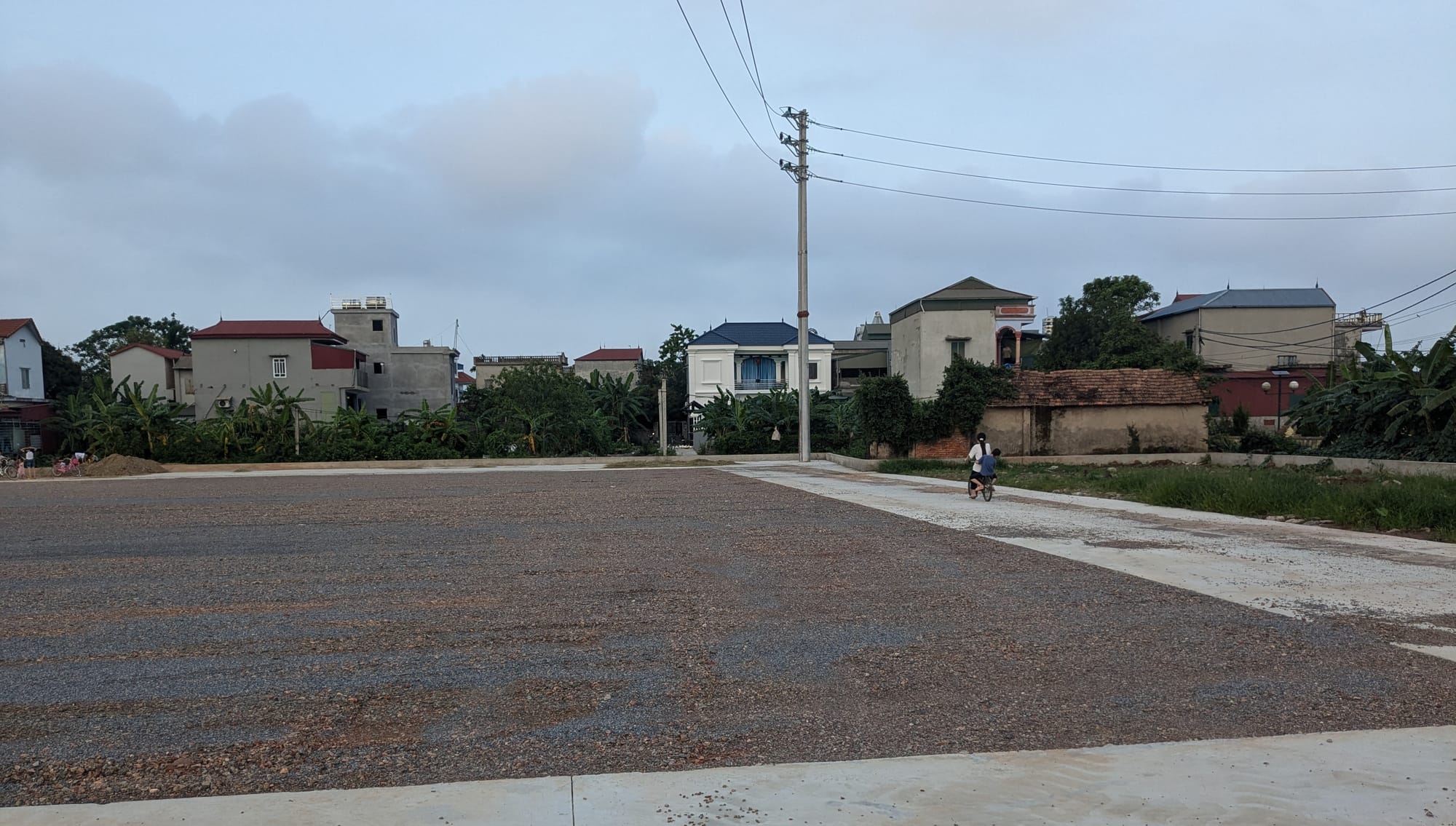
Local children are playing on a mound of dirt on one side of the field, watching me with curiosity. They confer with each other and every lap they have decided on a question to ask me. The youngest boy steps forward to ask it:
"What's your name?"
"How old are you?"
"Where are you from?"
I answer them each time with a smile, leaving them a few minutes to translate my answers to everyone. They may actually have more conversational English than some of my high school students, I laugh to myself.
"CAPPUCCINO ASSASSINO!" They shout and run away.
Welp....
Around the whole world, apparently...
One weekday I am invited to Chú's house for lunch. I arrive to find the courtyard of a traditional one-story Vietnamese home covered in tents and half the village there.
It is the one-year anniversary of his father's death, an important commemoration in Vietnamese culture. I think it marks both the end of a long period of mourning, the beginning of being remembered in perpetuity, and also part of the process of ensuring the departed's spirit remains residing with the family while in the (parallel) spirit plane.
I park my bicycle in the narrow alleyway and see most of my male coworkers sitting at a table inside. The principal and several teachers have prepared an offering tray and approach the massive altar which takes up most of the living room, fragrant with incense.
We sit down to eat in the courtyard, and the small cups of wine are poured at a steady rate. Since there is no school, they urge me to drink a full cup each time; at this point I suspect they won't be happy until they find out how much it will take to get me stumbling drunk. A vice principal once said: "Why don't you know how to get drunk?"
There are a variety of rustic, local foods on the table, and when I reach for one, an English teacher tells me: "That is thịt chó."
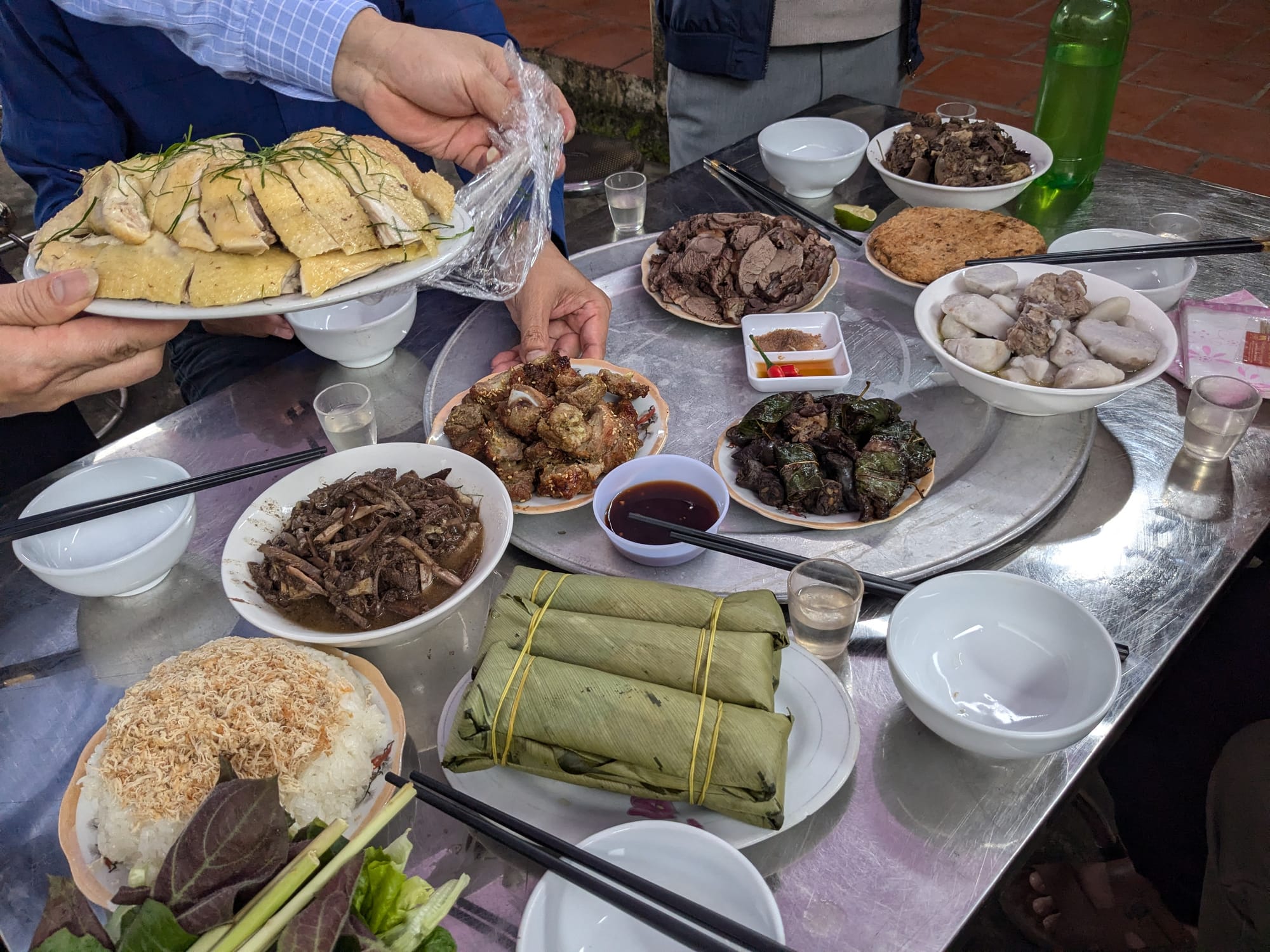
I hesitate with the bite in midair, making sure I understand correctly. I repeat the word back to him and he nods.
When I was new to the village, they asked me whether I liked certain things, but the most pointed question was: "Do you eat dog meat?" I told them no, and that was the end of the discussion. They have never invited me to eat dog meat. Which is how I wanted it. If they thought I would be open to it, they might invite me to eat it all the time. At restaurants where that is all that they serve.
The practice of keeping cats and dogs as genuine pets is growing in popularity, and there are now Vietnamese who are against the practice of eating them. Eating dog meat is still very common in Northern Việt Nam. The dogs are mutts raised specifically for meat and not the same breeds as those raised to be pets. They are mostly eaten by men, who not only like the taste of the meat but also associate it with giving them more strength. Eating cats is less common but has a similar trait; Vietnamese warriors used to eat tigers to give themselves "bravery" and "ferocity". There are no longer any tigers left in Việt Nam, but there are "little tigers".
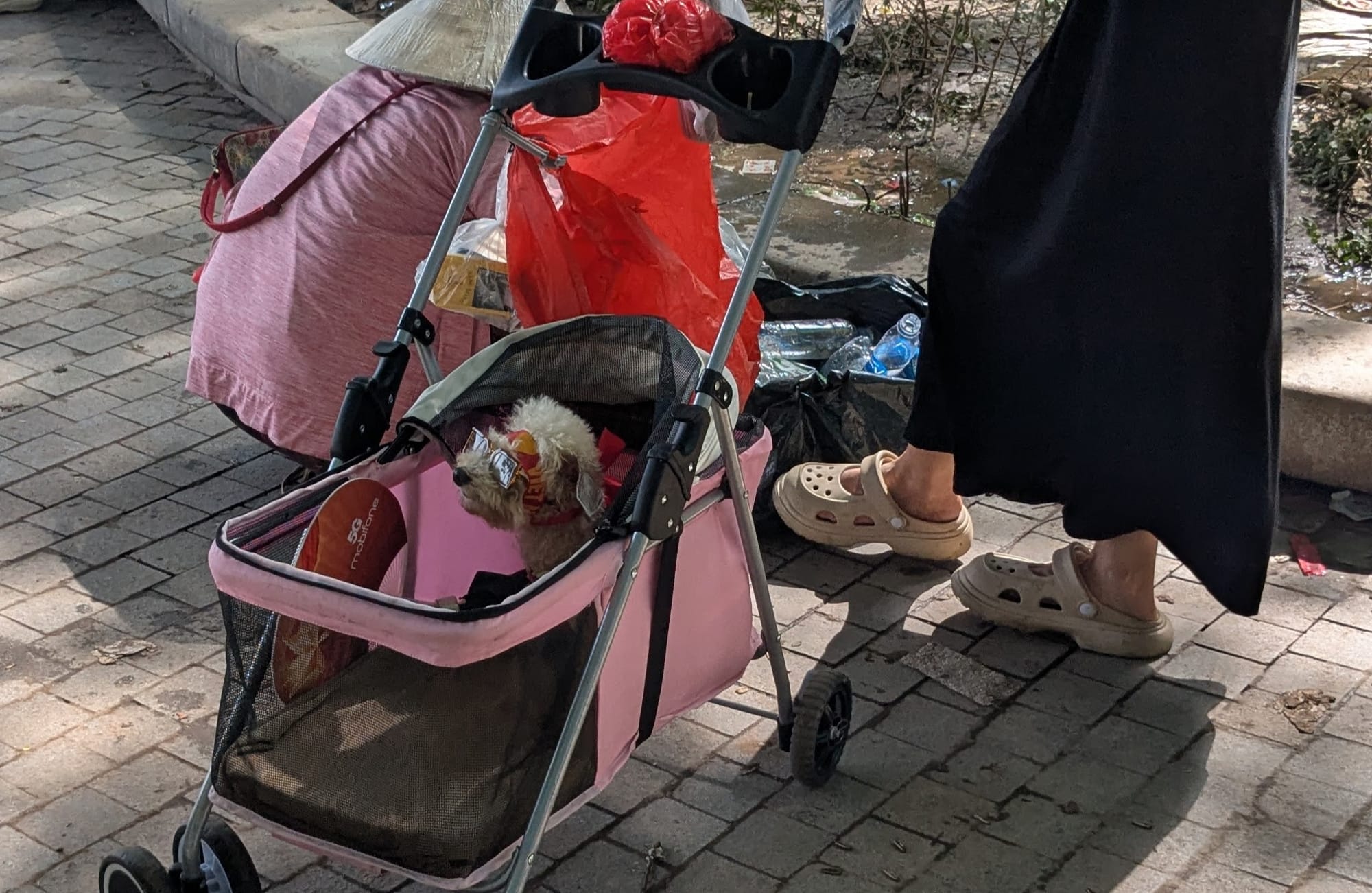
I like dogs as companions and grew up with canine family, but I know I'm a guest of a different culture. I would never order dog meat and told them I wouldn't eat it to mitigate any dog meat ordered on my behalf. But... secretly, I was hoping to try it once, because I want to know the taste of things that they taste.
So, after hesitating for a moment, I shrug and taste it.
"Ngon à?" Everyone is suddenly asking me.
"Ngon," I concede. It is actually pretty tasty. It is tender, and like beef it has a rich, iron-forward flavor.
The teacher Mr. Đạt is regarding me carefully and he says something to the English teacher, who then turns to me.
"Would you like to have a Vietnamese name?"
If you are living as a foreigner in Việt Nam, sometimes you take on a Vietnamese name because your name is difficult for people to pronounce. Some volunteers chose their own name before teaching, so that their students could more easily say their name. But I decided to wait until something meaningful came to me.
"Mr. Đạt suggests we could call you [******]. Like the school."
It is one of the words in the name of my school, and I am overwhelmed with pride and emotion that they want to name me after the school. I don't know if I'm worthy of it, but the other teachers at the table are murmuring to each other and nodding in agreement.
It also has a meaning associated with it in old Vietnamese, which I already know before he tells me:
"In Vietnamese, it means brave."